- +86 136 8127 5833
- [email protected]
- Shunyi, Beijing, China
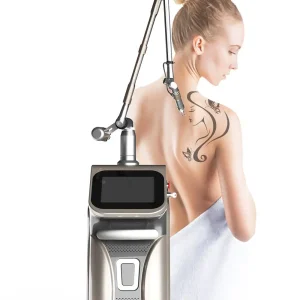
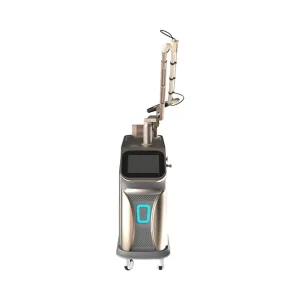
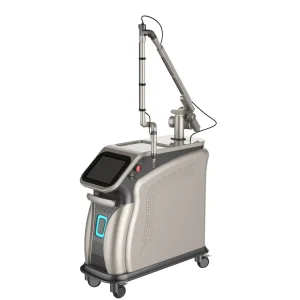
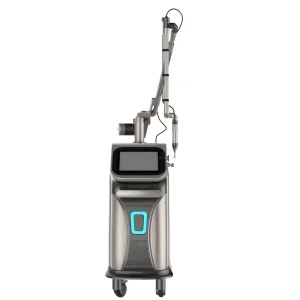
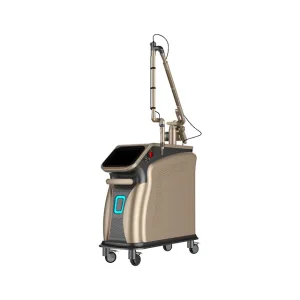
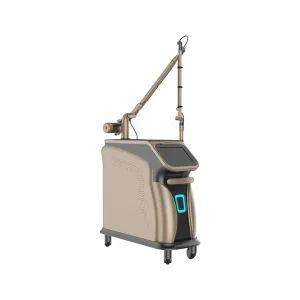
Medical-grade OEM & Wholesale platforms configured with advanced optical articulated arms, dual-pulse optics, and smart temperature cooling.
The global medical aesthetics and industrial surface-processing markets have undergone a paradigm shift from traditional Q-switched nanosecond technology to Vertical Picosecond Laser Systems. Driven by rising consumer demand for non-invasive dermatological procedures, multi-color tattoo erasure, and hyperpigmentation therapy, the picosecond segment represents one of the fastest-growing niches in optical medical devices. Modern medical chains, dermatological clinics, and global distributors no longer view picosecond technology as a luxury add-on, but rather as an essential, revenue-generating core asset.
In contrast to older nanosecond Nd:YAG lasers (which operate in the 5 to 10-nanosecond pulse duration range), a true vertical picosecond laser machine emits coherent optical energy with pulse durations under 1 nanosecond (typically 375 ps to 750 ps). This ultra-short pulse duration fundamentally alters how light interacts with target skin chromophores or surface contaminants. Instead of generating a predominantly photothermal effect—which risks heat diffusion to surrounding tissue, post-inflammatory hyperpigmentation (PIH), and prolonged downtime—picosecond pulse technology relies on a localized photomechanical (photoacoustic) shockwave effect.
Information Gain Key Metric: The photoacoustic impact of a picosecond laser creates pressure waves exceeding several gigapascals (GPa). This shatters exogenous tattoo ink particles and endogenous melanosomes into microscopic, dust-like fragments that are rapidly cleared by the body's lymphatic phagocytosis system, cutting total treatment sessions by up to 50% compared to Q-switched systems.
Converts peak laser power into pressure waves instead of excessive heat, minimizing epidermal damage and preventing post-treatment scarring.
Significantly reduces heat dispersion. Safe across dark Fitzpatrick skin types IV–VI with vastly reduced risk of PIH or hypopigmentation.
Faster clearance per session allows clinics to charge premium treatment pricing while increasing daily patient throughput.
Over the past decade, Chinese manufacturing hubs in Beijing, Guangdong, and Jiangsu have evolved from basic electronic assemblers into sophisticated optical engineering powerhouses. For global medical device brands and private-label distributors, sourcing vertical picosecond laser machines directly from established Chinese factories offers distinct technological and economic advantages.
Leading factories maintain in-house R&D centers for optical cavity alignment, power supply calibration, and thermal management integration. Sourcing Nd:YAG crystals, electro-optic Pockels cells, and high-energy power modules within tightly knit industrial clusters lowers BOM costs without sacrificing optical purity.
Vertical picosecond systems require precise mechanical guidance. Chinese original manufacturers utilize imported or high-grade domestic 7-joint light guide articulated arms featuring 360-degree rotation, minimal energy attenuation (<5%), and ultra-stable optical alignment even under high repetition rates.
Unlike rigid Western manufacturers, Chinese factories provide rapid chassis redesigns, custom GUI software development (multi-lingual support, patient records), integrated skin sensor firmware, and private-label casing tailored to target distributor markets.
Quality Assurance Standard: Quality-driven Chinese factories execute 100-hour continuous burn-in testing, energy stability mapping via coherent power meters, and helium-neon (He-Ne) aiming beam alignment before any unit leaves the cleanroom facility.
The structural versatility of vertical picosecond laser platforms allows them to be deployed across a diverse spectrum of clinical, aesthetic, and industrial environments:
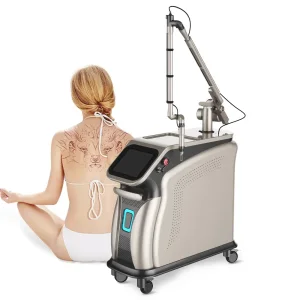
Tattoos created with modern synthetic inks often contain metallic compounds and mixed pigments (blues, greens, reds, yellows) that are notoriously resistant to standard 1064nm nanosecond lasers. A multi-wavelength vertical picosecond laser system utilizes frequency-doubled KTP crystals to generate 532nm for bright red/orange inks, 1064nm for deep black/blue pigments, and optional 585nm/650nm dye handpieces for green and sky-blue inks. The photomechanical shockwave shatters ink particles into micro-dust, allowing rapid macrophage evacuation.
Condition management for melasma, Nevus of Ota, freckles, lentigines, and post-inflammatory hyperpigmentation demands ultra-gentle fluences. Because picosecond pulses minimize tissue heating, dermatologists can deliver precise energy to target melanosomes without triggering compensatory melanogenesis. This makes vertical picosecond platforms the preferred device for Asian, Hispanic, and Mediterranean skin types.
By retrofitting the vertical picosecond laser output with a specialized Micro-Lens Array (MLA) or Focus Lens handpiece, the uniform laser beam is concentrated into hundreds of high-energy micro-spots. This induces Laser-Induced Optical Breakdown (LIOB) within the epidermal or upper dermal layers without rupturing the stratum corneum. The resulting localized cavitation zones trigger a natural wound-healing cascade, stimulating neocollagenesis and elastin synthesis to treat acne scars, fine lines, and enlarged pores with zero patient downtime.
As the market for aesthetic energy devices matures, international corporate buyers, chain medspas, and medical equipment distributors are refining their procurement criteria. Purchasing a vertical picosecond platform requires evaluating more than just nominal wattage; it demands a granular inspection of optical architecture and long-term manufacturing stability.
Leading buyers require optical homogenization lenses that transform standard Gaussian laser beams into a uniform "flat-top" profile. This prevents localized hot spots that cause epidermolysis and ensures consistent fluence delivery across the entire spot diameter.
Next-gen vertical chassis integrate internal energy meters at the optical cavity output and handpiece terminal. Real-time feedback loops automatically compensate for optical flashlamp aging or mirror drift, ensuring that the fluence set on the touch screen matches the actual delivered output.
High-end industrial and medical picosecond platforms utilize double-rod or dual-lamp cavity designs. This setup generates immense peak optical power while maintaining short pulse durations, extending the total lifespan of optical components.
Technical and commercial questions regarding vertical picosecond laser manufacturing and procurement.
Explore our complete manufacturing lineup of high-performance laser platforms for aesthetic medical clinics and global wholesale partners.