- +86 136 8127 5833
- [email protected]
- Shunyi, Beijing, China
Direct factory manufacturing certified to international medical standards. Select a specialized platform below to explore clinical specifications and direct OEM procurement options.
How engineering miniaturization and Radio Frequency (RF) excited metal tubes have reshaped the global market for ablative dermatological resurfacing and surgical aesthetics.
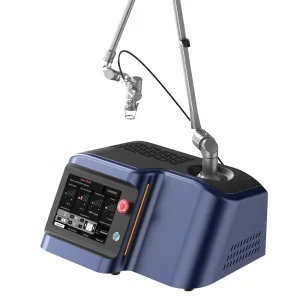
Historical medical-grade CO2 laser platforms required cumbersome floor-standing cabinets weighing upwards of 80 kg, creating structural bottlenecks for boutique clinics, mobile aesthetic practices, and multi-room MedSpas. Modern engineering advances from leading portable CO2 fractional laser machine manufacturers have concentrated high-output RF laser sources into compact desktop form factors (25–35 kg). This shift lowers international freight overhead by up to 60% while optimizing earnings per square foot of clinical space.
Fractional photothermolysis relies on creating precise Microscopic Treatment Zones (MTZs) surrounding islands of uninjured epidermal tissue. Global procurement demand has pivoted sharply toward systems capable of ultra-short pulse durations (under 1 millisecond). By delivering peak energy faster than the Thermal Relaxation Time (TRT) of adjacent tissue, current portable platforms achieve profound collagen remodeling with significantly reduced risk of Post-Inflammatory Hyperpigmentation (PIH).
Today’s medical buyers reject single-application capital equipment. Leading factories engineer portable CO2 platforms equipped with quick-interchange articulation arms and modular handpiece assemblies. A single base engine seamlessly transitions between deep aesthetic scar resurfacing, superficial fractional photo-rejuvenation, surgical micro-excision, and non-surgical gynaecological treatments (such as Vaginal Rejuvenation System - VRS protocols).
When sourcing medical-grade aesthetic equipment from OEM/ODM manufacturing hubs, distributors must evaluate thermal beam quality (M² factor) and power stability rather than raw peak wattage claims alone. A certified portable CO2 fractional laser equipped with a coherent metal RF tube consistently outperforms high-wattage glass tube alternatives in long-term beam constancy, operational safety, and patient satisfaction.
A rigorous engineering comparison outlining why premium medical laser factories adopt Radio Frequency (RF) excited metal laser tubes in portable fractional architectures.
| Engineering Parameter | Metal RF Excimer Tube (Professional Medical Standard) | DC Glass Water-Cooled Tube (Low-Cost Entry Standard) |
|---|---|---|
| Excitation Source | Solid-state Radio Frequency (RF) energy discharge | High-voltage Direct Current (DC) gas discharge |
| Beam Quality (M² Factor) | M² < 1.2 (TEM00 fundamental mode, ultra-Gaussian) | M² > 2.0 (Higher-order modes, irregular energy distribution) |
| Focal Micro-Spot Diameter | 50 μm – 80 μm (Minimal collateral thermal trauma) | 150 μm – 250 μm (Broader micro-scars, prolonged erythema) |
| Pulse Response Time | Microseconds (μs) – True ultra-pulse modulation | Milliseconds (ms) – Slow rise time, high thermal residual |
| Cooling Requirement | Integrated forced air-cooling or compact internal liquid loop | External bulky water chiller (incompatible with true portability) |
| Operational Lifespan | 20,000 to 30,000 Hours (Refillable gas chamber) | 1,000 to 2,000 Hours (Fragile consumable component) |
| Clinical Reproducibility | < 2% power drift across 8 hours of continuous operation | 15% – 30% thermal drift as cooling water temperature rises |
The 10,600 nm wavelength emitted by CO2 lasers targets intracellular water as its primary chromophore. Upon tissue interaction, rapid vaporization creates vertical micro-ablative columns extending deep into the reticular dermis. The instant coagulation surrounding each column triggers a immediate wound-healing cascade: Heat Shock Protein (HSP 70 & 47) expression, macrophage activation, and long-term fibroblast synthesis of Type I and Type III collagen. Portable units with refined galvo-scanners control column density to preserve uninjured reservoir tissue for accelerated re-epithelialization within 3 to 5 days.
To prevent localized thermal accumulation during high-fluence treatments, state-of-the-art portable fractional lasers incorporate dynamic high-speed galvanometric scanners. Advanced software algorithms support multi-pattern distributions—Square, Rectangle, Circle, Ellipse, Hexagon, Triangle, and Straight Line—with customizable scanning sequences. Modern factories employ Random Scan Distribution and Maximum Distance Algorithms, ensuring adjacent micro-dots are never delivered sequentially, thereby maintaining epidermal temperatures well below thermal pain thresholds.
A strategic framework for medical equipment importers, distributors, and clinic chains sourcing portable fractional CO2 systems direct from manufacturing facilities.
Importers must verify that the manufacturing facility holds audited ISO 13485:2016 certification for medical device production. Ensure the production line incorporates dedicated optical cleanrooms (Class 10,000 / ISO Class 7) for internal mirror alignment, beam expansion lens assembly, and sealed optical path integration to eliminate dust contamination.
Reputable factories utilize industry-grade power meters (such as Coherent or Ophir calibration gear) to test energy uniformity across all scan modes. Demand factory testing reports detailing pulse stability across varied frequencies (1 Hz to 100 Hz), spot energy symmetry, and articulated arm energy transmission efficiency (>85% threshold).
Industrial design for portable laser chassis requires rigorous thermal dissipation engineering. Superior manufacturers integrate high-static pressure centrifugal fans, dual high-efficiency copper radiators, medical-grade power supplies (Mean Well or equivalent), and dual mechanical emergency shut-off circuits meeting IEC 60601-1 and IEC 60601-2-22 safety guidelines.
Deploying a portable CO2 fractional laser machine eliminates consumables, contrasting sharply with micro-needling RF or consumable-tip cartridges. With zero cost-per-treatment overhead beyond basic sanitization, a clinic performing 4 treatments per week at $800 per session fully amortizes the capital expenditure of a high-end portable RF-CO2 platform within 12 to 14 weeks.
How versatile portable CO2 laser platforms address diverse clinical pathologies across Dermatology, Plastic Surgery, and Gynaecology.
Deep ice-pick, boxcar, and rolling acne scars require targeted thermal ablation combined with dermal subcision effects. Portable CO2 fractional lasers operating in Deep Ablation Mode reach up to 1.5 mm penetration depths into the reticular dermis, breakdown rigid fibrotic bands, and stimulate organized neo-collagenesis without causing broad epidermal sloughing.
For patients presenting with actinic keratosis, solar lentigines, coarse rhytids, and peri-oral lines, micro-ablative fractional scanning removes dysplastic keratinocytes while shrinking the dermal matrix. Adjustable overlap settings (1 to 7 passes) allow practitioners to customize treatments from superficial epidermal peels to deep skin tightening.
Switching the system from fractional mode to continuous wave (CW) or ultra-pulse surgical mode transforms the handpiece into a precise optical scalpel. Dermatologists execute bloodless excisions of verrucae, seborrheic keratoses, syringomas, xanthelasma, and skin tags with immediate micro-coagulation of capillaries under 0.5 mm.
Equipped with specialized 360-degree specular vaginal probes, portable CO2 systems deliver non-ablative thermal pulses to the vaginal mucosa. This stimulates extracellular matrix synthesis, restores mucosal hydration, increases vaginal wall elasticity, and provides non-surgical relief for mild Stress Urinary Incontinence (SUI) and Vulvovaginal Atrophy (VVA).
Ensuring seamless market authorization, operational safety, and continuous clinical support across international territories.
Leading portable CO2 fractional laser manufacturers design equipment compliant with strict international regulatory regimes. Platforms carry Medical CE (under EU MDR 2017/745), US FDA 510(k) clearance pathways, RoHS material compliance, and ISO 13485 facility certifications. Complete technical documentation dossiers (STED) are provided to regional distributors to expedite local health authority registration (such as ANVISA, TGA, Health Canada, and Saudi FDA).
Direct factory partnerships enable deep hardware and software tailoring to enhance distributor brand equity. Key OEM/ODM services include customized industrial exterior styling, pantone color matching, private-label GUI software development, multi-language interface localization (20+ languages supported), pre-set clinical protocol loading, and custom-branded transit packaging.
To minimize equipment downtime, established manufacturers maintain global spare parts inventories and modular engineering architectures. Swap-and-play internal modules—such as quick-connect power supplies, driver boards, and pre-calibrated galvo-scanner heads—allow local technicians or clinical operators to perform field servicing swiftly following video-guided remote diagnostics from factory field engineers.
An authoritative preview of emerging electro-optical advancements set to redefine fractional photothermolysis platforms over the next decade.
Future portable CO2 laser scanners will integrate real-time optical coherence tomography (OCT) and thermal camera feedback directly inside the scanning handpiece. AI algorithms will dynamically adjust pulse duration, energy delivery, and dot density on a microsecond level based on real-time skin hydration, epidermal thickness, and localized thermal elevation—virtually eliminating over-treatment risks.
Next-wave portable chassis will integrate dual laser sources within a single desktop envelope: combining ablative CO2 (10,600 nm) with non-ablative Erbium (1540 nm or 1550 nm). By firing coaxial or interleaved pulses, practitioners can achieve immediate tissue contraction alongside deep non-ablative dermal heating in a single, comfortable pass.
While RF metal tubes represent today's gold standard, active R&D into high-power semiconductor laser diodes and solid-state mid-infrared crystals promises further physical footprint reductions. Within 5 to 7 years, fully solid-state 10.6 μm equivalent systems will emerge, paring system weight below 15 kg while offering maintenance-free operational spans exceeding 50,000 hours.
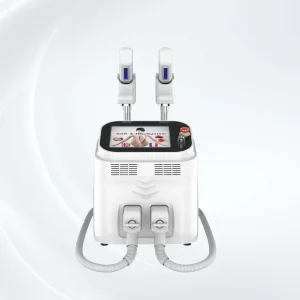
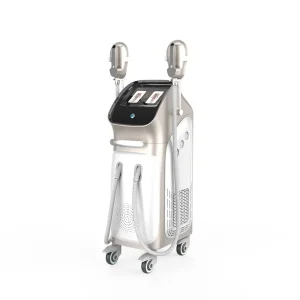
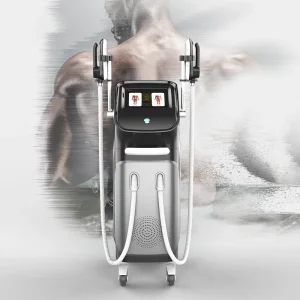
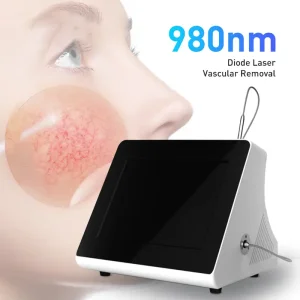
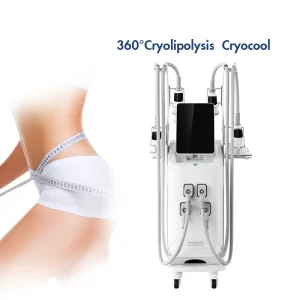
Complementary OEM/ODM technology lines produced in our certified manufacturing facility. Expand your clinical treatment portfolio with targeted light, laser, and body sculpting systems.
In-depth engineering and operational answers curated by medical laser designers to assist purchasing managers, biomedical engineers, and clinic owners.
Choosing a portable desktop platform offers significant operational and economic advantages without sacrificing optical output performance. Modern portable CO2 lasers engineered with RF metal tubes provide identical peak power density (up to 40W–60W) and optical spot fidelity as large vertical cabinets. However, the portable chassis reduces total unit weight from 80+ kg down to 25–35 kg. This dramatically reduces international door-to-door express shipping costs, allows easy movement between treatment rooms or multi-clinic operations, and minimizes the physical footprint in high-rent urban medical spas.
An industrial metal Radio Frequency (RF) excited CO2 laser tube manufactured by leading optical brands (such as Coherent or Synrad) boasts an operational lifespan of 20,000 to 30,000 active discharge hours. In a high-volume clinical environment, this translates to approximately 7 to 10 years of reliable service. Furthermore, RF metal tubes are fully re-fillable with gas when pressure eventually drops. In contrast, traditional Direct Current (DC) glass water-cooled tubes suffer from rapid gas degradation and mirror seal deterioration, typically failing within 1,000 to 2,000 operating hours (12 to 18 months), requiring total tube replacement and frequent system re-calibration.
While both modalities induce dermal collagen remodeling, their mechanisms of action and primary indications differ. Fractional CO2 lasers emit an ablative 10,600 nm light column that vaporizes micro-channels of tissue, providing superior removal of epidermal pigmentation, actinic damage, deep rhytids, and severe fibrotic acne scars. Microneedling RF is non-ablative, delivering electrical thermal energy beneath an intact epidermis. CO2 fractional resurfacing delivers more dramatic single-session texture smoothing and epidermal contraction, whereas RF microneedling carries a lower risk of post-inflammatory hyperpigmentation on darker skin types (Fitzpatrick V-VI) with minimal surface downtime.
To safely treat Fitzpatrick Types III-IV with fractional CO2 lasers, practitioners must meticulously manage heat accumulation. Modern portable platforms incorporate specialized scanning software features: 1) Random or Smart Step Scanning, which prevents adjacent micro-dots from firing sequentially, keeping epidermal baseline temperatures low; 2) Ultra-Pulse Mode, delivering high energy in microsecond bursts shorter than tissue thermal relaxation time; 3) Lowering micro-dot density coverage (e.g., 5% to 10% area coverage per pass) while extending post-procedure sun protection protocols and utilizing topically applied cooling or tyrosinase inhibitors prior to treatment.
Maintenance for an RF-tube portable system is straightforward due to its sealed solid-state construction: 1) Optical Cleanliness: Inspect and gently clean the final focal lens on the scanner probe and the 7-joint optical arm mirrors using optical-grade lens wipes and pure anhydrous ethanol weekly; 2) Air Flow Inspection: Clean air intake dust filters monthly to maintain optimal internal cooling performance; 3) Calibration Verification: Conduct annual optical power alignment checks using an external laser power meter to ensure touchscreen delivered energy match actual output at the tissue level.
Yes, qualified medical equipment manufacturers offer full OEM and ODM customization services for volume importers and brand distributors. This includes customizing the physical chassis injection-molded housing with brand-specific pantone colors and logos, designing custom startup software boot screens, localizing the graphical user interface (GUI) into native languages, pre-configuring proprietary clinical presets, and supplying custom-branded flight cases alongside compliant technical safety labeling.