- +86 136 8127 5833
- [email protected]
- Shunyi, Beijing, China
Direct from Beijing Sano Laser Factory — Precision Engineered Air Cooling Equipment for Pain Reduction & Thermal Protection
Quantitative breakdown of cold air epidermal protection versus legacy contact cooling modalities.
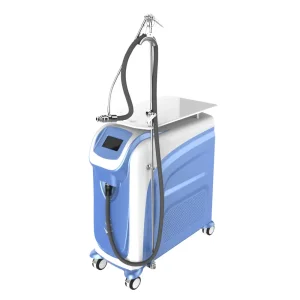
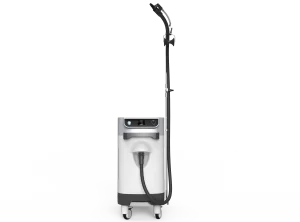
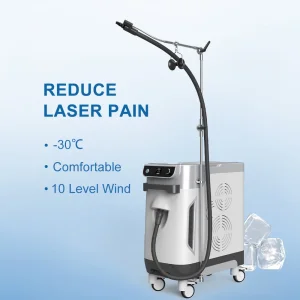
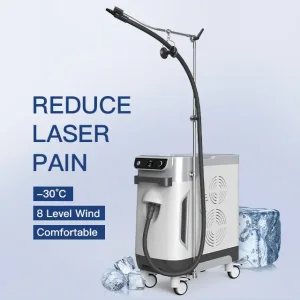
In the contemporary domain of Energy-Based Devices (EBDs) — encompassing 808nm diode lasers, Q-switched picosecond systems, non-ablative vascular lasers, and fractional CO2 resurfacing platforms — the management of epidermal thermal dissipation is paramount. Zimmer Air Cooling Equipment Factories & Factory ecosystem has redefined the benchmark for non-contact epidermal thermal management.
Historically, practitioners relied heavily on sapphire contact chillers, ice packs, or dynamic cryogen sprays (R134a tetrafluoroethane gas). While contact cooling provides localized temperature reduction, it suffers from significant thermodynamic limitations: contact friction creates tissue distortion, sapphire glass accumulates debris leading to optical attenuation, and static contact fails to provide pre-cooling, parallel-cooling, and post-cooling continuously across wide anatomical zones.
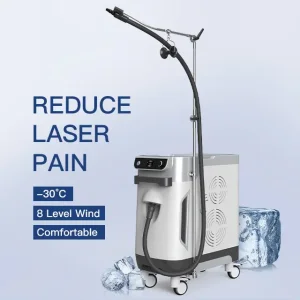
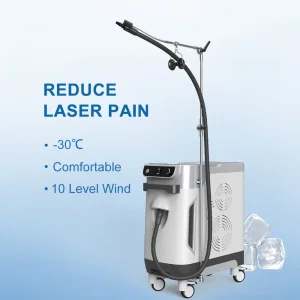
Core Industry Insight: Forced cold air cryo therapy systems operate by delivering a high-velocity, sub-zero stream of chilled air (-30°C to -35°C) directly to the target tissue. This continuous thermal sink effectively insulates the epidermis from heat accumulation without interfering with laser beam penetration, eliminating consumable reliance while drastically suppressing pain sensation and thermal edema.
This technical whitepaper examines the global macro-environment of skin cooling equipment manufacturing, detailing the operational capabilities of high-efficiency compressors, dual-stage refrigeration loops, and the strategic advantages offered by China's Industry 4.0 manufacturing ecosystem led by pioneers such as Beijing Sano Laser Development S&T Co., Ltd.
Analyzing technological shifts across aesthetic device manufacturing, patient comfort protocols, and energy density scaling.
As laser manufacturers scale handpiece power (e.g., 3000W diode laser bars emitting >120 J/cm²), built-in contact cooling reaches thermodynamic saturation. External forced air cooling provides an active thermal gradient that neutralizes epidermal heat accumulation even under ultra-short pulse widths.
Strict environmental regulations targeting HFCs (hydrofluorocarbons) alongside soaring consumable costs for disposable canister sprays have accelerated the global adoption of continuous compression-based cold air systems. Modern Zimmer-style chillers use eco-friendly refrigerants with zero ozone depletion potential.
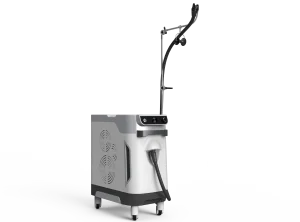
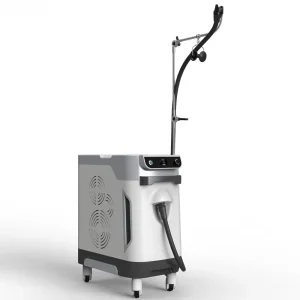
Next-generation air chillers integrate microprocessors capable of modulating fan speed (1-9 levels) dynamically. High-efficiency brushless motors ensure whisper-quiet clinical operation (<58 dB) while keeping the target output air stream steadily controlled down to -30°C.
B2B buyers, medical device distributors, and chain medspas globally evaluate skin cooling equipment through a rigorous matrix of operational total cost of ownership (TCO), multi-device interoperability, and clinical risk mitigation. Demand dynamics vary by regional regulatory standards and clinical workload density:
In high-volume medical spas, treatment speed and patient compliance dictate revenue. Pain during tattoo removal (picosecond lasers) or high-speed hair reduction is the primary cause of patient attrition. Procuring robust Zimmer cold air chillers allows clinics to run high-fluence protocols safely on Fitzpatrick skin types III–VI without causing post-inflammatory hyperpigmentation (PIH) or blistering. Furthermore, elimination of per-shot cryogen cost increases gross profit margins per session by up to 14%.
Leading global laser original equipment manufacturers (OEMs) increasingly bundle white-labeled cold air skin cooling devices alongside their flagship optical platforms. Modern cooling factories offer full structural OEM/ODM customization — including custom chassis paint schemes, branded touchscreens, custom hands-free support arms, and synchronized trigger interface cables that start air blowing automatically when the laser foot-pedal is depressed.
Hospital-grade applications require continuous operation capability (8-12 hours of uninterrupted clinical use without heat-exchanger freezing or compressor shutdown). Thermal stability, auto-defrost cycling, and HEPA air filtration modules represent crucial purchasing requirements for clinical procurement officers.
Inside Beijing Sano Laser Development S&T Co., Ltd. — Vertically Integrated R&D, Automated Production, and Rigorous Thermal QA.
SANO utilizes high-end customized Panasonic / Mitsubishi hermetic rotary compressors engineered for continuous duty refrigeration cycles. Paired with oversized aluminum evaporators and high-static pressure centrifugal blowers, the system guarantees instant sub-zero air delivery within 10 seconds of power activation.
Every chiller leaving the Shunyi, Beijing assembly facility undergoes 72 hours of uninterrupted thermal stress burn-in testing. Temperature transducers measure precise sub-zero thermal stability across all 9 speed settings, guaranteeing strict compliance with ISO13485 quality control parameters.
SANO’s centralized Beijing supply chain hub ensures short lead times (5-7 business days for standard models, 14-21 days for full ODM custom tooling). By controlling metal fabrication, plastic injection molding, and PCB board design in-house, production costs are reduced by 35-50% compared to European counterparts.
Direct performance evaluation comparing Forced Cold Air Chillers against alternative cooling mechanisms in clinical practice.
| Cooling Technology | Operating Temperature | Consumable Cost | Epidermal Protection Level | Patient Comfort & Pain Reduction | Maintenance & Reliability |
|---|---|---|---|---|---|
| Forced Cold Air (Zimmer / ICOOL) | -30°C to -35°C (Adjustable) | $0 / Continuous Air | Very High (Pre, Parallel, Post) | Optimal (85-90% Reduction) | Low maintenance, closed refrigerant loop |
| Sapphire Contact Tip | +4°C to -5°C | $0 (Built into laser tip) | Moderate (Requires contact pressure) | Moderate (Friction heat build-up) | Risk of tip burn out, sapphire scratching |
| Dynamic Cryogen Spray (DCD) | -20°C (Pulsed shot) | High ($150-$300 per canister) | High (Instantaneous) | Moderate (Sharp cold sting) | Solenoid valve leaks, nozzle clogging |
| Ice Packs / Topical Gel | 0°C to +5°C | Low (Gel & freezing supplies) | Low / Inconsistent | Poor (Messy, slow workflow) | Cross-contamination risk, labor intensive |
The versatility of Zimmer cold air cooling devices allows seamless integration across a wide spectrum of light-based and radiofrequency aesthetic modalities:
When operating diode lasers in sliding "In-Motion" mode or high-fluence single-pulse mode, thermal accumulation in dark skin (Fitzpatrick IV-VI) poses a grave risk of epidermal burns. Directing the cold air nozzle via a clip-on adapter directly to the laser handpiece ensures the epidermis is maintained at 15°C–20°C during energy pulse emission, protecting melanin while allowing laser energy to target the hair follicle bulb deep in the dermis.
Photo-acoustic shockwaves generated during nanosecond/picosecond laser pulses cause immediate epidermal frosting and localized inflammation. Pre-cooling the skin for 30 seconds prior to laser firing numbs nerve endings naturally (inducing temporary localized anesthesia), while post-cooling immediately blunts the acute burning sensation.
Ablative CO2 micro-beams create micro-thermal zones (MTZs) that radiate intense post-treatment heat. Gentle cold air flux applied immediately post-procedure reduces pain scores dramatically without drying out the tissue excessively or compromising collagen remodeling triggers.
Vascular treatments target hemoglobin, generating high localized thermal energy in superficial capillaries. Ambient air chillers prevent thermal tracking along surrounding dermal tissue, containing the heat strictly within the targeted vessel walls.
Explore OEM/ODM Cooling Equipment, Body Contouring, and Laser Systems Manufactured in Beijing
Expert Engineering Clarifications for Clinic Buyers, Importers, and OEM Partners
Selecting a manufacturing partner for sub-zero air cooling equipment requires assessing technical parameters beyond basic surface claims. When auditing a supplier factory, procurement teams should verify three core engineering criteria:
Beijing Sano Laser Development S&T Co., Ltd. remains committed to advancing thermal management innovation for the global medical aesthetic market. By combining precision engineering, robust quality assurance, and direct factory supply pricing, SANO empowers clinics and distributors worldwide with uncompromised operational performance.