What is the optimal operating temperature for vertical cryolipolysis fat freezing?
▼
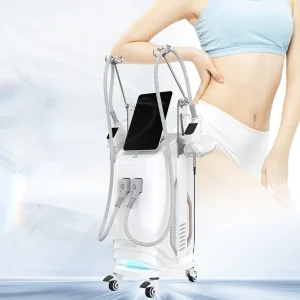
Clinical consensus and extensive histopathological studies indicate that maintaining a tissue cup contact temperature between -5°C and -11°C produces maximal adipocyte apoptosis while keeping the surrounding epidermal and nerve tissue completely safe. SANO vertical cryolipolysis systems utilize micro-calibrated thermistors to ensure temperature stability within ±0.5°C of the target setpoint throughout the entire 35-to-45-minute treatment session.
How does 360° surround cooling technology compare to traditional 2-plate cooling systems?
▼
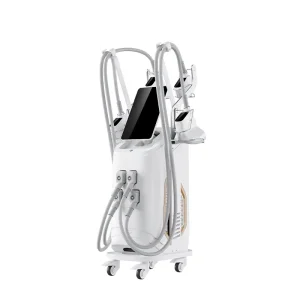
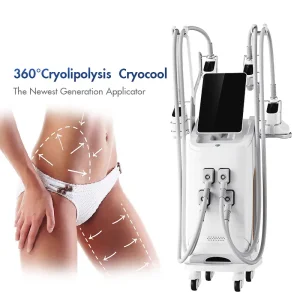
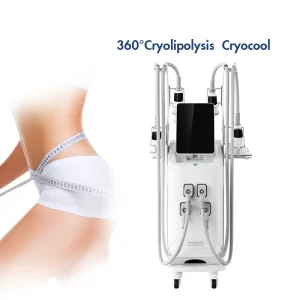
Traditional cooling applicators feature two flat metal plates placed on opposing sides of a plastic cup. This leaves significant "dead zones" along the curved edges of the vacuumed tissue where no direct thermal exchange occurs. 360° surround cooling technology utilizes an all-aluminum/copper conductive sleeve that covers 100% of the interior applicator surface. This ensures uniform temperature drop across the entire fat pocket, increases fat layer reduction per session from ~18% up to ~25%, and reduces treatment time by approximately 25%.
Why is a vertical chassis preferred over a portable desktop unit for commercial clinics?
▼
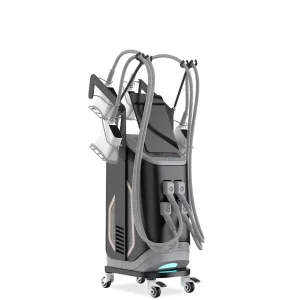
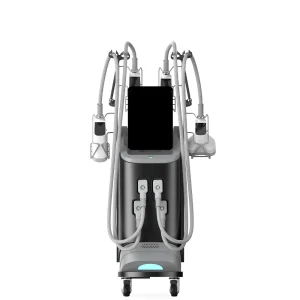
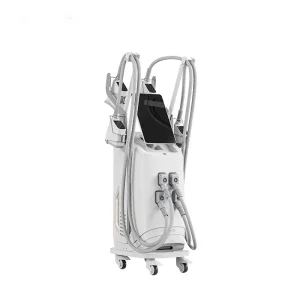
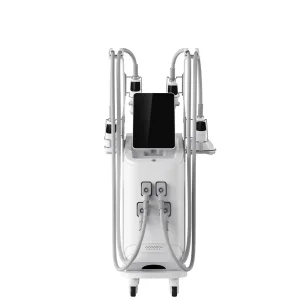
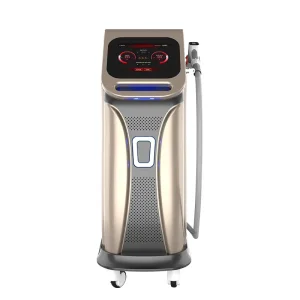
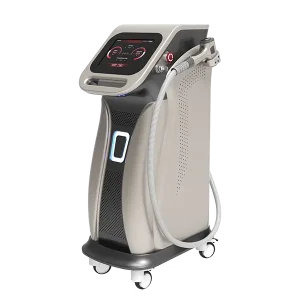
A vertical chassis provides the physical space required for high-capacity industrial components: dual independent refrigeration compressors, heavy-duty heat-exchange radiators, high-flow hydraulic pumps, and large 15L water/glycol reservoirs. Desktop units must compromise on compressor wattage and cooling fluid volume, which often leads to thermal degradation when running multi-handle treatments continuously throughout a busy clinical day. Vertical platforms are built for continuous 12-hour back-to-back patient scheduling.
Can all 4 cryolipolysis handles operate simultaneously at different temperature setpoints?
▼
Yes. SANO high-end vertical cryolipolysis machines feature independent power supply lines, separate vacuum pumps, and dedicated cooling fluid channels for each port. This architectural independence allows an operator to run Handle 1 on the abdomen at -11°C while simultaneously running Handle 2 and 3 on the outer thighs at -8°C, and Handle 4 on a submental chin treatment at -4°C, with zero cross-talk interference or vacuum pressure drops.
What anti-freeze protection measures are required to guarantee patient safety?
▼
Patient safety relies on a dual protection system: First, high-density professional anti-freeze membrane pads impregnated with specialized glycol-glycerin thermal buffer fluids MUST be placed over the skin prior to cup application. Second, the machine hardware incorporates embedded thermistor micro-sensors that continuously monitor tissue temperature. If skin contact temperature approaches unsafe freezing limits, the system triggers an intelligent pulse heating burst or automatically releases vacuum suction.
How many sessions are typically required, and when do patients see visible results?
▼
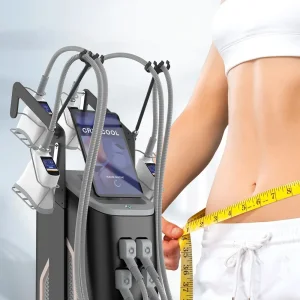
Most patients achieve dramatic clinical improvements within 1 to 3 sessions scheduled 6 to 8 weeks apart per targeted region. Initial fat layer softening and subtle contour changes become visible around day 20 to 30 following treatment, with peak circumferential reduction occurring between 60 and 90 days as macro-phages complete the clearance of apoptotic fat cell debris.
What maintenance protocols are required for long-term operational reliability?
▼
Routine maintenance for vertical cryolipolysis systems is minimal but essential for component longevity: 1) Replace internal distilled water/glycol coolant fluid every 3 to 6 months depending on usage volume; 2) Inspect and clean the liquid/gel trap filters daily to prevent anti-freeze membrane fluids from entering internal vacuum lines; 3) Clean air intake dust filters monthly to maintain peak radiator cooling efficiency.
What after-sales support and warranty coverage does SANO provide for overseas buyers?
▼
SANO provides a comprehensive 2-year factory warranty on all vertical cryolipolysis systems, backed by lifetime technical engineering support. In the event of a component failure, our engineering desk delivers real-time video diagnostics and dispatches free modular replacement parts (such as quick-connect pumps, power modules, or complete applicator assemblies) via fast international air express to minimize clinic downtime.