- +86 136 8127 5833
- [email protected]
- Shunyi, Beijing, China
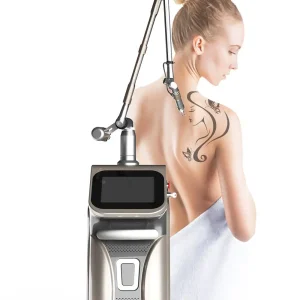
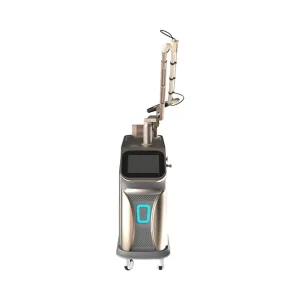
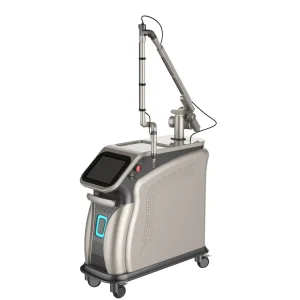
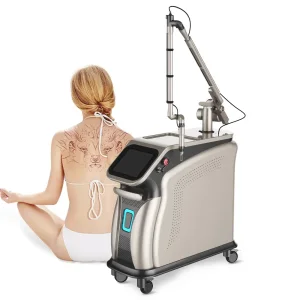
Engineered for high-volume commercial operation, providing sub-nanosecond pulse delivery, stable energy fluency, and minimal epidermal disruption.
The aesthetic laser market in Hanoi, Vietnam, is currently undergoing an unprecedented structural transformation. Driven by rapid urban economic expansion in districts such as Hoan Kiem, Ba Dinh, Cầu Giấy, and Nam Tu Liem, consumer demand for non-invasive cosmetic procedures has pivoted from traditional skincare salons toward advanced, medical-grade dermatological interventions. Central to this transition is the acute clinical requirement for efficient pigmentary management equipment tailored specifically to Northern Vietnamese skin phenotypes.
Northern Vietnamese populations predominantly possess Fitzpatrick Skin Types III, IV, and V. This biological demographic presents unique clinical challenges to medical practitioners and med-spa operators in Hanoi. The high density of epidermal and dermal melanin, coupled with prolonged exposure to tropical solar ultraviolet radiation (UV Index frequently exceeding 10+ in summer months), creates an elevated incidence of complex pigmentary disorders. Conditions such as recalcitrant Melasma, Nevus of Ota, Hori’s Macules (Acquired Bilateral Nevus of Ota-like Macules), post-inflammatory hyperpigmentation (PIH), and intricate multi-colored professional/amateur tattoos represent the primary clinical caseloads in Hanoi’s top dermatological institutes.
Clinical Insight for Hanoi Importers: Historical reliance on traditional nanosecond Q-switched Nd:YAG lasers (with pulse durations of 5 to 10 nanoseconds) frequently delivers excessive photothermal energy into the dermis. On Fitzpatrick Type IV and V skin, this thermal build-up leads to a high statistical rate of post-laser rebound hyperpigmentation or permanent hypopigmentation. Modern Hanoi clinics require ultra-short pulse picosecond technology that shatters pigment through photo-acoustic shockwaves rather than thermal heating.
Consequently, searching for a reliable OEM Vertical Picosecond Laser Manufacturer & Factory for the Hanoi market has become a vital strategic focus for Vietnamese medical device distributors, aesthetic equipment importers, and private hospital groups. B2B buyers require industrial-grade vertical chassis machines capable of continuous operation in humid tropical environments, backed by comprehensive OEM customization, localized technical support, and strict compliance with global quality standards.
To understand why vertical picosecond lasers outperform traditional desktop units or legacy Q-switched systems in Hanoi, one must analyze the physical interaction between laser photons and cutaneous chromophores. The fundamental principle governing laser-tissue interaction is selective photothermolysis, expanded by the concept of photo-acoustic breakdown.
When a laser pulse duration is shorter than the target chromophore's (melanosome or ink particle) stress relaxation time (typically under 1 nanosecond), the optical energy is absorbed so rapidly that the particle experiences thermal expansion before it can physically expand. This induces intense internal stress waves within the pigment crystal. Vertical picosecond lasers deliver energy in 300 to 450 picoseconds—roughly 100 times shorter than traditional Q-switched lasers. The result is pure photo-acoustic pressure fragmentation, reducing target pigments into micro-particulate "dust" rather than larger thermal fragments.
Because the pigment particles are pulverized into sub-micron sizes, the body's native immune system—specifically dermal macrophages and Langerhans cells—can engulf and transport the fragmented ink or melanin debris through the lymphatic drainage system at vastly accelerated rates. In clinical practice across Hanoi clinics, this translates into fewer total treatment sessions (e.g., 3-4 sessions for deep tattoo removal instead of 10-12 sessions with nanosecond lasers) and significantly shortened recovery intervals between sessions.
| Technical Parameter | Traditional Nanosecond Q-Switched | Standard Desktop Pico Laser | SANO Vertical OEM Picosecond System |
|---|---|---|---|
| Pulse Duration | 5 ns – 10 ns | 800 ps – 1.5 ns | 350 ps – 450 ps (True Picosecond) |
| Primary Mechanism | Photo-Thermal (High Heat) | Hybrid Photo-Thermal | Photo-Acoustic Shockwave |
| Peak Energy Output | 400 mJ – 800 mJ | 600 mJ – 1000 mJ | Up to 2000 mJ (Dual Cavity Rods) |
| Beam Profile | Gaussian (Hotspots) | Semi-Gaussian | Flat-Top Top-Hat Beam |
| Cooling Infrastructure | Basic Radiator / Air | Small Water Tank | Industrial Closed-Loop TEC + Dual Radiator |
| PIH Risk on Fitzpatrick IV-V | High (25% - 35%) | Moderate (10% - 15%) | Extremely Low (< 2%) |
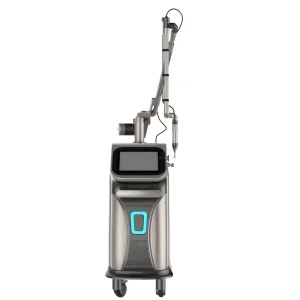
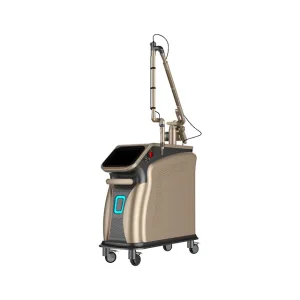
Equipped with imported 7-joint articulated light guide arms featuring 360-degree rotation, minimal energy loss (<5%), counterweight balance, and extreme beam alignment precision for effortless practitioner handling during multi-hour clinical sessions.
Built with double laser rods and high-intensity xenon flashlamps wired in series or parallel, enabling maximum peak power burst capability while ensuring long-term optical energy stability across millions of shot discharges.
Complete custom software engineering for Vietnamese equipment distributors, including localized Vietnamese language graphical user interfaces (GUI), pre-programmed clinical parameters for skin types III-V, and logo branding.
For medical equipment trading companies in Hanoi, sourcing directly from a vertically integrated laser manufacturer in China provides unmatched strategic advantages. Hanoi’s geographical proximity to major manufacturing hubs in Beijing and Guangdong enables expedited multimodal logistics. Equipment can be shipped efficiently via land transport (through the Huu Nghi / Lang Son border gate) or maritime freight to Hai Phong Port, drastically cutting transit times to 3–7 days compared to 30+ days from European or American suppliers.
Furthermore, China's mature high-tech manufacturing ecosystem allows SANO to integrate top-tier global components—such as semiconductor pump diodes, German water pumps, and Korean optical arms—at an unbeatable cost-to-performance ratio. Hanoi distributors can deliver world-class medical equipment to local clinics at competitive price points while maintaining robust profit margins.
Modular handpieces and multi-wavelength capabilities (1064nm, 532nm, 585nm, 650nm, fractional MLA) enable treatment versatility across all skin concerns.
Clinical Focus: Melasma, Freckles, Solar Lentigines, Ota/Hori Nevus.
Utilizing the 1064nm wavelength with Micro-Lens Array (MLA) fractional handpieces, practitioners in Hanoi can generate Laser-Induced Optical Breakdown (LIOB) in the dermis without disrupting the stratum corneum. This stimulates intense collagen remodeling and elastin synthesis while shattering dermal pigment, offering safe treatment for delicate Asian skin phototypes.
Clinical Focus: Dark black, blue, red, yellow, and green pigments.
Multi-wavelength switching allows total spectrum coverage. 1064nm targets deep black/blue inks; 532nm targets superficial red and orange inks; specialized 585nm and 650nm dye handpieces effectively clear stubborn green and sky-blue ink compositions commonly encountered in cover-up body art.
Clinical Focus: Seborrheic skin, enlarged pores, acne scars, urban pollution dullness.
Hanoi’s high humidity and urban traffic environment contribute to elevated skin sebum secretion and pore congestion. The 1064nm quasi-long pulse mode combined with nanometer carbon lotion penetrates deep into pilosebaceous units, vaporizing debris, refining enlarged pores, and neutralizing active inflammatory acne.
Clinical Focus: Fine lines, post-acne boxcar scars, overall texture refinement.
The high-peak-power picosecond shockwave generates intra-epidermal vacuolization. This triggers tissue healing pathways without open wounds, allowing patients in Hanoi to return to work immediately with zero downtime and minimal sun sensitivity.
Detailed technical, regulatory, and commercial insights for medical device buyers in Vietnam.
Vertical picosecond systems house larger industrial-grade power supplies (typically 2000W to 3000W), heavy-duty dual YAG laser cavities, and high-volume closed-loop water cooling tanks with TEC refrigeration units. This ensures uninterrupted 12-hour continuous operation without thermal throttling, maintaining constant energy output shot after shot during busy clinical schedules in Hanoi.
SANO provides a full regulatory technical dossier, including ISO13485 medical factory certification, CE compliance documentation, test reports, schematic diagrams, and bilingual instruction manuals necessary for obtaining medical device import licenses and registration certificates from the Vietnam Ministry of Health.
Hanoi experiences extremely high humidity and temperatures during summer months. SANO vertical picosecond platforms feature sealed optical paths with internal desiccant circulation, gold-coated optical mirrors to prevent oxidation, and smart TEC cooling systems that prevent condensation from forming on optical crystals and flashlamps.
We support end-to-end white-label manufacturing: custom sheet-metal chassis painting (matching brand color codes), acrylic shell redesigns, customized software startup logos, UI language translation into Vietnamese, branded outer flight-case packaging, and custom handpiece design.
Our premium imported xenon flashlamps are rated for up to 10,000,000 shots under standard operating parameters. Quick-connect modular designs allow localized engineers or trained clinic staff in Hanoi to replace lamp cartridges or handpieces easily within minutes, ensuring maximum machine uptime.
All platforms are fully customizable for OEM/ODM partners in Hanoi, backed by a 2-year factory warranty and lifelong technical support.
Expand your product portfolio with industry-leading OEM/ODM vertical picosecond laser systems. Request a factory quote, technical catalog, and sample demonstration today.
Send Inquiry Now