- +86 136 8127 5833
- [email protected]
- Shunyi, Beijing, China
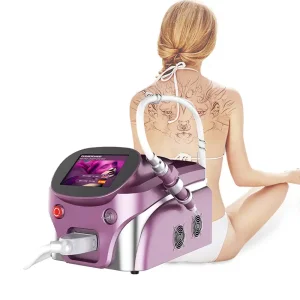
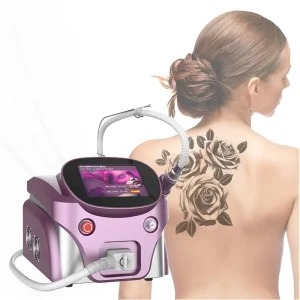
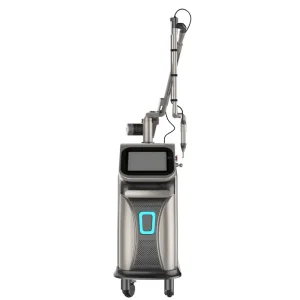
Engineered to medical-grade CE standards. Explore our core portable platforms for tattoo removal, hyperpigmentation clearance, and dermal remodeling.
Understanding the macroeconomic drivers, clinical demand shifts, and equipment deployment metrics reshaping modern laser dermatology.
The global tattoo removal market is expanding at a CAGR of 9.6%, driven by "regret metrics" among millennials and the demand for rapid clearing protocols without scar formation.
Compact, benchtop, and portable form-factors have lowered capital expenditure entry barriers by up to 60%, allowing independent medspas and mobile aesthetic nurses to offer clinical-grade treatments.
Beyond multi-colored tattoo removal, over 55% of portable picosecond devices are now deployed for melasma, post-inflammatory hyperpigmentation (PIH), and skin texture revitalization using Micro-Lens Array (MLA) handpieces.
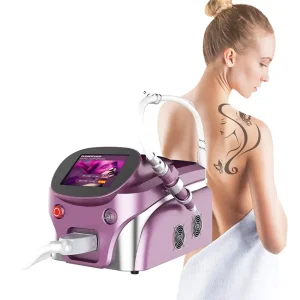
As a leading Portable Picosecond Tattoo Removal Manufacturer & Supplier, Beijing SANO Laser Development S&T Co., Ltd. observes an accelerating shift toward decentralized aesthetic practices. Medical spa franchisees, dermatological clinics, and aesthetic practitioners across North America, Western Europe, and the Asia-Pacific region demand high-peak-power, solid-state lasers engineered into compact, transportable chassis without sacrificing energy stability or spatial beam quality.
Empirical technical parameters governing genuine picosecond optical emission performance.
A rigorous examination of laser-tissue interactions, chromophore excitation dynamics, and pressure wave propagation within the dermal matrix.
To evaluate why portable picosecond lasers outperform legacy nanosecond Q-switched systems, one must analyze the physical mechanisms governing selective photothermolysis versus stress confinement photomechanical shattering.
The principle of selective photothermolysis, originally formulated by Anderson and Parrish, states that target chromophores can be selectively targeted by emitting laser energy at a pulse duration shorter than or equal to the target's Thermal Relaxation Time ($t_r$). However, exogenous tattoo ink particles and cellular melanosomes exhibit dimensions ranging from 10 to 100 nanometers. Their corresponding Stress Relaxation Time ($t_s$) is significantly shorter—typically below 1 nanosecond (1000 picoseconds).
Nanosecond pulses ($3 \times 10^{-9}\text{s}$ to $10 \times 10^{-9}\text{s}$) exceed the Stress Relaxation Time of fine ink granules. Energy delivery causes thermal accumulation, expanding ink granules into larger fragments through thermal diffusion. This generates substantial heat transfer to adjacent collagen fibrils, elevating the risk of scarring, blister formation, and dyspigmentation.
Picosecond pulses ($300 \times 10^{-12}\text{s}$ to $600 \times 10^{-12}\text{s}$) deliver energy rapidly within the Stress Relaxation window. This induces acoustic wave formation, building stress transients exceeding $10^9\text{ Pa}$. The ink particles undergo intense photomechanical acoustic shock, pulverizing granules into micro-dust that is rapidly cleared by macrophage phagocytosis.
The comparative engineering baseline below highlights why premium medical distributors specify true picosecond architecture over pseudo-pico or boosted nanosecond systems:
| Engineering Parameter | Traditional Q-Switched Nd:YAG | Portable Picosecond Laser (SANO Standard) | Clinical / OEM Benefit |
|---|---|---|---|
| Pulse Width Range | 5 ns – 20 ns (Nanoseconds) | 350 ps – 600 ps (Picoseconds) | Sub-nanosecond confinement prevents thermal injury. |
| Dominant Mechanism | Photothermal (Heat Accumulation) | Photomechanical (Pressure Shockwave) | Dust-like fragmentation of recalcitrant inks. |
| Peak Energy Power | 0.15 GW – 0.3 GW | 1.5 GW – 2.5 GW | High photon fluence shatters resistant ink shades. |
| Average Treatment Sessions | 10 to 16 Sessions | 4 to 7 Sessions | Doubles clinic turnaround and patient satisfaction. |
| Risk of Scarring / PIH | Moderate to High (Skin Type IV-VI) | Extremely Low (Safe for all Fitzpatrick) | Safe treatment profile across diverse skin phototypes. |
| Supported Wavelengths | 1064nm / 532nm | 1064nm / 532nm / 585nm / 650nm / 755nm | Total clearance spectrum across full color spectrums. |
How SANO Laser miniaturizes high-voltage power supplies, optical cavities, and liquid-cooling networks into compact desktop form-factors.
Our portable chassis incorporates tandem Nd:YAG laser rods within a gold-plated diffuse reflector cavity. This doubles energy gain while balancing thermal focal lensing under high-frequency operation.
To eliminate energy loss common in fiber optic cables, SANO offers integrated high-transmission articulated optical delivery arms, preserving polarization state and spot uniform top-hat distribution.
Portable units frequently suffer from thermal shutdown. Our custom TEC (Thermoelectric Cooler) and high-flow radiator subsystem maintains deionized cooling liquid at 22°C–28°C under continuous duty cycles.
Internal optical photodiodes monitor output fluence pulse-by-pulse, automatically adjusting high-voltage discharge to ensure consistent energy delivery across long clinical sessions.
Engineers designing portable aesthetic laser hardware face a constant compromise between physical footprint and electro-optical thermal stability. SANO Laser resolves this through modular architecture: isolating high-voltage power electronics from sensitive optical resonators, shielding high-speed electro-optic Q-switches (Pockels cells) against vibration, and utilizing aviation-grade alloy frames to maintain optical alignment during transport.
Maximizing clinical efficacy and return on investment by combining portable picosecond lasers with synergistic aesthetic technologies.
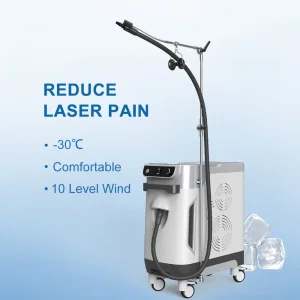
Combining 1064nm picosecond treatment with continuous -30°C cold air refrigeration reduces epidermal thermal load, completely eliminates topical anesthesia requirements, and prevents vascular edema.
Applying nano-activated carbon lotion prior to 1064nm picosecond pulse emission generates explosive micro-cavitation inside sebaceous glands, tightening enlarged pores and treating active acne vulgaris.
Micro-Lens Array handpieces split the raw beam into hundreds of high-fluence micro-dots, inducing Laser-Induced Optical Breakdown (LIOB) in the dermis without disrupting the stratum corneum.
Deploying portable picosecond laser hardware across diverse regional healthcare systems and regulatory environments.
In established clinical practices across North America and Europe, portable picosecond systems serve as ideal secondary units for satellite offices or dedicated express tattoo removal suites. Their compact footprint enables seamless mobility between treatment bays without recalibration downtime.
For international medical distributors and brand owners, navigating regional medical device regulations is paramount. SANO Laser provides end-to-end manufacturing compliance documentation supporting global market entry.
Pioneering advancements in electro-optics, artificial intelligence, and sub-picosecond laser science.
R&D efforts are focused on pushing commercial pulse durations below 100 picoseconds. Reducing pulse duration enhances photomechanical pressure gradients, eliminating residual heat while expanding efficacy against ultra-fine particulate inks.
Integrating high-resolution multispectral cameras into handpiece optics. Neural networks analyze skin tone, depth of ink pigment, and capillary density in real time, auto-adjusting pulse energy, spot diameter, and repetition rates.
Replacing bulky optical parametric oscillators (OPO) with solid-state tunable crystal optics. Future portable platforms will emit continuous spectrum selections between 500nm and 1100nm from a single compact cavity.
In-depth technical and commercial answers from SANO Laser's senior engineering team and clinical specialists.
The fundamental distinction lies in pulse duration compression and peak acoustic power. Tabletop Q-switched lasers operate in the nanosecond range ($5-10\text{ns}$), utilizing photothermal energy to heat and expand pigment particles. A true portable picosecond laser compresses pulse duration down to sub-nanosecond levels ($350-600\text{ps}$), delivering high peak power that generates pure photomechanical shockwaves. This shatters pigment into microscopic particles with negligible heat dissipation into adjacent tissue.
Our engineering team utilizes a dual-stage thermal management architecture. High-efficiency micro-channel radiator loops pair with semiconductor TEC Peltier cooling blocks to lock internal water temperature between 22°C and 28°C. On the electro-optical side, custom high-capacitance semiconductor pulse power supplies maintain constant discharge voltage, guaranteeing energy output stability within ±1% across extended continuous operation.
Yes, particularly when utilizing the 1064nm fundamental wavelength. Because 1064nm features lower epidermal melanin absorption compared to 532nm or 755nm, and because the picosecond pulse width operates faster than epidermal melanin's Thermal Relaxation Time, thermal transfer to the epidermis is virtually eliminated. This drastically reduces the risk of Post-Inflammatory Hyperpigmentation (PIH) and hypopigmentation on darker skin tones.
SANO portable picosecond systems incorporate premium xenon flashlamps rated for over 3,000,000 discharges under standard clinical operating conditions. Our high-gain Nd:YAG laser rods are vacuum-sealed in gold-plated optical cavities, preventing degradation from moisture or dust ingress and ensuring consistent output for years of continuous practice.
As a direct manufacturer, SANO provides full OEM/ODM services including custom chassis industrial design, injection mold fabrication, bespoke color schemes, multi-language UI software development, custom parameter preset programming, logo screen-printing, and branded transport cases. Additionally, we provide complete technical files supporting localized regulatory registrations.
All SANO systems ship with a 2-year comprehensive factory warranty covering core electro-optical components, laser power supplies, and optical handpieces. We offer 24/7 direct video support with certified optical engineers, rapid spare part dispatch from international hubs, and comprehensive clinical training materials to ensure complete operational success.
Complete your clinical treatment offerings with our range of energy-based aesthetic systems.