- +86 136 8127 5833
- [email protected]
- Shunyi, Beijing, China
Engineered for high-throughput dermatological clinics in San José, Escazú, and regional medical tourism hubs.
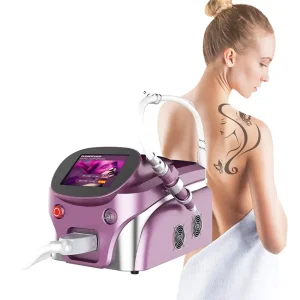
The global medical aesthetic device market has undergone a paradigm shift, transitioning rapidly from conventional nanosecond thermal ablation toward ultrashort picosecond photoacoustic fragmentation. In Central America, Costa Rica has emerged as the premier nexus for medical tourism and advanced dermatological care. Anchored by world-class private clinical networks in the Gran Área Metropolitana (GAM)—specifically Escazú, Santa Ana, and San José—the regional demand for high-reliability tattoo removal, pigment clearance, and dermal restructuring technology has experienced an unprecedented compound annual growth rate (CAGR) exceeding 14.2% over recent fiscal cycles.
Unlike standard consumer markets, Costa Rica’s aesthetic market is uniquely dual-faceted. On one front, it caters to a sophisticated domestic demographic seeking body modification updates, cosmetic corrections, and age-defying skin therapies. On the other front, international medical tourists—primarily from North America and the Caribbean—leverage Costa Rica's internationally accredited clinics (JCI accredited facilities) for affordable yet cutting-edge laser treatments. This dynamic creates an urgent operational requirement for local clinics: the mandatory adoption of medical-grade laser hardware that provides high energy stability, zero downtime, and safe efficacy across diverse skin phototypes.
Crucially, Costa Rica's geographic positioning near the equator exposes its population to high cumulative solar radiation (UV Index frequently exceeding 11+). This environmental variable significantly increases baseline epidermal melanin activation among local patients, who predominantly present with Fitzpatrick Skin Phototypes III through V. Traditional nanosecond laser modalities present elevated risks of post-inflammatory hyperpigmentation (PIH) and hypopigmentation when applied to tanned or melanated skin. Consequently, Costa Rican clinic directors, plastic surgeons, and dermatological equipment distributors are shifting capital expenditure toward high-peak-power Picosecond Nd:YAG and Alexandrite platforms capable of inducing selective photothermal-to-photoacoustic energy conversion without overheating surrounding tissue structures.
Understanding the physics of ink clearance is essential for evaluating tattoo removal manufacturers supplying the Costa Rican market. The selective photothermolysis of tattoo pigments depends strictly on matching the laser energy's spatial and temporal parameters with the target chromophore's thermal relaxation time (TRT). Exogenous ink particles suspended within dermal macrophages typically possess a relaxation time of less than 1 nanosecond.
Ultrashort picosecond pulses deposit massive energy within trillionths of a second, inducing acoustic stress waves that shatter ink into dust-like micro-particles digestible by lymphatic systems.
By bypassing prolonged thermal exposure, picosecond technology minimizes thermal diffusion into surrounding dermal structures, virtually eliminating blistering and scarring risks on darker phototypes.
Integrating dual-stage Nd:YAG crystals delivering 1064nm (black/blue ink), 532nm (red/orange), and optional 755nm/650nm (green/teal) wavelengths for full-spectrum ink clearance.
To assist Costa Rican procurement managers, biomedical engineers, and aesthetic franchise owners, the following technical matrix outlines the key performance indicators (KPIs) separating commercial grade laser hardware:
| Technical Parameter | Legacy Nanosecond Q-Switched | Professional Picosecond (SANO Medical) | Clinical Advantage for Costa Rica |
|---|---|---|---|
| Pulse Duration (FWHM) | 5 ns – 20 ns | 375 ps – 550 ps | Pure photomechanical impact; no heat accumulation. |
| Peak Power Output | 0.2 – 0.5 Gigawatts | 1.5 – 3.0 Gigawatts | Shatters stubborn recalcitrant ink deposits effortlessly. |
| Beam Profile & Optics | Gaussian / Uneven Energy Distribution | Homogeneous Flat-Top (Top-Hat) Beam | Eliminates hot spots, preventing pin-point bleeding & scarring. |
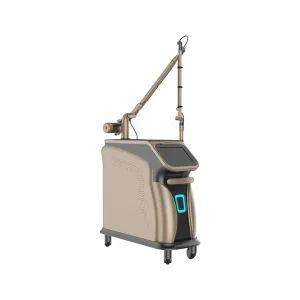
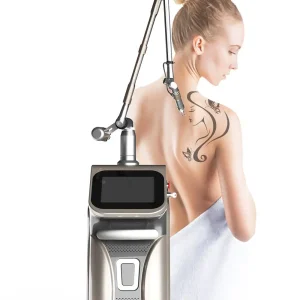
| Articulated Delivery Arm | Direct optical fiber or 5-joint arm | Imported Korean 7-Joint Counter-Balanced Arm | Minimal optical energy loss (< 5%), precise ergonomic maneuvering. |
| Cooling Integration | Basic Radiator Water Loop | Dual-Cycle Freon Compressor + TEC Semiconductor | Maintains continuous 24/7 operation in humid Costa Rican climates. |
| Target Inks Cleared | Standard carbon ink only | Full spectrum: recalcitrant green, blue, red, brown, black | Enables clinics to market complete multicolor removal services. |
Deploying aesthetic laser systems in Costa Rica requires a nuanced understanding of environmental, regulatory, and commercial variables unique to Central America. Manufacturers providing equipment to San José, Alajuela, Heredia, and coastal tourist centers like Guanacaste must engineer hardware capable of withstanding distinct localized stress factors.
Costa Rica’s tropical maritime climate features relative humidity levels routinely between 80% and 95%. High ambient moisture poses severe condensation risks to high-voltage laser power supplies and optical Pockels cells. SANO’s export-grade laser chassis feature sealed optical paths with desiccated nitrogen purges and internal thermostatic heating elements to prevent moisture degradation. Furthermore, local electrical grids in Central America often experience voltage fluctuations (±15%). SANO systems integrate wide-input (110V/220V automatic switching) industrial power supplies equipped with heavy-duty solid-state capacitors, safeguarding sensitive laser rods from voltage spikes.
Importing medical aesthetic devices into Costa Rica requires compliance with the Ministry of Health (Ministerio de Salud de Costa Rica). Importers and clinic owners must verify that their manufacturing partners supply comprehensive technical dossiers, ISO 13485 quality management certifications, CE medical marks, and safety test reports (IEC 60601-1 / IEC 60601-2-22). SANO provides complete OEM/ODM technical documentation to streamline the local registration process for distributor partners across Latin America.
For practice administrators in Escazú or Jacó, acquiring a dedicated picosecond workstation must yield quantifiable financial returns. With average patient pricing for tattoo removal in Costa Rica ranging between $120 USD to $350 USD per session depending on tattoo surface area, a clinic utilizing a high-reliability SANO platform processing 4 to 6 patients per day can fully amortize their capital equipment investment within 4 to 6 months of operation.
Partner directly with Beijing Sano Laser Development S&T Co., Ltd. for factory-direct wholesale pricing, OEM custom branding, 2-year comprehensive warranties, and lifetime technical support.
Request Factory Quotation & CatalogExpert answers regarding technical procurement, clinical parameters, and international shipping logistics.
From diode laser hair removal to multi-functional Nd:YAG platforms, inspect our complete CE-compliant manufacturing range.
Contact our senior biomedical engineering desk today for direct factory quotes, technical specifications, OEM custom customization, and Latin America regional shipping schedules.
Send Inquiry Now