- +86 136 8127 5833
- [email protected]
- Shunyi, Beijing, China
Explore our flagship aesthetic laser, slimming, and diagnostic platforms engineered for high-precision clinical performance and full OEM/ODM enterprise customization.
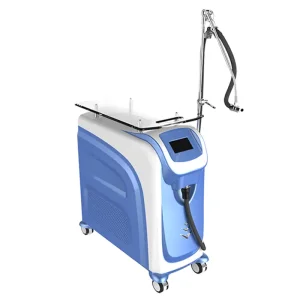
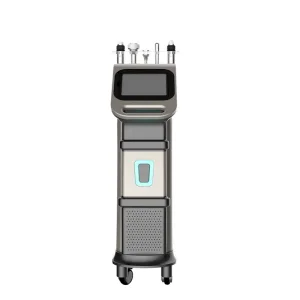
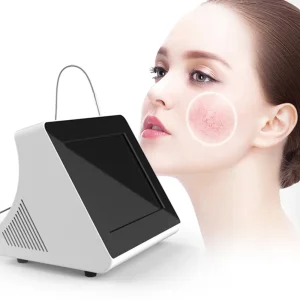

The global medical aesthetics and dermatological diagnostic sector is undergoing a profound paradigm shift. Legacy 2D planar skin imaging systems—which relied on single-wavelength RGB illumination and qualitative visual inspection—are rapidly being phased out by sophisticated enterprise-grade OEM 3D Facial Skin Analyzer Factories & Factory engineering platforms. Modern clinical practice demands quantitative volumetric metrics, sub-surface chromatic mapping, and automated deep learning diagnostic engines to validate pre- and post-treatment efficacy.
In high-throughput medical spas, dermatological clinics, and global cosmetic R&D hubs, an automated 3D facial skin analyzer serves as the primary gateway for patient consultation, treatment planning, and clinical conversion. By replacing subjective skin scoring with objective, calibrated physical data, clinics elevate trust, minimize diagnostic error, and optimize protocol customization across modalities such as 808nm diode hair removal, CO2 fractional laser resurfacing, HIFU SMAS lifting, and microneedle fractional radiofrequency (RF).
Simultaneous optical extraction of epidermal melanin, sub-dermal hemoglobin vascular mapping, and deep porphyrin fluorescence via calibrated cross-polarized and ultraviolet (365nm) lighting channels.
High-speed structured light projection computes micron-level 3D spatial geometry, quantifying facial volume loss, deep wrinkle depths, pore volume, and structural sagging across 36 facial sub-zones.
Convolutional Neural Networks (CNNs) trained on millions of dermatological images classify acne severity, vascular lesions, hyperpigmentation, and biological skin age with clinical precision.
An authentic premier OEM 3d Facial Skin Analyzer Factory must master both optical hardware physics and computational algorithms. Skin is an optically complex, multi-layered turbid medium characterized by photon scattering, absorption, and surface specular reflection. To isolate sub-surface dermatological anomalies, modern diagnostic hardware incorporates proprietary multi-spectral lighting arrays.
By employing high-CRI (Color Rendering Index > 95) LEDs coupled with linear polarizing filters set at orthogonal angles (90° cross-polarization), specular glare from the stratum corneum is entirely eliminated. This exposes deep dermal structures including telangiectasia, melasma, and underlying dermal collagen network integrity that remain invisible under standard ambient room lighting.
| Light Spectrum Modality | Wavelength Range | Target Chromophore / Structure | Diagnostic Clinical Output |
|---|---|---|---|
| Standard RGB Natural Light | 400 nm - 700 nm | Stratum Corneum Surface | Surface texture, open pores, visible fine lines, and gross skin tone uniformity. |
| Cross-Polarized Light (CPL) | 520 nm - 640 nm | Dermal Hemoglobin & Melanin | Sub-surface spots, vascular erythema, telangiectasia, and hidden pigmentation. |
| Parallel-Polarized Light (PPL) | 450 nm - 680 nm | Surface Micro-Relief | Skin smoothness, pore depth elevation profiles, and superficial skin scaling. |
| Ultraviolet Light (UV) | 365 nm (Peak) | Porphyrins & Free Fatty Acids | Propionibacterium acnes bacterial activity, deep UV spot damage, and sebum distribution. |
| Wood's Digital Light | 365 nm - 395 nm | Epidermal/Dermal Junction | Dyschromia differentiation, chloasma depth, vitiligo delineation, and hydration mapping. |
In tandem with multi-spectral light engines, 3D volumetric depth quantification uses high-precision phase-shifting fringe projection. A calibrated micro-projector casts sinusoidal light grids onto the patient's face while twin ultra-high-resolution industrial CMOS sensors capture surface distortion. The result is a dense point-cloud rendering that builds a 3D digital twin of the patient's facial contour down to micron scales.
The global supply chain for aesthetic equipment is experiencing hyper-consolidation. Distributors, medical equipment brands, and aesthetic chains require reliable OEM 3d Facial Skin Analyzer Factories that can deliver high-volume production, rigorous quality assurance, and ongoing software feature enhancements without inflating acquisition costs.
Leading manufacturing hubs—notably located in specialized industrial technology zones in Beijing (such as Shunyi District), Shenzhen, and Guangzhou—possess unmatched vertical supply chain integration. From precision optical lens grinding to high-grade industrial metal fabrication and SMT circuit board assembly, Chinese OEM facilities deliver unparalleled economies of scale.
For medical aesthetic chain operators in North America and Western Europe, procuring diagnostic equipment directly from certified OEM factories reduces capital expenditure by 40% to 65% compared to local legacy brands. Higher profit margins allow distributors to package 3D analyzers seamlessly alongside premium therapeutic hardware like 4D HIFU, Picosecond lasers, and EMS body sculpting devices.
Global adoption trends reveal that clinics utilizing high-precision 3D diagnostic skin analyzers observe a 38% increase in treatment plan conversion. When patients visualize their sub-dermal vascular damage or projected aging metrics in full 3D, their willingness to commit to long-term therapeutic regimens—such as multi-session diode laser vascular removal or microneedling RF treatments—increases substantially.
A major differentiator for a world-class OEM 3d Facial Skin Analyzer Factory lies in its capability to offer full-stack customization across hardware engineering, firmware customization, software user experience, and cloud API integration.
Custom sheet metal molding, customized chassis paint finishes, ergonomically optimized chin-rests, and integrated motorized hood assemblies tailored to client brand identity.
Selection of high-resolution Sony/OmniVision CMOS sensors (20MP to 36MP), customized optical lens coatings, and specialized narrow-band LED array configurations.
Custom Android/Windows diagnostic software suites featuring proprietary branding, multi-language localization (20+ languages), and customized clinical reporting templates.
Open RESTful APIs and local SDKs allowing seamless data synchronization with clinic management software (EHR/CRM), cloud databases, and iOS/Android mobile apps.
The application of 3D facial skin diagnostic platforms extends across multiple professional environments, each demanding distinct operational workflows and feature prioritization.
In clinical dermatology setups, 3D skin analysis platforms serve as objective diagnostic tools for monitoring pathological conditions including rosacea, melasma, actinic keratosis, and post-surgical scar remodeling. Quantitative depth profiling allows dermatologists to precisely measure collagen generation following RF microneedling or CO2 fractional laser resurfacing treatments.
For aesthetic spa chains, the system operates as an interactive sales catalyst. By generating visually compelling side-by-side 3D skin comparisons and age simulation models, practitioners can demonstrate treatment efficacy over 3-to-6-month protocols. This objective validation significantly enhances client retention and boosts recurring skincare product sales.
Cosmeceutical manufacturers utilize 3D facial skin diagnostic platforms in double-blind clinical trials to evaluate the efficacy of novel topical formulations, anti-aging serums, and barrier repair creams. High-precision skin hydration mapping and sebum secretion metrics supply reproducible data required for regulatory dossier submissions.
Compact, desktop OEM skin analyzers equipped with touchscreens and cloud integration provide luxury beauty retail counters with instant skin diagnostics. Automated product recommendation engines pair identified skin concerns directly with specific brand SKUs in real time.
Navigating global regulatory landscapes is paramount for distributors importing aesthetic diagnostic machinery. A credible OEM 3d Facial Skin Analyzer Factory must adhere to rigorous international quality management standards and data privacy mandates.
Production lines must operate under strict ISO 13485 Medical Device Quality Management Systems. Hardware designs undergo rigorous testing to ensure CE MDR compliance, electrical safety (IEC 60601-1), and electromagnetic compatibility (EMC).
Patient facial imagery and biometric diagnostic reports constitute Protected Health Information (PHI). Software architectures feature AES-256 bit end-to-end cloud encryption, localized server storage options, and strict GDPR consent workflows.
Every diagnostic unit undergoes automated optical spectrum calibration using standardized color targets and phantom skin models prior to factory dispatch, ensuring long-term measurement consistency across different environmental lighting conditions.
The next decade of skin diagnostic engineering will be defined by the convergence of real-time 3D optical rendering, generative artificial intelligence, and personalized predictive dermatological modeling.
Next-generation AI engines utilize generative adversarial networks (GANs) to project facial aging vectors over 5, 10, and 15 years, while accurately modeling the preventive impact of targeted laser and injectable interventions.
Hyper-resolution photogrammetry enables the creation of real-time 3D facial digital twins, allowing practitioners to simulate aesthetic surgical modifications, filler placement, and volumetric tissue lifts prior to clinical execution.
Transitioning from multispectral to full hyperspectral imaging (400nm - 1000nm), allowing non-invasive optical biopsy of dermal oxygen saturation, tissue hydration gradient levels, and early-stage cellular atypia detection.
In-depth technical answers addressing critical considerations for distributors, brands, and clinic network buyers evaluating OEM 3D facial skin analyzer manufacturing partners.
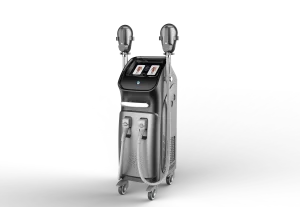
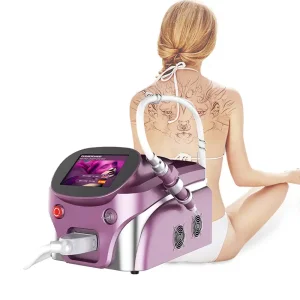
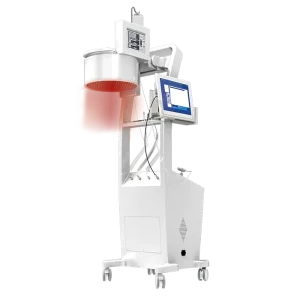
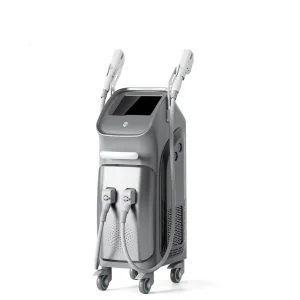
Discover our expanded lineup of high-intensity muscle building, specialized laser hair removal, fractional resurfacing, and hair growth therapy systems.