- +86 136 8127 5833
- [email protected]
- Shunyi, Beijing, China
Explore high-performance systems manufactured under certified ISO 13485 environments, featuring precision thermal delivery, customizable software, and modular architecture designed for global clinical distribution.
The global market for non-invasive fat reduction and body contouring has undergone a structural paradigm shift over the past decade. Among the various non-surgical modalities—including High-Intensity Focused Ultrasound (HIFU), Radiofrequency (RF), and High-Intensity Electromagnetic Field (HI-EMT) therapy—Cryolipolysis (Cryo Sculpting) remains the clinical gold standard for localized subcutaneous adipose tissue reduction. The underlying physiological mechanism relies on controlled cold-induced apoptosis of adipocytes without causing thermal trauma to surrounding vascular, neural, or dermal tissues.
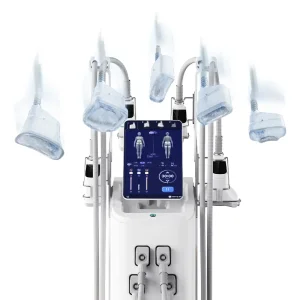
As global demand from medical spas, dermatology clinics, and aesthetic distributors accelerates, China has solidified its position as the world's primary research, development, and manufacturing hub for advanced Cryo Sculpting equipment. Leading Chinese original equipment manufacturers (OEMs) and original design manufacturers (ODMs) have transitioned from basic mechanical assembly to state-of-the-art biomedical engineering. Modern manufacturing ecosystems integrate medical-grade Semiconductor Peltier cooling systems, intelligent real-time thermal monitoring algorithms, multi-channel dynamic vacuum pressure controls, and ergonomic 360-degree surround-cooling applicators.
Information Gain Insight: Traditional cryo devices utilized dual two-plate cooling methods, leaving up to 60% of the treatment cup thermally inactive. Advanced Chinese OEM factories have engineered 360-degree all-dimension cooling applicators, reducing treatment duration from 60 minutes to 35 minutes while increasing clinical fat cell clearance by over 18%.
When sourcing medical-grade body slimming equipment from Chinese manufacturers, enterprise procurement directors and distributors must evaluate core technological sub-systems. Quality differentiation lies in internal component sourcing, thermodynamic efficiency, and patient safety protection hardware.
Premium factories utilize imported Japanese thermo-electric cooling chips combined with custom copper heat dissipation radiators. This configuration maintains continuous target cooling temperatures (-11°C to -15°C) with less than 0.5°C thermal drift during high-load clinical operation.
Patient safety hinges on anti-frostbite hardware design. Modern Chinese manufacturing platforms embed dual thermal sensors directly into every applicator cup. Intelligent real-time feedback loops instantly cut off power if surface skin temperatures drop below pre-set safety thresholds.
To eliminate post-treatment ecchymosis and tissue bruising, advanced platforms replace crude binary vacuum pumps with German-engineered proportional suction valves. Suction pulses are dynamically modulated across 10 distinct pressure levels (10 kPa to 80 kPa).
| Engineering Parameter | Tier-1 OEM/ODM Manufacturers | Low-Cost Assembly Workshops |
|---|---|---|
| Cooling Technology | 360° Full-Surface Contact Aluminium-Silicon Applicators | Legacy Dual-Plate Plastic Cups (Partial Contact) |
| Temperature Control | Dual NTC Sensors per cup; ±0.2°C accuracy | Single mechanical thermistor; ±2.0°C thermal fluctuation |
| Peltier Chip Sourcing | Imported High-Density Semiconductor Modules | Low-grade domestic commercial Peltier units |
| Vacuum Systems | German Vacuum Pump + Dynamic Massage Pulse modes | Unregulated continuous suction pump (High bruise risk) |
| Applicator Versatility | 7-8 Interchangeable Contour Heads (Double Chin to Thigh) | 1 or 2 Fixed size applicators |
| Software Architecture | Android-based IoT system with Client Data Management | Basic 8-bit MCU micro-controller interface |
Global buyers purchasing aesthetic hardware from Chinese factories face a complex decision matrix involving regulatory compliance, supply chain transparency, Total Cost of Ownership (TCO), and Return on Investment (ROI). Medical device procurement officers should look beyond initial unit cost and focus on long-term hardware reliability, failure rate metrics, and after-sales logistics support.
Leading Chinese manufacturers offer full turn-key customization. This includes custom structural casing design, corporate color matching, screen graphic user interface (GUI) localization in over 15 languages, and firmware locking mechanisms to protect distributor regional territory rights.
Importing medical aesthetic equipment into stringent markets such as the European Union, North America, LATAM, and the Middle East requires rigorous documentation. Established Chinese manufacturers maintain comprehensive technical dossiers to streamline customs clearance and local medical device registration.
Modern aesthetic clinics rarely rely on a single technology to achieve optimal clinical outcomes. Market-leading manufacturers in China now build synergistic body contouring platforms that combine Cryo Sculpting with secondary treatment technologies to target multiple tissue layers in a single patient regimen.
Targeted freezing crystallizes subcutaneous lipids within fat cells, initiating programmed cell death without damaging surrounding skin tissue.
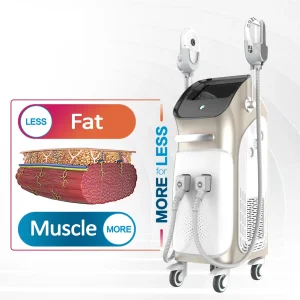
High-Intensity Electromagnetic pulses force supramaximal muscle contractions, building deep core muscle density while burning localized free fatty acids.
Radiofrequency and HIFU heat collagen fibers within the dermis and SMAS layers, tightening loose skin post-fat reduction to prevent tissue laxity.
The next decade of Chinese aesthetic manufacturing will be defined by deep AI integration, automated biometrics, and non-contact thermal dynamics. R&D centers in Beijing, Shenzhen, and Shanghai are actively pioneering several next-generation breakthroughs:
Answers to critical engineering, manufacturing, and operational questions sourced directly from factory technical directors.
Expand your clinical offerings with our full line of OEM/ODM laser systems, tattoo removal platforms, body slimming solutions, and skin rejuvenation machines.