- +86 136 8127 5833
- [email protected]
- Shunyi, Beijing, China
Explore our engineered equipment portfolio certified for safety, efficiency, and clinical reliability across high-volume medical aesthetics facilities globally.
In high-energy dermatological laser procedures, thermal management of the epidermis is the primary determinant of both patient safety and therapeutic efficacy. As modern laser platforms push higher energy fluences, advanced cold air cooling devices have evolved from comfort accessories into critical clinical risk-mitigation assets.
Continuous sub-zero skin air cooling systems operate on the principle of forced laminar convection. By continuously removing thermal energy from the skin surface before, during, and immediately after photon deposition, these devices dramatically reduce epidermal thermal relaxation times (TRT). Unlike contact sapphire cooling tip methods or chemical cryogen spray bursts, non-contact continuous cold air devices deliver uninterrupted thermal extraction down to −35°C without compromising optical beam paths, obscuring target lesions, or inducing chemical frostbite.
While sapphire contact tips lose cooling efficiency when moved rapidly across larger skin areas (such as back or full-leg laser hair removal), forced air cooling systems maintain constant heat sink pressure across any contour. Furthermore, unlike cryogen sprays (R134a) which incur ongoing per-treatment consumable costs and environmental compliance challenges, compressor-driven cold air devices utilize filtered ambient air, eliminating consumables entirely while maintaining consistent operational thermal flux.
Manufacturing an industrial-grade medical cold air device requires solving three critical mechanical engineering hurdles: stable refrigeration cycle management under continuous backpressure, prevention of internal ice blockages due to ambient humidity, and noise-damping acoustic insulation within compact clinical chassis formats.
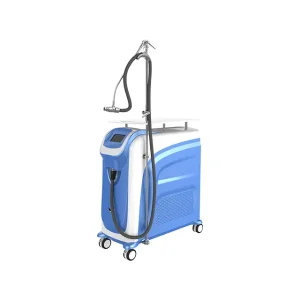
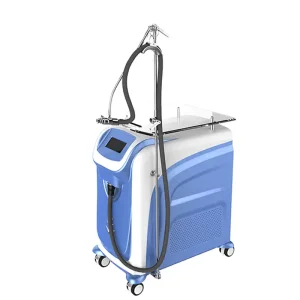
At the core of the skin cooling machine is a high-displacement medical compressor paired with eco-friendly R404A or R290 refrigerant. Designed for 12+ hours of uninterrupted clinical operation, it rapidly pulls down temperature from ambient to −30°C within 4 minutes of initialization.
Ambient air humidity moisture often freezes inside cooling evaporators, causing progressive airflow drop. Our patented auto-defrost loop redirects superheated gas through the heat exchanger periodically without interrupting the clinical airflow stream, guaranteeing stable 1-10 fan speed volume.
Air delivered onto ablated or post-laser compromised skin must be free from particulate pollutants and micro-organisms. Integrated HEPA filtration removes 99.97% of airborne particles down to 0.3 microns, protecting both the patient's dermis and the internal compressor turbine.
| Cooling Modality | Target Skin Temp | Operational Consumable Cost | Epidermal Protection Score | Operator Flexibility |
|---|---|---|---|---|
| Continuous Cold Air (Skin Cool Device) | −10°C to −35°C | $0 (Filtered Air) | Optimal (Pre, During, Post) | 100% Hands-Free / Tube Adapter |
| Sapphire Contact Cooling Tip | 0°C to 5°C | Low (System Water/TEC wear) | Moderate (During contact only) | Restricted to handpiece drag speed |
| Cryogen Spray (R134a Dynamic Cooling) | −20°C (Pulse burst) | High ($300-$800/month canisters) | High (Requires strict timing) | Trigger tied to specific handpiece |
| Chilled Ice Packs / Gels | 4°C to 10°C | Low (Messy cleaning prep) | Poor (Pre/Post session only) | Manual application, high downtime |
Medical aesthetics clinics and plastic surgery centers deploy skin cooling air devices alongside a diverse array of optical and thermal treatment platforms. Integrating continuous sub-zero airflow dramatically elevates energy tolerance thresholds, allowing practitioners to safely increase laser fluences for higher single-pass efficacy.
When operating high-power diode lasers on Fitzpatrick Skin Types IV-VI, melanin competition in the epidermis presents a severe burn risk. Blowing continuous −20°C cold air via a custom bracket attached directly to the laser handpiece pre-cools the basal layer. This allows practitioners to safely administer fluences upwards of 30-40 J/cm² without risk of epidermal blistering.
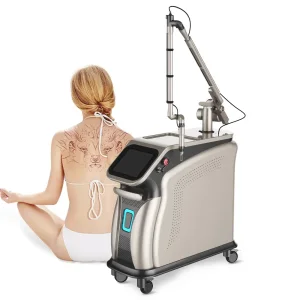
Tattoo pigment shattering via photo-acoustic shockwaves generates sudden, intense acoustic-thermal energy spikes in the dermis. Blowing high-velocity cold air at level 6-8 fan speed provides immediate local anesthesia, blunting sharp pain responses, blunting pinpoint epidermal splatter, and reducing post-treatment edema by over 60%.
Ablative resurfacing removes microscopic epidermal columns, causing acute heat accumulation. Cold air cooling prevents lateral thermal diffusion into surrounding healthy tissues. Post-procedure cold air soothing for 10 minutes significantly accelerates re-epithelialization while reducing erythema duration from days to hours.
Targeting hemoglobin in telangiectasias requires precise heat accumulation within vessel walls. Epidermal cooling prevents skin surface absorption energy loss. Cold air allows target vessel collapse under peak energy pulses while preserving epidermal integrity and eliminating post-treatment purpura.
As a tier-1 medical beauty equipment manufacturer headquartered in China’s high-tech industrial manufacturing hub, our production infrastructure delivers world-class precision engineering at competitive factory direct pricing models.
Our integrated manufacturing ecosystem leverages high-volume component sourcing, computerized robotic sheet-metal fabrication, custom mold injection facilities, and rigorous ISO13485 quality assurance testing standard operating procedures. This vertical integration provides global B2B procurement partners with decisive competitive edges in pricing scalability, custom engineering flexibility, and speed to market.
Every skin cool machine undergoes automated pressure, electrical safety, airflow CFM measurement, and 72-hour continuous thermal stress chamber testing prior to final export crate packing. Zero-defect assembly protocols ensure field reliability under tropical clinic ambient conditions.
We provide complete turnkey customization solutions for international distributors. From custom chassis color-matching, screen UI localized translation, branded silk-screen logo application, to custom handpiece mounting brackets designed for your proprietary laser systems.
We combine localized cost efficiency with premium global components: high-torque compressors, Panasonic electronic control chips, medical-grade ultra-flexible silicone hoses, and ultra-quiet German acoustic damping fan assemblies to guarantee low operating noise levels (<55 dB).
Navigating international regulatory import landscapes requires comprehensive compliance documentation. Our skin cooling devices carry fully audited CE Certification, conforming to European Union Medical Device Directives, Low Voltage Directive (LVD 2014/35/EU), and Electromagnetic Compatibility (EMC 2014/30/EU) standards.
Complete technical dossiers (TCF), test reports, and declarations of conformity are provided for seamless customs clearance across the European Union, Middle East, Southeast Asia, and South American markets.
Chassis power supply units are built to support switchable dual-voltage inputs (110V 60Hz / 220V 50Hz) with heavy-duty surge protection modules, ensuring stable operation across diverse power grid infrastructure worldwide.
Machines are packed in heavy-duty, custom-molded aluminum flight cases or reinforced wooden export crates. Nitrogen-sealed anti-moisture barrier wrapping protects internal components during maritime container freight shipping.
The medical aesthetics industry is undergoing rapid technological convergence. Next-generation skin cooling machines are transcending simple continuous blower designs, incorporating real-time feedback sensor arrays and machine learning temperature regulation.
Integrating non-contact infrared thermal sensors into the cold air nozzle tip allows real-time monitoring of epidermal skin temperature. The system automatically adjusts airflow volume to lock target skin temperature at a constant 15°C, eliminating human operator error risks.
Advanced ODM protocols now enable smart communication links between laser system foot pedals and skin cooling blower motors. Air velocity automatically ramps up to maximum speed 200ms prior to laser pulse discharge, reducing energy consumption and noise during idle prep time.
In compliance with global F-Gas regulations and environmental sustainability protocols, factory engineering teams are transitioning compressors to R290 (Propane) green refrigerants with near-zero Global Warming Potential (GWP) and zero Ozone Depletion Potential (ODP).
Investing in an industrial-grade CE certified skin cool device yields quantifiable financial returns across three distinct revenue drivers: patient throughput acceleration, consumable expense elimination, and risk-mitigation insurance savings.
Effective pain blunting enables practitioners to maintain higher laser repetition rates (10Hz sliding motion) without needing frequent treatment pauses. Full-body hair removal session times are reduced from 60 minutes down to 40 minutes, increasing daily clinic room utilization capacity.
Replacing expensive disposable cryogen gas canisters or single-use cooling gels saves high-volume medspas between $3,600 and $8,000 per year in operating overhead. The machine pays for its acquisition cost within the first 60–90 days of active clinical deployment.
Pain and post-procedure downtime are the two primary reasons patients abandon aesthetic laser course packages. Providing pain-free cooling experiences dramatically boosts client retention rate across 4-6 session treatment plans while driving positive online reviews.
Direct technical insights from our engineering and export compliance department to assist medspas, distributors, and laser manufacturers during procurement evaluations.
Browse our additional certified aesthetic and dermatological machinery manufactured in our Beijing production plant under strict ISO quality controls.