- +86 136 8127 5833
- [email protected]
- Shunyi, Beijing, China
Explore original engineering solutions across high-power diode hair removal, skin cooling, and advanced body sculpting systems built under strict CE protocols.

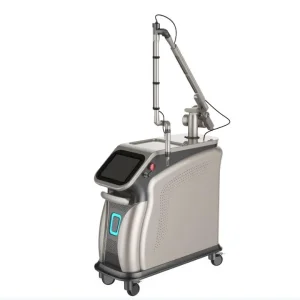
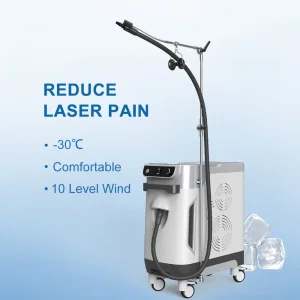
Understanding how sub-nanosecond laser pulse delivery transforms dermatological pigment clearance and dictates B2B manufacturing expenditure.
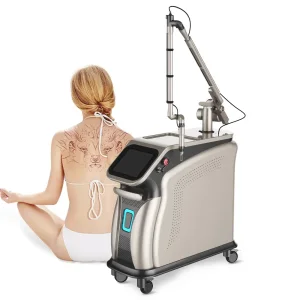
In the global medical aesthetics sector, the transition from traditional Q-switched nanosecond lasers (typically 5 to 20 nanoseconds pulse duration) to true ultra-short picosecond systems (300 to 750 picoseconds) represents a paradigm shift in laser-tissue interactions. When evaluating a CE Certification pico laser tattoo removal machine cost, B2B importers, medical distributors, and hospital procurement departments must analyze not merely the surface purchase price, but the underlying optical physics that drive clinical outcomes, device longevity, and compliance standards.
The primary mechanism of traditional Q-switched lasers relies on selective photothermolysis, delivering light energy absorbed by melanin or exogenous ink pigments to generate thermal expansion. However, thermal relaxation time (TRT) of microscopic ink particles (ranging from 1 to 10 nanoseconds) dictates that nanosecond pulses transfer significant heat energy to surrounding dermal tissue. This often leads to epidermal blistering, scarring, post-inflammatory hyperpigmentation (PIH), and extended patient recovery cycles.
Conversely, picosecond technology leverages photo-acoustic breakdown. By delivering peak power within a pulse duration shorter than the pigment's acoustic relaxation time (ART), the laser energy is converted into a mechanical pressure wave before thermal diffusion can occur. This stress-wave generation shatters tattoo ink into micro-dust-like particles—substantially smaller than the fragments produced by nanosecond systems. Consequently, macrophage phagocytosis clears these micro-particles faster, reducing the average number of required clinical sessions by 40% to 60%.
A transparent breakdown of Bill-of-Materials (BOM) components, optical assembly quality, and Total Cost of Ownership (TCO) for global buyers.
When searching for a verified China laser tattoo removal equipment cost supplier or comparing European vs. Asian OEM manufacturing lines, price disparities ranging from $2,500 to over $35,000 are frequently encountered. Understanding the technical drivers of these variations is essential for establishing a scalable aesthetic distribution business.
Single vs. Dual-rod Nd:YAG cavities impact cost exponentially. Premium platforms utilize imported synthetic YAG crystals paired with Electro-Optic (EO) Active Q-Switches (KD*P or Pockels cell) rather than low-cost passive Q-switches, guaranteeing stable pulse energies at 1064nm and 532nm wavelengths without thermal lensing drift.
High-end picosecond systems integrate imported South Korean or German 7-joint light guide articulated arms featuring dielectrically coated gold mirrors. These maintain optical transmission rates above 92%, whereas lower-tier domestic arms suffer up to 35% power attenuation and laser beam misalignment after transport.
A continuous 2000W to 3000W OPT (Optimal Pulse Technology) power generator equipped with medical-grade capacitors ensures steady voltage discharge. Dual TEC (Thermoelectric Cooling) semiconductors paired with high-flow water pumps maintain laser rod temperatures at a stable 20°C–25°C, preventing flashlamp premature failure.
| Equipment Market Tier | Typical FOB Price Range | Pulse Duration Specs | Q-Switch Mechanism | Target Business Entity |
|---|---|---|---|---|
| Entry-Level Portable | $2,200 – $4,500 USD | 800ps – 20ns (Hybrid) | Passive Dye Q-Switch | Small Salons, Tattoo Parlors |
| Mid-Tier Professional Vertical | $5,500 – $11,500 USD | 450ps – 600ps | Single-Pockels EO Q-Switch | MedSpas, Regional Distributors |
| Medical Grade Dual-Rod System | $12,000 – $24,000 USD | 300ps – 450ps (True Pico) | Dual-Pockels Electro-Optic | Dermatology Clinics, Hospitals |
How leading medical aesthetic brands and regional equipment suppliers scale through standardized factory OEM/ODM engineering partnerships.
Tier-1 manufacturing facilities implement 72-hour continuous burn-in testing protocols, checking laser shot stability over 1,000,000 pulses using energy meter sensors (Coherent® laser energy detectors) to verify fluency deviation remains under ±3%.
Factory-direct customization allows distributors to brand multi-language touch-screen software, integrate Android-based customer relationship management (CRM) software, and store specialized preset clinical protocols tailored to various skin types.
Industrial design focused on B2B serviceability utilizes modular internal chassis arrangements. Electrical power supplies, water cooling loops, and laser cavity modules are segregated to allow plug-and-play technician replacement without total disassembly.
Navigating European Medical Device Directives, ISO 13485 manufacturing benchmarks, and regional safety accreditations.
For international buyers, verifying a supplier's compliance claims is a cornerstone of risk management. A genuine CE Certification pico laser tattoo removal machine must comply with two major European Union directives: the Low Voltage Directive (LVD 2014/35/EU) for electrical safety and the Electromagnetic Compatibility Directive (EMC 2014/30/EU). For clinical facilities operating within medical environments, obtaining Medical CE accreditation under Regulation (EU) 2017/745 (MDR) is mandatory.
Optimizing spot sizes, handpiece optics, and wavelength selection for full-spectrum tattoo ink wavelengths and dermal rejuvenation.
A multi-functional picosecond platform must address the complete spectrum of exogenous pigments (multicolor tattoos) and endogenous melanocytic lesions (Ota nevus, freckles, melasma, solar lentigines). Modern commercial configurations incorporate multiple distinct wavelength handpieces:
Primary target: Dark pigments including black, dark blue, and brown ink, as well as deep dermal melanocytosis. High depth of penetration with minimal epidermal melanin competition, preserving darker Fitzpatrick skin types IV–VI.
Primary target: Red, orange, and yellow tattoo inks, alongside superficial epidermal pigmented lesions. Absorbed strongly by hemoglobin and superficial melanin, requiring precise cooling protection.
Primary target: Difficult-to-treat green, cyan, and sky blue tattoo inks. High selectivity for green pigments with significantly lower microvascular absorption compared to 532nm.
Diffractive Lens Array (DLA) technology focuses laser energy into high-density micro-spots, inducing Laser-Induced Optical Breakdown (LIOB) in the dermis to stimulate collagen remodelling without breaking the stratum corneum.
Next-generation advancements reshaping the aesthetic equipment manufacturing landscape over the coming decade.
As competition intensifies among global equipment manufacturers, R&D centers are pioneering several technological innovations that will redefine future picosecond platforms:
In-depth technical answers addressing cost structures, certification verifications, and operational ROI.
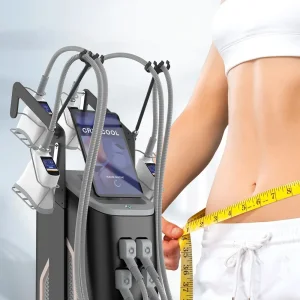
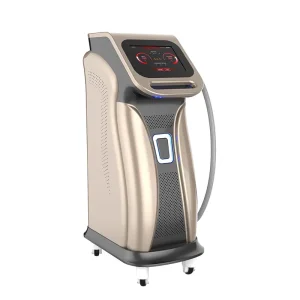
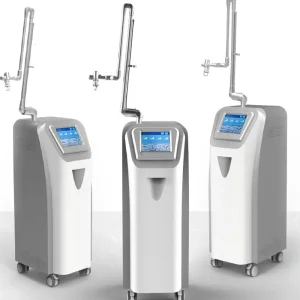
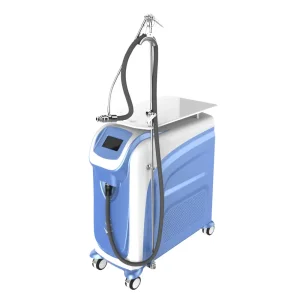
Explore our complete catalog of medical fractional CO2, cryolipolysis body slimming, DPL pulsed light, and specialized tattoo removal solutions.