- +86 136 8127 5833
- [email protected]
- Shunyi, Beijing, China
Explore our engineering-certified equipment manufactured under ISO 13485 and CE standards for global distribution.
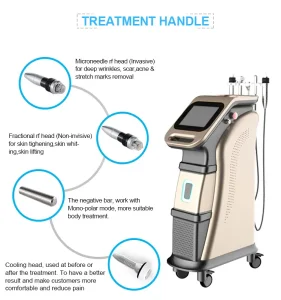
Why integrating negative-pressure pneumatics into electro-thermal needle arrays represents a decisive structural leap in sub-dermal remodeling.
Traditional RF microneedling relies purely on mechanical push force to penetrate the stratum corneum. On relaxed or elastotic skin, this induces variable mechanical resistance, skin tenting, and erratic depth penetration. Vacuum-assisted microneedling RF solves this through dynamic negative-pressure suction (up to 400 mmHg).
The vacuum gently engages and flattens the target skin tissue against the handpiece tip prior to needle insertion. This eliminates epidermal deformation, ensuring 100% of the microneedle matrix reaches the exact predetermined target depth—ranging precisely from 0.5 mm to 4.0 mm into the dermis.
Radiofrequency energy (typically delivered at 1 MHz to 5 MHz) creates localized thermal coagulation zones (TCZs) between 60°C and 80°C in the reticular dermis. This controlled micro-injury triggers immediately three cascade responses: immediate collagen triple-helix denaturation, inflammatory cytokine release, and long-term neo-collagenesis and elastogenesis.
By coupling vacuum suction with real-time impedance sensing, SANO systems dynamically recalibrate power output to compensate for localized tissue moisture levels, preventing epidermal burns while maximizing deep dermal energy absorption.
OEM/ODM Sourcing Insight: Independent clinical optical coherence tomography (OCT) data indicates that pneumatic vacuum engagement increases active transdermal micro-channel depth uniformity by 67% compared to manual friction-based microneedle insertion, directly correlating with a 42% improvement in neocollagen density at 12 weeks post-treatment.
| Performance Parameter | Standard Non-Vacuum Microneedle RF | SANO Vacuum Microneedling RF System | Clinical & Operational Impact |
|---|---|---|---|
| Penetration Depth Precision | ±0.45 mm (Vulnerable to skin tenting) | ±0.05 mm (Stepping Motor + Vacuum Lock) | Eliminates pinpoint focal hot-spots and superficial epidermal damage. |
| Patient Pain Index (VAS 1-10) | 5.8 / 10 (Requires high topical numbing) | 2.4 / 10 (Tactile gate control mechanism) | Negative pressure stimulates touch receptors, inhibiting pain signaling. |
| Needle Insulation Architecture | Standard Stainless Steel / Partial Coating | Medical Gold-Plated 316L Insulated Needles | Energy isolated to needle tip; preserves epidermis completely. |
| Topical Drug Delivery Enhancement | Base micro-channel absorption | Negative-pressure dynamic suction (+67% absorption) | Dramatically improves post-treatment serum & PDRN transdermal delivery. |
| Tip Service Life & Precision | 1,000–2,000 shots before dulled tips | 5,000+ shots micro-honed sharp profile | Reduces consumable cost per patient for commercial clinics. |
The global energy-based aesthetic device market is experiencing a structural pivot toward minimally invasive combined-modality platforms.
Modern B2B buyers no longer accept fixed-energy handpieces. The industry standard is rapidly moving toward integrated closed-loop micro-sensors. These sensors check skin contact quality, vacuum seal integrity, and tissue impedance 100 times per second, dynamically throttling RF output power to ensure uniform thermal coagulation zones across diverse anatomical zones.
Leading global clinics demand multi-application versatility. Factories must provide dual needle cartridge options: insulated needles (which protect the epidermis for treating deep dermal acne scars and skin laxity in high-melanin Fitzpatrick IV-VI types) and non-insulated needles (which treat superficial epidermal texture, pores, and fine lines simultaneously).
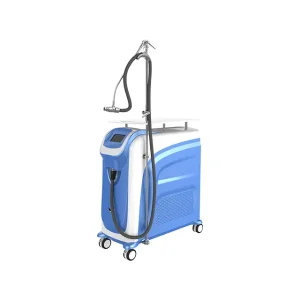
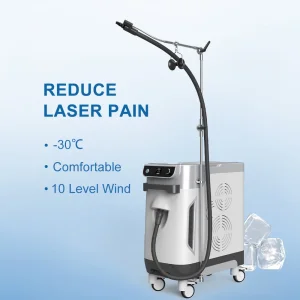
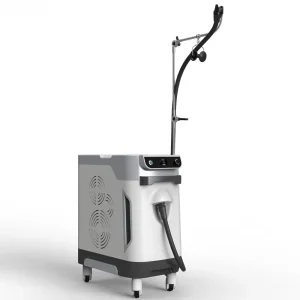
Vacuum Microneedling RF is expanding rapidly beyond facial treatments into body applications (striae distensae, post-pregnancy skin laxity, and sub-gluteal tightening). Manufacturers are re-engineering power supplies to deliver higher pulse energy (up to 50W) and deeper penetration depths up to 4.0 mm, often combined with post-procedure Cryo Air Cooling to eliminate downtime.
What medical equipment importers, regional distributors, and hospital networks evaluate before issuing an RFQ to OEM/ODM factories.
International medical aesthetic distribution requires rigorous compliance documentation. Buyers demand fully audited ISO 13485 quality management systems, Medical CE certification under MDR (EU) 2017/745, and FDA 510(k) pathway readiness. SANO provides comprehensive technical dossiers, EMC safety test reports, and biocompatibility testing for gold-plated needle materials.
In the commercial aesthetic industry, consumable costs dictate clinic profitability. Importers evaluate the unit cost of sterile needle cartridges, tip sharpness degradation curves, and motor stepping reliability. SANO’s precision automated manufacturing keeps sterile replacement tip costs highly competitive, providing distributors with high consumable profit margins.
Brand identity is critical for medical laser distributors. Global buyers require custom chassis design, proprietary color palettes, logo screen printing, custom GUI software in 12+ languages, and pre-programmed clinical treatment parameters tailored to regional skin demographics.
How Beijing and Guangdong precision manufacturing hubs deliver unmatched engineering quality, speed, and cost efficiency to global partners.
SANO operates Class 10,000 cleanroom assembly environments dedicated to sterile tip manufacturing. Micro-needles undergo high-precision electro-polishing and 24K gold vacuum sputtering to eliminate micro-burrs and guarantee non-allergenic biocompability.
Every needle matrix is driven by imported high-torque micro-stepping motors capable of sub-millimeter precision stepping (0.1 mm adjustments), ensuring zero friction drag or needle jamming during high-frequency clinical procedures.
China's complete medical device supply chain ecosystem allows SANO to integrate elite global components: Korean-engineered articulated arms, German medical-grade pneumatic vacuum pumps, and Japanese power supply modules into customized aesthetic platforms.
Before leaving our Beijing facility, every system undergoes 72 hours of continuous high-power burn-in testing, multi-point power calibration using oscilloscope sensor arrays, and vacuum pressure seal validation.
Tailored treatment modalities designed for diverse clinical environments and patient demographics worldwide.
Target Indications: Severe rolling/boxcar acne scars, traumatic surgical scars, and striae rubra/alba.
Clinical Protocol: Deep penetration (2.0 mm to 3.5 mm) utilizing insulated needle arrays. High RF fluence (25J-40J/cm²) with vacuum level 3 locks target tissue to deposit energy deeply into scar tissue without risking superficial thermal ablation or post-inflammatory hyperpigmentation (PIH).
Target Indications: Periorbital fine lines, nasolabial folds, jawline laxity, and enlarged pores.
Clinical Protocol: Medium depth (1.2 mm to 2.0 mm) with non-insulated needle arrays. Bipolar RF mode combined with suction gate control ensures a pain-free experience with minimal transient erythema (resolving within 4-12 hours).
Target Indications: Post-liposuction skin irregularity, abdominal skin laxity, and sub-brachial flaccidity.
Clinical Protocol: Maximum body penetration (3.0 mm to 4.0 mm) utilizing specialized 64-pin large-area tip cartridges. High-frequency RF pulse bursts stimulate deep dermal collagen contraction and hypodermal septa tightening.
In-depth technical and operational answers provided by SANO’s Senior Biomedical Engineering Desk.
Expand your clinic portfolio with our full range of engineered laser and body sculpting platforms.