- +86 136 8127 5833
- [email protected]
- Shunyi, Beijing, China
Engineered for high-throughput dermatological facilities in Nagoya's Sakae and Meieki medical hubs, featuring multi-wavelength versatility and active epidermal thermal protection.
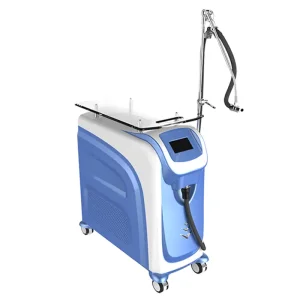
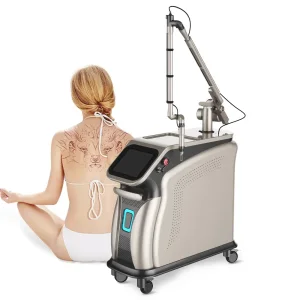
The Nagoya metropolitan area, acting as the economic engine of Japan's Chūbu region and Aichi Prefecture, presents a sophisticated, rapidly evolving landscape for medical aesthetic procedures. Known globally for industrial manufacturing precision, Nagoya's commercial expectations for aesthetic machinery mirror its automotive and robotics sectors: uncompromising hardware stability, repeatable optical calibration, and absolute patient safety profiles.
In Nagoya's premier medical districts such as Sakae, Fushimi, and the Meieki station commercial zone, aesthetic dermatology centers face distinct demographic and clinical patient profiles. Among Japanese clinical demographics (Fitzpatrick Skin Types III and IV), dermal and epidermal hyperpigmentation treatments represent over 65% of all laser room appointments. Conditions such as Melasma (肝斑), Nevus of Ota (太田母斑), Post-Inflammatory Hyperpigmentation (PIH), Ephelides (freckles), and age spots (Lentigines) require laser platforms capable of delivering high energy density without causing thermal collateral damage to surrounding keratinocytes.
Furthermore, Nagoya's expanding urban lifestyle has driven an unprecedented surge in body art modification removal and cosmetic tattoo corrections (eyebrow microblading revision). Conventional photothermal lasers frequently trigger severe rebound hyperpigmentation or scarlike textural changes in Asian skin types. Consequently, Nagoya aesthetic clinic directors and medical device importers demand high-specification Active Electro-Optic Q-Switched Nd:YAG Laser Systems that operate primarily via photoacoustic fragmentation rather than photothermal coagulation.
Compliance with Japan's PMDA safety expectations, strict PSE electrical isolation standards, and electromagnetic compatibility (EMC) protocols engineered directly into OEM system chassis.
Sub-nanosecond and short-pulse PTP (Photoacoustic Twin Pulse) modes designed to treat dermal melasma without epidermal disruption or lengthy social downtime for active patients.
The global market for energy-based aesthetic devices (EBDs) is undergoing a fundamental structural transition. Historical passive Q-switched systems utilizing saturated absorbers are rapidly being phased out by tier-one manufacturing facilities in favor of Electro-Optic (EO) Active Pockels Cell Q-Switching mechanisms. This shift is driven by the clinical necessity for pulse-to-pulse energy stability, variable pulse duration modulation, and flat-top optical beam distribution profiles.
Traditional long-pulse lasers rely on photothermolysis, elevating target tissue temperatures to coagulate chromophores. This causes significant thermal diffusion into surrounding dermal structures, leading to PIH in darker skin tones. Electro-Optic Q-Switched Nd:YAG systems compress peak energy into ultra-short nanosecond pulses (typically 3–6 ns). This matches the Thermal Relaxation Time (TRT) and Stress Relaxation Time (SRT) of targeted melanosomes, generating intense acoustic shockwaves that shatter pigment particles into micro-dust without thermal leakage.
The fundamental 1064nm wavelength of Neodymium-doped Yttrium Aluminum Garnet (Nd:YAG) penetrates deep into the reticular dermis with minimal absorption by epidermal melanin, rendering it the gold standard for deep tattoo ink and dermal melanocytosis. By integrating a Potassium Titanyl Phosphate (KTP) non-linear crystal, the laser frequency is doubled to 532nm, offering high absorption in melanin and hemoglobin for precise epidermal lesion ablation (such as solar lentigines) and vascular lesions.
| Technical Parameter | Traditional Passive Q-Switched System | SANO Active Electro-Optic Q-Switched Platform |
|---|---|---|
| Q-Switch Mechanism | Dye cell / Passive crystal (Deteriorates over time) | High-speed KD*P Pockels Cell Electro-Optic Switch |
| Pulse Width Stability | Fluctuates between 10 ns – 25 ns based on thermal load | Constant sub-5 ns pulse duration across all frequencies |
| Beam Profile Output | Gaussian (Hot-center peak causes micro-scarring) | Homogeneous Flat-Top Beam Profile (Uniform fluence distribution) |
| Energy Density (Fluence) | Unstable peak intensity, limited life cycle (<500k shots) | High-precision closed-loop energy sensing (>10 million shots) |
| Clinical PIH Risk (Asian Skin) | High due to peripheral thermal diffusion | Extremely low due to pure photomechanical fragmentation |
As an OEM/ODM manufacturing pioneer supplying international markets, SANO Laser continues to push the boundaries of high-energy solid-state optical engineering. Our technology roadmap focuses on four primary innovation pillars designed to deliver maximum clinical ROI and technical durability for partners in Nagoya and global distributor channels.
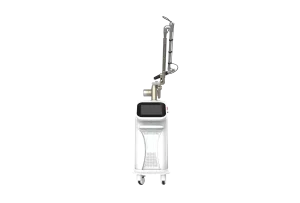
Optical delivery efficiency is paramount when outputting multi-gigawatt peak energy. SANO platforms incorporate custom 7-joint articulated light guide arms imported from specialized optomechanical foundries in South Korea. Counter-balanced with precision springs and total internal reflection (TIR) dielectrically coated mirrors, the arm guarantees minimal energy attenuation (<3%) and total freedom of movement for clinical operators during prolonged treatment sessions.
Optical energy loss due to Xenon flashlamp aging or cavity thermal lensing is a major point of friction for medical equipment operators. SANO's proprietary microprocessor monitoring architecture embeds an internal photodiode sensor within the laser resonator path. Every single shot is sampled in real-time, automatically adjusting power supply voltage to maintain exact set-point fluence (J/cm²) within ±1.5% tolerance.
By splitting a high-fluence laser pulse into two sub-pulses separated by a microsecond interval (interval of 80–100 μs), PTP mode delivers equivalent total peak energy while significantly lowering peak power amplitude. This gentle yet powerful energy delivery suppresses pain sensations and allows comfortable melasma toning sessions without requiring topical numbing cream or creating purpura.
High-volume clinics in Nagoya demand continuous 12-hour machine operation without thermal shutdowns. SANO laser cavities feature dual Nd:YAG crystal rods powered by heavy-duty pulse capacitors. The thermal management system incorporates a high-flow German water pump, medical-grade stainless steel heat exchangers, and thermoelectric cooling (TEC) modules to keep water temperatures strictly under 28°C under continuous 10 Hz fire rates.
SANO Laser operates a comprehensive OEM/ODM manufacturing infrastructure in Beijing, offering direct factory partnerships to Japanese distributors, equipment leasing groups, and multi-location clinic organizations throughout Nagoya, Tokyo, and Osaka. We bridge the gap between high-end optical engineering and commercial accessibility.
We provide full customization of external injection-molded chassis casing, industrial color palettes, logo screen printing, and fully localized Japanese user interfaces (UI/UX) with pre-set clinical treatment parameters tailored to Asian skin conditions.
With direct air freight connections to Chubu Centrair International Airport (NGO), SANO guarantees rapid replacement part dispatch (flashlamps, optics, power supplies) within 48 hours, ensuring zero downtime for your clinical facility.
Every laser system undergoes a 72-hour continuous burn-in test, 10,000-shot energy consistency audit, and high-voltage isolation test prior to export packaging in custom shockproof flight cases.
Detailed engineering and clinical answers provided by SANO Senior Laser R&D Team.
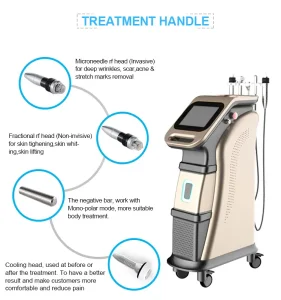
Full suite of CE-certified medical laser, RF microneedling, body contouring, and vascular clearance platforms available for Nagoya distribution.
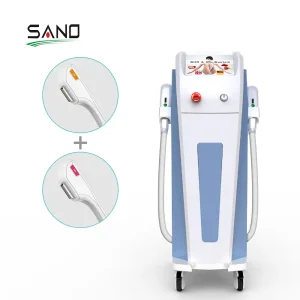
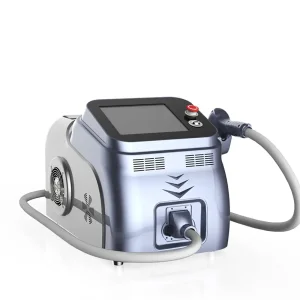
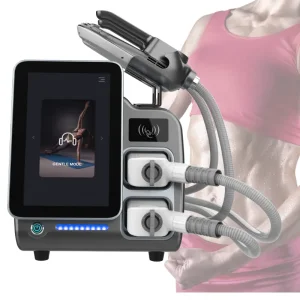
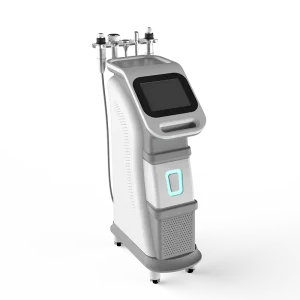
Elevate your clinical outcomes in Nagoya with SANO Medical's industry-leading Q-Switched Nd:YAG, Picosecond, and RF systems. Contact our engineering desk today for direct factory pricing, technical dossiers, and OEM consultation.
Send Inquiry Now