- +86 136 8127 5833
- [email protected]
- Shunyi, Beijing, China
Engineered to international ISO13485 and CE standards, these top-tier energy-based devices serve dermatologists, plastic surgeons, and medspas across Mexico City, Guadalajara, and Monterrey.
The global market for energy-based aesthetic treatment equipment has experienced an unprecedented realignment over the past decade. Historically dominated by high-markup North American and European equipment brands, the Latin American aesthetic ecosystem—anchored primarily by Mexico—has rapidly migrated toward direct manufacturing partnerships with Tier-1 Chinese OEM/ODM producers. This whitepaper analyzes the microeconomic factors, clinical imperatives, regulatory pathways, and technological advances driving Chinese treatment equipment manufacturers into a dominant market share position within Mexico's booming medical aesthetics and wellness sectors.
Mexico currently stands as the second-largest aesthetic procedure market in Latin America and ranks among the top ten globally for non-invasive cosmetic treatments. Driven by a robust domestic demand, expanding middle-class disposable income, and a thriving medical tourism corridor in border cities (such as Tijuana, Mexicali, and Ciudad Juárez) as well as resort hubs (Cancún, Los Cabos, Puerto Vallarta), Mexican clinics require medical-grade devices that yield reliable clinical outcomes without imposing crippling capital expenditure (CapEx) loads.
Core Insight on Information Gain: Unlike legacy procurement models that rely on multi-tier regional distributors with 300% to 500% price markups, direct engagement with R&D-driven Chinese manufacturers provides Mexican distributors and hospital chains with custom software localization, specialized hardware configurations tailored to higher melanin skin phototypes, and direct factory-to-engineer technical support protocols.
To understand the rapid integration of Chinese treatment devices in Mexico, one must evaluate the structural composition of the Mexican healthcare and aesthetic ecosystem. The market operates across three distinct operational models:
Situated along the US-Mexico border and major international flight hubs, medical tourism facilities cater heavily to North American patients seeking high-end cosmetic surgeries, laser skin resurfacing, and body contouring at competitive rates. Equipment in these centers must match Western clinical efficacy while offering fast throughput and zero downtime.
Concentrated in affluent metropolitan zones such as Polanco and Santa Fe (Mexico City), San Pedro Garza García (Monterrey), and Zapopan (Guadalajara). These clinics prioritize cutting-edge technology—such as sub-nanosecond Picosecond lasers and targeted RF Microneedling—demanding strict international safety certifications.
The fastest-growing segment in Mexico, focusing on high-volume, accessible treatments like laser hair removal, EMS muscle sculpting, and cryolipolysis body shaping. Operational profitability in this tier hinges on low maintenance overhead and long component lifespan.
From a clinical standpoint, over 75% of the Mexican population possesses skin characteristics falling within Fitzpatrick Phototypes III, IV, and V. High melanin density presents a unique challenge for light- and laser-based modalities. Standard high-fluence single-wavelength lasers designed for Caucasian skin (Types I-II) carry a significantly elevated risk of epidermal burns, post-inflammatory hyperpigmentation (PIH), and persistent erythema when applied to darker skin tones.
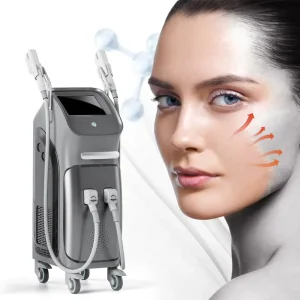
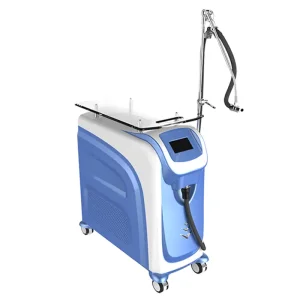
Leading Chinese manufacturers have capitalized on this clinical demand by developing specialized energy delivery systems. For instance, in diode laser hair removal, Chinese R&D centers pioneered the integration of synchronized triple-wavelength arrays (755nm / 808nm / 1064nm) backed by advanced TEC (Thermoelectric Cooling) contact sapphire tips. The 1064nm wavelength bypasses superficial epidermal melanin to target deeper dermal papillae safely, while sub-zero sapphire cooling protects the basal layer. This technical adaptation has made Chinese energy-based devices exceptionally popular among Mexican dermatologists.
The rise of China as the global epicenter for aesthetic device manufacturing is not merely a product of cost efficiency; it is driven by intense R&D cluster integration, robust supply chain agility, and rigorous manufacturing standards.
Major manufacturing clusters in Beijing, Shenzhen, and Wuhan possess unmatched supply chain density. Component sourcing that requires months in Europe or North America occurs within days in China. Core optical components—such as German-imported Dilas laser bars, US Coherent RF tubes, and Korean multi-joint articulated arms—are integrated into precision-machined chassis locally, guaranteeing world-class performance at optimized cost structures.
Modern tier-1 Chinese manufacturers operate under ISO 13485 quality management systems for medical devices. Equipment undergoes strict burn-in testing protocols (often 48 to 72 hours of continuous thermal stress testing), pressure vessel testing for cooling loops, and spectroradiometric laser energy calibration prior to export packaging.
| Evaluation Parameter | Legacy US / European Manufacturers | Tier-1 Chinese OEM/ODM Manufacturers |
|---|---|---|
| Initial Capital Expenditure (CapEx) | Extremely High ($80,000 – $180,000 USD) | Optimized & Accessible ($8,000 – $25,000 USD) |
| Consumable / Card Lockouts | High recurring per-shot or RFID tip fees | Zero consumable lockouts; open system architecture |
| Software & UI Customization | Rigid; English-only or basic regional presets | Full OEM Spanish UI localization & custom branding |
| Spare Parts Lead Time in Mexico | 4–8 Weeks via expensive import channels | 3–7 Days direct air express + localized spares kit |
| Warranty & Support Structure | Strict yearly maintenance service contracts | 2-Year comprehensive warranty with 24/7 video engineering support |
Navigating Mexico's Federal Commission for the Protection against Sanitary Risks (COFEPRIS) is a critical requirement for medical device importers. Professional Chinese exporters supply complete technical documentation dossiers, including IEC 60601-1 electrical safety reports, IEC 60601-2-22 laser safety test data, CE certificates under the Medical Device Regulation (MDR), and ISO 13485 audit trails. This comprehensive technical backing drastically simplifies the sanitary registration process for Mexican distributors.
Market trends across Mexico indicate a sharp rise in multi-technology combination treatments. Clinics no longer rely on single-function machinery; instead, they procure versatile platforms capable of addressing diverse body and face clinical indications in a single visit.
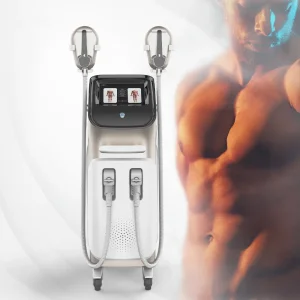
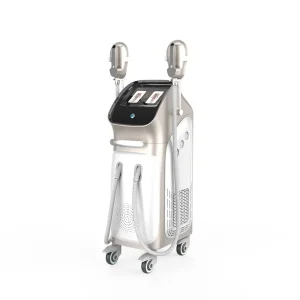
The combination of High-Intensity Electromagnetic Technology (HI-EMT) and Radiofrequency (RF) energy has revolutionized non-surgical body shaping in Mexico. High-power devices deliver supramaximal muscle contractions while simultaneously melting subcutaneous fat. Applications focus heavily on abdominal toning, gluteal lifting, and post-bariatric muscle rehabilitation.
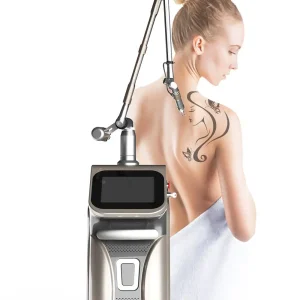
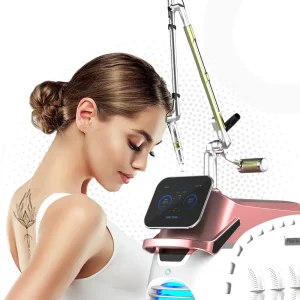
Tattoo removal demand across urban Mexican centers has expanded exponentially. Furthermore, dark spot treatments (chloasma, melasma, solar lentigines) require pure photo-acoustic pressure waves rather than photothermal heat to avoid hyperpigmentation. 300ps to 500ps true picosecond systems provide the ideal solution.
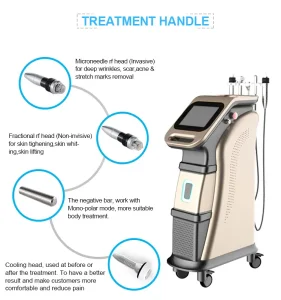
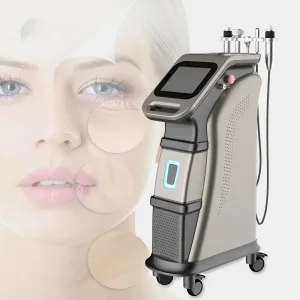
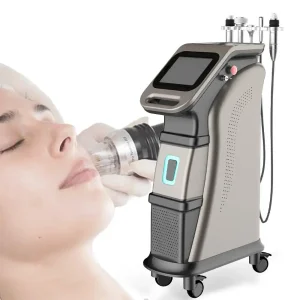
Post-acne scarring remains a major concern for young patients in Mexico. Vacuum-assisted fractional radiofrequency microneedling (such as the Pinxel-2 platform) allows operators to precisely control penetration depths from 0.5mm to 3.5mm, delivering thermal energy directly into the dermis without damaging the fragile epidermis.
When Mexican distributors and clinic networks evaluate Chinese manufacturing partners, procurement decisions are guided by three fundamental requirements:
Explore our full range of certified platforms available for OEM custom manufacturing, wholesale procurement, and direct clinic supply in Mexico.
Addressing core technical, regulatory, and commercial considerations for sourcing treatment machinery from China to Mexico.
Expand your clinic operations or distribution network in Mexico with medical-grade, certified treatment platforms direct from our factory. Request technical specifications, FOB/CIF pricing, and customized OEM solutions today.
Send Inquiry Now