- +86 136 8127 5833
- [email protected]
- Shunyi, Beijing, China
Engineered in ISO 13485-certified facilities, our medical-grade Focused Ultrasound platforms deliver consistent acoustic energy density for non-invasive skin lifting, SMAS tightening, and localized adipose reduction.
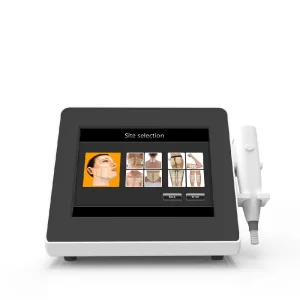
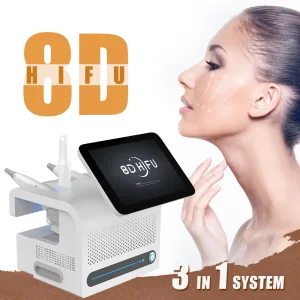
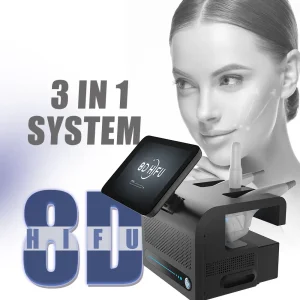
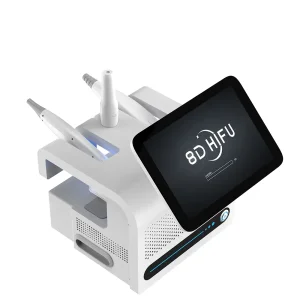
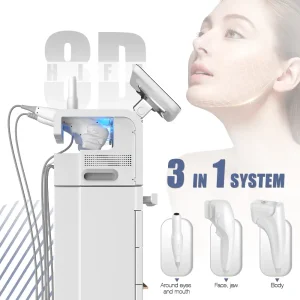
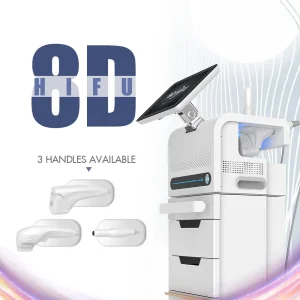
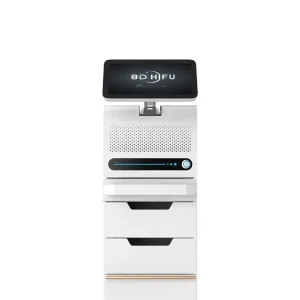
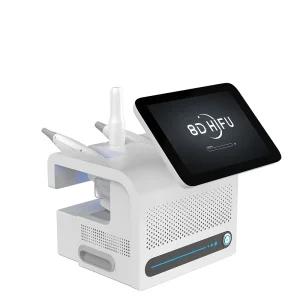
An authoritative analysis of market growth, clinical intent migration, and technological shifts within the global medical aesthetic device ecosystem.
Commercial medspas and clinical dermatology practices worldwide are rapidly migrating capital expenditures toward Micro-Focused Ultrasound (MFU) and Micro & Macro Focused Ultrasound (MMFU). Unlike ablative lasers that disrupt the epidermal barrier, HIFU bypasses the stratum corneum entirely, delivering controlled thermal coagulation points (TCPs) into the Superficial Muscular Aponeurotic System (SMAS).
Manufacturing hubs in Beijing have bridged the performance gap with traditional Western platforms. By integrating imported high-Q factor piezoelectric ceramic elements (PZT) from Japan and Germany, leading Chinese OEMs now manufacture solid-state transducers with acoustic wave propagation variance held below ±0.15mm depth tolerances.
Search intent data reveals a structural pivot: prospective clients no longer query broad "facelift" terms, but specifically request depth-targeted protocols like "SMAS lifting," "submental fullness tightening," and "jawline vector sculpting." Factory ODM platforms must accommodate customizable parameter presets tailored to regional anatomical variations.
Demystifying marketing terms (4D, 7D, 8D, 9D) through rigorous electrical and mechanical specifications, acoustic wave mechanics, and thermal dynamics.
| Modality / Standard | Acoustic Frequency Range | Focal Depth Matrix | Peak Acoustic Output | Primary Clinical Target |
|---|---|---|---|---|
| Micro-HIFU (Facial Rejuvenation) | 4.0 MHz – 7.0 MHz | 1.5mm, 2.0mm, 3.0mm, 4.5mm | 0.1 J – 3.0 J/cm² | Epidermis, Dermis, Subdermal Adipose, SMAS Layer |
| Macro-HIFU (Body Sculpting) | 2.0 MHz – 3.0 MHz | 6.0mm, 9.0mm, 13.0mm | 0.5 J – 6.0 J/cm² | Subcutaneous Adipose Tissue (SAT), Deep Fascia |
| Vaginal Tightening Transducers | 3.5 MHz – 5.0 MHz | 3.0mm, 4.5mm (360° rotational) | 0.2 J – 2.5 J/cm² | Vaginal Submucosa & Muscularis Layer |
| Linear / Ultra-Speed Scanning (7D/8D) | 2.0 MHz – 10.0 MHz | 1.5mm to 13mm Continuous | Adjustable High-PRF Mode | Rapid Full-Face Vectors & Localized Body Contouring |
At the core of every high-performance HIFU cartridge is a precision-cut ceramic disk. When excited by high-frequency electrical pulses, the ceramic undergoes rapid mechanical deformation, generating high-frequency acoustic waves. Factories must ensure geometric focal accuracy: if the acoustic waves converge 0.5mm shallower or deeper than labeled, treatment efficacy drops dramatically, or burn risks emerge.
In the aesthetic B2B supply chain, naming conventions frequently cause confusion for equipment buyers:
How medical practitioners leverage multi-depth focused ultrasound alongside existing aesthetic energy devices to maximize patient outcomes.
The Superficial Muscular Aponeurotic System (SMAS) sits approximately 4.5mm beneath the facial dermis. By delivering targeted acoustic thermal dots reaching 65°C to 70°C at this precise depth, HIFU induces immediate triple-helix collagen contraction without micro-epidermal thermal injury, initiating a 90-to-180-day endogenous neocollagenesis cascade.
Macro-focused 13mm and 9mm cartridges deliver high peak power designed to disrupt subcutaneous fat cell membranes. The affected adipocytes undergo natural macrophage-mediated clearance over 6 to 12 weeks, providing measurable circumferential reduction across flanks, abdomen, and thighs.
Leading clinics combine HIFU with complementary platforms to address all structural skin layers:
Inside our Shunyi, Beijing production facilities: rigorous engineering protocols ensuring hardware reliability, zero acoustic leakage, and international regulatory readiness.
Cartridge handpieces and acoustic lens housing are assembled within strictly controlled ISO Class 7 cleanrooms to eliminate microscopic particulate contamination on optical and ceramic elements.
Every batch of transducers undergoes automated hydrophone testing in water bath tanks. Energy density distributions are mapped in 3D space to verify focal point width, depth accuracy, and pulse consistency.
Power control boards, high-voltage pulse generators, and UI motherboards are subjected to continuous 100-hour stress testing under elevated ambient temperatures before final casing assembly.
We provide complete turnkey solutions for global aesthetic brand owners, equipment distributors, and medical chains looking to launch proprietary HIFU systems.
Ensuring seamless international deployment across North American, European, Latin American, Middle Eastern, and Asia-Pacific markets.
Universal 110V–240V, 50/60Hz auto-switching medical power supplies with medical-grade isolated transformers to prevent voltage spike interference.
Provision of full IEC 60601-1 (Electrical Safety) and IEC 60601-1-2 (EMC) test documentation to streamline local market registrations.
Direct 24/7 video access to factory assembly engineers, multi-lingual service manuals, and spare parts dispatched via DHL/FedEx within 48 hours.
Custom flight-case packing with shock-absorption foam linings designed to maintain acoustic alignment during global transit.
A forward-looking technical overview of upcoming advancements in high-intensity ultrasound engineering planned for 2026–2030.
Integration of ultra-high frequency diagnostic imaging arrays directly behind the treatment transducer, allowing operators to visually verify facial SMAS depth before triggering pulses.
Pulsed acoustic wave modes designed for ultra-sensitive skin types, achieving collagen stimulation via mechanical stress gradients rather than thermal denaturation.
Smart internet-of-things (IoT) cartridges providing automated shot-count telemetry, energy decay monitoring, and remote operational diagnostics for chain clinics.
Acoustic sonoporation handpieces designed to transiently increase skin cell membrane permeability for deep transdermal macromolecule delivery.
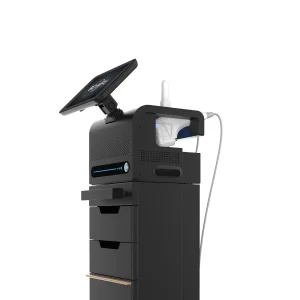
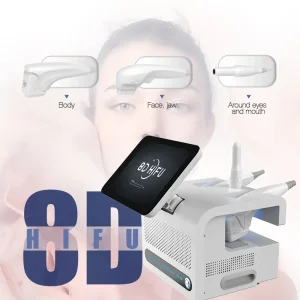
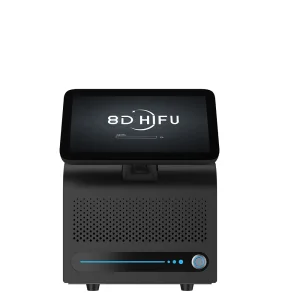
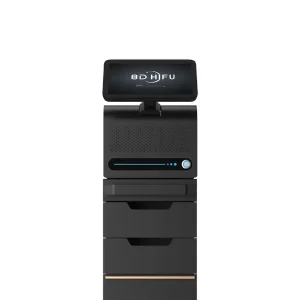
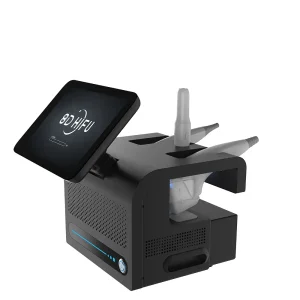
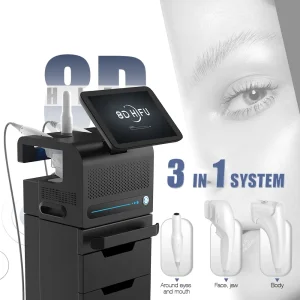
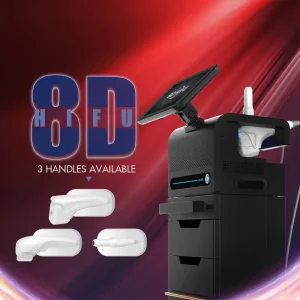
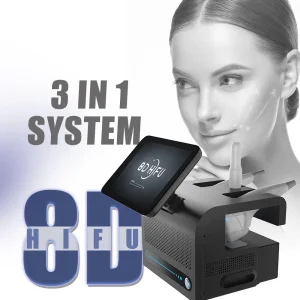
Browse our full range of portable, vertical, multi-functional, and body-slimming ultrasound platforms engineered for clinical excellence.
Direct answers from our senior ultrasonic R&D engineering desk addressing equipment selection, maintenance, safety margins, and commercial ROI.
Radiofrequency energy relies on tissue electrical impedance to generate bulk heating in the dermis (typically 40°C–55°C), which diffuses outward and requires multiple passes. In contrast, High-Intensity Focused Ultrasound (HIFU) utilizes acoustic wave convergence to pass harmlessly through the epidermis and dermis, concentrating acoustic energy at precise focal points (TCPs) reaching 65°C–70°C directly within the SMAS layer (4.5mm) or deep dermis (3.0mm). This produces instantaneous collagen protein denaturation and contraction without damaging the overlying skin surface.
While these names reflect evolutionary marketing terminology, the underlying mechanical differences lie in line matrix patterns and frequency modulation. Traditional 3D/4D HIFU handpieces use single or multi-line stepper motors to deliver parallel lines of dots (1–12 lines) per trigger. 7D/8D MMFU systems introduce dual-frequency technology: high-frequency micro-transducers (7MHz, 10MHz) for superficial peri-orbital and facial zones, paired with low-frequency macro-transducers (2MHz) for volumetric fat cell disruption at 6mm, 9mm, and 13mm depths with significantly faster shot cycle speeds.
Facial anatomy features sensitive nerve branches (such as the marginal mandibular and supraorbital nerves) located near vascular structures. If a factory uses substandard ceramic lenses with focal depth drift (e.g., a labeled 4.5mm cartridge firing at 5.5mm or 3.5mm), the energy may strike nerve tissue or superficial skin, leading to transient facial nerve paresis or epidermal burns. SANO subjects 100% of manufactured cartridges to hydrophone acoustic beam mapping to guarantee depth tolerances within ±0.15mm.
Standard clinical HIFU cartridges are rated between 20,000 and 30,000 lines (or up to 100,000 shots for single-dot probes). To prevent thermal energy degradation as shot counts increase, SANO incorporates degassed acoustic coupling fluid inside sealed cartridge housings paired with high-durability piezoelectric ceramics. This ensures energy output remains within ±5% of calibrated joules from the 1st shot to the 20,000th shot.
Yes. HIFU is inherently chromophore-independent. Unlike light-based laser devices (such as 808nm diode lasers or Alexandrite lasers) that target epidermal melanin and carry post-inflammatory hyperpigmentation (PIH) risks on Fitzpatrick IV–VI skin, focused ultrasound bypasses skin pigmentation entirely. Acoustic waves convert to heat only at the geometric focal focal point beneath the epidermis, making HIFU safe for all skin phototypes year-round.
We offer comprehensive white-labeling and hardware customisation services, including custom ABS/metal chassis housing colors, laser-engraved logos, custom outer shipping cases, pre-loaded multi-lingual software interfaces (supporting over 15 languages), customized treatment depth presets, and encrypted RFID cartridge chips that prevent unauthorized third-party cartridge usage on your proprietary machines.
HIFU systems require low daily maintenance compared to liquid-cooled laser systems. Essential protocols include: 1) Checking cartridge acoustic windows for scratches or gel buildup daily; 2) Using medical-grade ultrasound transmission gel free of air micro-bubbles; 3) Operating in climate-controlled treatment rooms (18°C–25°C); and 4) Replacing handpiece cable assemblies every 100,000 lines to prevent signal attenuation.
SANO aesthetic equipment is manufactured under an ISO 13485 Quality Management System. Our HIFU systems hold Medical CE certificates under the EU Medical Device Regulation framework, CB Scheme electrical safety reports (IEC 60601-1), EMC test certificates (IEC 60601-1-2), and RoHS compliance documentation. Technical construction files (TCF) are available to support regional distributor registrations.
Protocol stacking yields superior clinical outcomes: HIFU targets deep structural SMAS vectors (4.5mm), while Vacuum RF Microneedling treats superficial dermal elastic fibers (1.5mm–2.5mm) to shrink pores and refine skin texture. For body contouring, combining 13mm macro-HIFU with 360° Cryolipolysis accelerates adipocyte clearance through simultaneous thermal necrosis and cryo-induced apoptosis.
Due to minimal consumable costs per treatment line, commercial medspas typically amortize a professional SANO HIFU system within 15 to 30 patient treatments. With full-face treatment pricing averaging $800–$2,000 globally and consumable cartridge expenditure under $30 per patient session, HIFU represents one of the highest gross margin modalities in non-surgical aesthetics.