- +86 136 8127 5833
- [email protected]
- Shunyi, Beijing, China
Direct factory supply of medical-grade laser, radiofrequency, and body contouring platforms manufactured under ISO13485 quality protocols.
Understanding the transition from traditional Q-Switched nanosecond domains to ultra-short picosecond pulse regimes for medical aesthetic applications.
By delivering energy in trillionths of a second, picosecond lasers generate peak power densities exceeding gigawatts per square centimeter. This ultra-short duration is substantially shorter than the thermal relaxation time (TRT) of targeted chromophores like melanin and ink pigments.
Rather than heating ink particles to the point of thermal dissolution—which causes collateral damage to surrounding cutaneous tissue—picosecond energy induces Laser-Induced Optical Breakdown (LIOB). This converts light into intense mechanical shockwaves, pulverizing pigment into micro-dust particles.
Because thermal diffusion is strictly confined, collateral thermal necrosis is practically zero. Clinical trials demonstrate a dramatic reduction in Post-Inflammatory Hyperpigmentation (PIH), scarring, and hypopigmentation, particularly across darker Fitzpatrick skin types IV–VI.
A transparent engineering-level breakdown of wholesale price structures, optical component valuations, and total cost of ownership (TCO) for global distributors.
When evaluating the wholesale picosecond laser machine price, B2B buyers and medical equipment procurement teams frequently encounter extreme market price variance—ranging from $3,000 for basic portable units to over $45,000 for high-end medical-grade platforms with imported optics. Understanding the precise optoelectronic drivers of these price points is critical to optimizing capital expenditure and ensuring clinical efficacy.
| Equipment Category Tier | Wholesale Price Range (USD) | Optical Cavity & Laser Source | Beam Delivery System | Target Business Model |
|---|---|---|---|---|
| Portable / Desktop Entry Tier | $2,500 – $5,500 | Single Nd:YAG Rod, Passive Q-Switched / Micro-Cavity | Handpiece-integrated lens assembly | Small beauty parlors, tattoo touch-up shops |
| Standard Clinical Vertical Tier | $6,000 – $14,000 | Dual-lamp Single-rod Nd:YAG, Electro-optic Active Q-Switching | Standard 7-joint articulated optical arm | MedSpas, multi-specialty cosmetic centers |
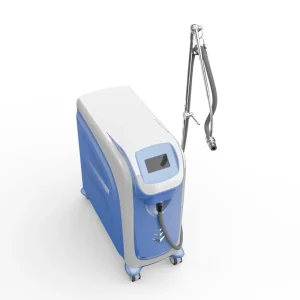
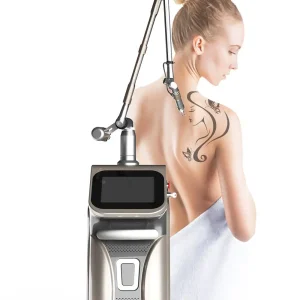
| Medical Grade / High-Power Tier | $15,000 – $32,000+ | Dual-lamp Dual-rod Nd:YAG (Korean Cavity / German Lamp), OPT Power Supply | Imported Korean 7-joint articulated arm with energy feedback | Dermatology clinics, surgical centers, OEM brand leaders |
High-grade Yttrium Aluminum Garnet (Nd:YAG) crystals doped with precise Neodymium concentrations determine pulse stability. Dual-rod systems doubled in price due to internal optical alignment requirements, but yield double the peak energy output without thermal degradation.
Imported Korean 7-joint articulated arms utilize high-reflectivity dielectric coated mirrors. Inferior optical arms suffer up to 40% laser transmission energy loss and alignment drift, whereas high-end arms maintain over 92% optical efficiency across millions of pulses.
Achieving true picosecond pulse duration requires ultra-fast high-voltage discharge capacitors. Industrial 2000W to 3000W OPT power modules ensure continuous millisecond charging cycles without energy pulse degradation during high-frequency treatments (up to 10Hz).
Evaluating regional market consumption, clinic profitability metrics, and unit economics for medical aesthetics operations.
Driven by demand for non-ablative skin rejuvenation (Laser Genesis / Micro Lens Array treatments) and multi-color tattoo removal. High emphasis on CE MDR, FDA 510(k) cleared platforms, long-term technical reliability, and low operator maintenance.
Extremely high demand for recalcitrant dermal pigmentation treatment, such as Melasma, Nevus of Ota, and post-acne hyperpigmentation. Clinics require robust cooling systems capable of performing in elevated ambient temperature environments.
Surging preference for skin whitening, pore tightening, and tone homogenization. Fast-paced clinic turnarounds demand high repetition rates (10Hz continuous fire) and durable laser handpieces with zero consumable lockouts.
Assuming a commercial wholesale procurement cost of $12,000 per unit for a medical-grade vertical picosecond platform:
| Operational Metric | Conservative Estimate | Moderate Growth Estimate | High-Volume Medical Spa |
|---|---|---|---|
| Average Session Charge (Tattoo / Melasma) | $150 USD | $250 USD | $400 USD |
| Patients Treated Per Day | 3 Patients | 6 Patients | 12 Patients |
| Monthly Gross Revenue (22 Days) | $9,900 USD | $33,000 USD | $105,600 USD |
| Estimated Capital Payback Period | 1.3 Months | 0.4 Months (12 Days) | 0.15 Months (4 Days) |
Matching specific laser wavelengths and handpiece array lenses to challenging dermatological indications.
Deep dermal penetration. Ideal for dark tattoo inks (black, dark blue, brown), Nevus of Ota, dermal melasma, and non-ablative skin conditioning across Fitzpatrick IV-VI skin types without epidermal damage.
High absorption in melanin and bright inks. Tailored for superficial epidermal lesions, freckles, solar lentigines, and warm-toned tattoo pigments (red, orange, yellow).
Micro-Lens Array focuses laser energy into localized high-density spots, inducing controlled LIOB in the dermis. Triggers neo-collagenesis and elastin remodeling for acne scar reduction and wrinkle smoothing.
When acquiring picosecond systems for clinical network expansion, ensure handpiece specifications include adjustable spot sizes (zoom head from 2mm to 10mm) and automated energy feedback sensors. Variable spot size maintains constant fluence across variable treatment depths, reducing clinical operator error and accelerating patient throughput.
Ensuring seamless market entry for global importers through customized branding, electrical safety compliance, and comprehensive technical dossiers.
Our manufacturing infrastructure adheres strictly to ISO13485 quality management systems. All exported aesthetic equipment undergoes rigorous electrical safety testing (IEC 60601-1) and electromagnetic compatibility (IEC 60601-1-2) verification, facilitating local medical registry submissions.
Factory-direct integration allows custom industrial chassis engineering, pantone color matching, private label branding, localized UI software translations (English, Spanish, German, French, Arabic, Russian), and pre-programmed clinical treatment parameters.
Every platform is backed by a full 2-year warranty package with direct engineer-to-engineer video technical support, plug-and-play modular component replacements, and guaranteed 72-hour international express spare parts dispatch.
Next-generation advancements in optoelectronic design, semiconductor pumping, and AI-assisted skin diagnostic integrations.
R&D focus is actively transitioning optical cavities toward 200ps–300ps boundaries. Shorter pulse durations amplify mechanical stress waves while further diminishing thermal deposition, allowing safer treatment of stubborn recalcitrant tattoo pigments.
Transitioning from traditional flashlamp pumping to high-efficiency Diode-Pumped Solid-State modules. DPSS architectures eliminate flashlamp degradation, reducing annual operational maintenance and extending system lifespans beyond 10 million shots.
Integrating smart optical sensors within the articulated arm handpiece to automatically measure epidermal melanin density and skin hydration prior to pulse discharge, dynamically adjusting fluence for optimal safety.
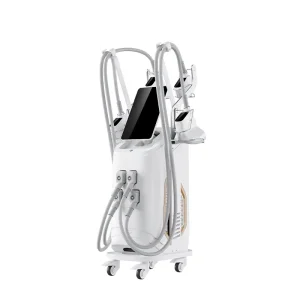
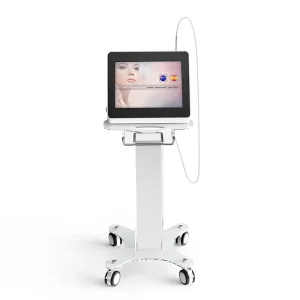
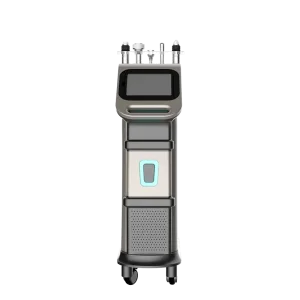
Complete multi-modality platforms for medical aesthetic clinics, body shaping centers, and international distributors.
Expert insights regarding optical system selection, wholesale pricing structures, warranty, and international delivery.