- +86 136 8127 5833
- [email protected]
- Shunyi, Beijing, China
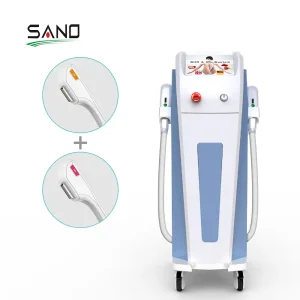
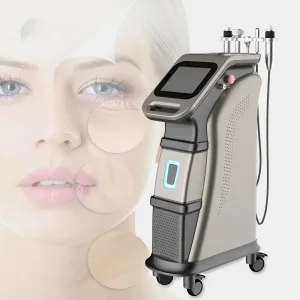
The international market for non-invasive body contouring and fat reduction platforms has experienced a structural paradigm shift over the past decade. Driven by consumer reluctance toward surgical procedures such as traditional suction-assisted liposuction (SAL) and abdominoplasty—which carry inherent risks of general anesthesia, surgical scar formation, and extended downtime—medical spas, plastic surgery practices, and aesthetic dermatology clinics worldwide are rapidly expanding their capital expenditure on medical-grade freeze machines for body applications.
According to macro-level clinical device data, the global non-invasive fat reduction equipment industry is expanding at a CAGR exceeding 14.2%, projected to top $11.8 Billion in annual equipment and consumable procurement value by 2030. At the epicenter of this expansion is cryolipolysis technology (non-surgical body freezing). B2B procurement heads, clinical chain directors, and medical equipment distributors are seeking reputable freeze machine for body suppliers and factories capable of manufacturing stabilized, high-throughput, multi-applicator platforms that adhere strictly to international regulatory bodies including EU CE MDR, US FDA 510(k), ISO 13485, and Japanese PMDA standards.
Characterized by strict medical device certification requirements and high patient purchasing power. Demand centers on multi-handle cryo machines capable of treating multiple body zones (abdomen, submental, flanks) simultaneously to optimize hourly clinic revenue.
China serves as the premier global OEM/ODM manufacturing engine for medical aesthetic devices. Advanced production ecosystems in Beijing and Guangdong combine cost-efficient supply chains with rigorous optoelectronic and thermodynamic R&D engineering.
Experiencing explosive double-digit growth in commercial beauty salons and luxury wellness resorts. Importers demand high-durability chassis, tropicalized cooling radiators to withstand hot ambient climates, and intuitive multi-lingual software interfaces.
To understand the competitive advantages offered by leading freeze machine for body manufacturers, one must evaluate the exact thermodynamic and cellular mechanics governing selective cryo-apoptosis. Unlike thermal energy modalities (such as high-intensity focused ultrasound or radiofrequency) which induce non-selective tissue coagulation or necrosis through intense heat, body freezing technology relies on the unique sensitivity of adipocytes (fat cells) to low temperatures.
“Selective Cryo-Lysis operates on the physical principle that triglyceride-rich lipids within human fat cells crystallize at significantly higher temperatures (between +4°C and -11°C) than surrounding water-rich structures such as epidermal keratinocytes, vascular endothelial cells, and peripheral nerve fibers.”
When an industrial-grade body freeze machine applies controlled cooling via vacuum-assisted applicators to target subcutaneous adipose tissue, it initiates a cascading cellular event without compromising epidermal integrity:
High-power Semiconductor TEC (Thermoelectric Cooling) Peltier chips extract thermal energy from the skin surface, dropping local subcutaneous adipose temperature to sustained therapeutic targets (-9°C to -14°C).
Triglycerides within adipocytes undergo phase transition from liquid to solid crystalline states. This structural alteration triggers an irreversible intracellular stress pathway.
Over 14 to 30 days post-session, affected fat cells release inflammatory cytokines, signaling macrophages to initiate phagocytosis—the natural engulfment and breakdown of damaged fat cells.
Digested lipids are gradually transported through the lymphatic network to the liver, where they are metabolized identically to dietary fats, resulting in a permanent reduction of 20%–28% in local fat layer thickness.
Early generation body freeze machines utilized two flat metal cooling plates situated on opposite sides of a vacuum applicator cup. This historical engineering approach created steep thermal gradients, where fat directly adjacent to the plates reached ultra-low temperatures while central tissue remained under-cooled.
| Engineering Parameter | Legacy Dual-Plate Cryo Systems | Next-Gen 360° Surround Cooling Platforms |
|---|---|---|
| Cooling Coverage Area | ~40% to 50% cup surface contact | 100% full-surround cup contact area |
| Temperature Uniformity | High thermal gradient; uneven fat destruction | Homogeneous thermal delivery across entire bulge |
| Effective Treatment Time | 60 minutes per session | 35 to 45 minutes per session (-30% time reduction) |
| Peltier Cooling Chips | Standard commercial grade (Dual module) | Japanese medical-grade TEC (Quattro module) |
| Comfort & Safety Rating | Higher risk of localized cold burn / bruising | Optimized skin thermal safety with silicon inserts |
As competition intensifies across commercial medspas, global buyers from professional body freezing machine factories are prioritising machines equipped with state-of-the-art technological features. The market is shifting rapidly from single-function aesthetic standalone devices toward multi-modality, intelligent body-sculpting workstations.
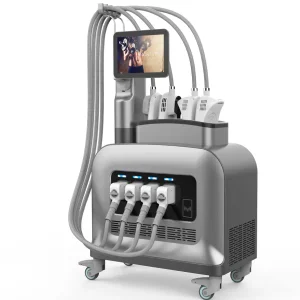
Modern commercial platforms feature dual, quadruple, or even quintuple independent vacuum channels and dedicated cooling pumps. This allows a practitioner to treat four anatomical regions (e.g., dual flanks and dual lower abdomen) simultaneously, quadrupling clinic revenue per hour.
Embedded inside each applicator cup are high-precision NTC thermistor sensors linked directly to Proportional-Integral-Derivative (PID) microprocessor loops. These sample skin temperatures at 50 Hz, automatically adjusting cooling energy to eliminate epidermal frostbite risks.
To address post-cryo tissue laxity, top-tier suppliers now integrate complementary modalities within the same chassis—combining cryo-lipolysis with Electromyostimulation (EMS), Cavitation, and Vacuum Radiofrequency (RF) for total body sculpting.
The versatile nature of modern wholesale freeze machine for body devices allows seamless integration into diverse commercial medical aesthetic environments. Depending on the operational model of the purchasing institution, factories offer modular handpiece combinations tailored to precise treatment protocols.
Primary Goal: Maximum throughput and low operational overhead.
Recommended Setup: 4-Handle 360° Cryolipolysis Workstations with interchangeable cup contours (large abdomen, medium flank, small submental double-chin applicator).
Primary Goal: Post-surgical refinement & non-surgical alternatives.
Recommended Setup: Hybrid platforms pairing targeted freezing with multi-frequency cavitation and 448kHz RF for post-liposuction smoothing and skin tightening.
Primary Goal: Custom OEM/ODM market differentiation.
Recommended Setup: Custom chassis industrial design, private label branding, localized UI languages, and proprietary anti-freezing membrane supply agreements.
Selecting a reliable body freeze machine manufacturer requires evaluating factors far beyond the initial wholesale price per unit. B2B importers must conduct rigorous due diligence across factory engineering capabilities, quality control (QC) workflows, component sourcing transparency, and international regulatory dossiers.
Ensure the factory utilizes premium internal components: German or Japanese silent water pumps for continuous coolant circulation, medical-grade proportional vacuum valves, pure copper radiator heat exchangers, and flame-retardant ABS chassis materials.
Leading factories mandate a minimum 72-to-100-hour continuous burn-in test cycle for every produced unit—verifying vacuum pressure stability, sub-zero temperature retention, thermal camera calibration, and electrical leakage safety under extreme voltage fluctuation.
As aesthetic engineering evolves, body freezing technologies are positioned to integrate advanced artificial intelligence, eco-friendly green engineering, and non-invasive biometric monitoring. The following roadmap outlines projected development phases for B2B buyers planning long-term inventory strategy.
Real-time machine learning algorithms dynamically adjusting sub-zero cooling profiles based on individual patient subcutaneous fat density, tissue hydration, and dermal thickness measured via embedded micro-ultrasound sensors.
Native built-in radial shockwave modules combined within the cryo-applicator cup, applying micro-mechanical pulses immediately post-freezing to break up crystallized adipocyte clusters, accelerating fat clearance by up to 40%.
Transition to zero-GWP (Global Warming Potential) eco-refrigerants in line with international environmental mandates, paired with IoT cloud management for predictive factory maintenance, continuous remote diagnostics, and OTA firmware upgrades.