- +86 136 8127 5833
- [email protected]
- Shunyi, Beijing, China
Engineered for global medical aesthetic clinics, B2B distributors, and OEM buyers demanding high-performance energy delivery and compliance standards.
A comprehensive analysis of non-invasive electro-aesthetic equipment manufacturing, market demand, and technology adoption across international medical sectors.
The global energy-based aesthetic device market is projected to reach $8.4 Billion by 2030, driven predominantly by a Compound Annual Growth Rate (CAGR) of 11.2% in Fractional Radiofrequency (RF) systems. Medical spas, dermatological clinics, and surgical centers are pivoting away from fully ablative CO2 systems toward micro-ablative fractional RF due to significantly reduced downtime and hyperpigmentation risks.
Leading Chinese manufacturing hubs—specifically specialized high-tech industrial nodes in Beijing and Guangdong—now produce over 65% of global RF power-generating modules. OEM/ODM collaboration allows international brands to leverage advanced SMT board production, high-precision stepper motor integration, and certified ISO 13485 cleanroom assembly lines without massive capital expenditures.
Commercial viability requires strict adherence to international regulatory frameworks. Leading manufacturing facilities maintain CE Medical (MDR), FDA 510(k) clearances, and IEC 60601-1 electromedical safety compliance. This technological authoritativeness guarantees precise energy metering, thermal safety limits, and reliable operational life spans under continuous clinic utilization.
Unpacking the thermal physics, impedance dynamics, and energy delivery mechanisms engineered into medical-grade micro-needle RF platforms.
Unlike optical laser modalities reliant on chromophore absorption (melanin or water), Fractional RF delivers thermal energy directly via electric current resistance in tissue. When needle electrodes penetrate the dermal architecture, energy generation reaches temperatures of 55°C to 68°C. This exact range induces immediate collagen triple-helix denaturation and triggers prolonged neoelastogenesis without epidermic sloughing.
Factory configurations feature dual tip technologies. Insulated needles concentrate radiofrequency emissions strictly at the uninsulated 0.3mm tip, safeguarding the epidermal junction (ideal for Fitzpatrick Types IV-VI). Non-insulated needles emit thermal energy across the entire dermal insertion length, delivering volumetric heating suitable for diffuse skin laxity and superficial rhytids.
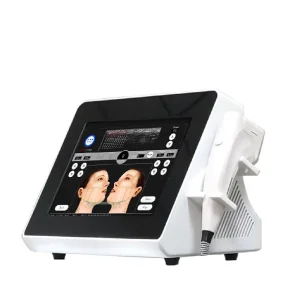
Modern clinical systems employ stepping-motor vacuum technology. Negative air pressure pulls the stratum corneum snugly against the handpiece array prior to needle insertion. This eliminates tissue mechanical deflection, guaranteeing sub-millimeter needle penetration depth accuracy (adjustable from 0.2mm to 4.0mm in 0.1mm increments) across anatomically complex contours.
“Engineering Precision Note: Energy delivery in high-end fractional RF factories utilizes real-time impedance feedback. By measuring tissue resistance every millisecond, the internal generator dynamically auto-adjusts voltage output to maintain consistent joule delivery regardless of local skin hydration variation.”
How cutting-edge innovations in artificial intelligence, multi-energy integration, and sub-dermal delivery systems are transforming device manufacturing.
Integration of microprocessors capable of algorithmic skin impedance detection. Ensures zero thermal spikes, reducing post-treatment erythema duration by up to 40%.
Combining non-contact micro-plasma discharge with sub-dermal microneedle RF in a single handset, enabling simultaneous superficial epidermal resurfacing and deep dermal tightening.
Utilizing micro-channel pathways created by fractional RF for acoustic-assisted drug delivery, driving exosomes, PDRN, and hyaluronic acid complexes into deep reticular dermis.
Computer-vision-guided robotic arm articulation for perfect grid delivery across large treatment sites, eliminating operator fatigue and guaranteeing 100% uniform pulse distribution.
High-ROI clinical workflows supported by fractional RF engineering, optimized for modern aesthetic practice diaries.
Fractional RF insulated microneedling breaks dense fibrotic tethering beneath rolling, boxcar, and ice-pick scars. By delivering thermal coagulation directly inside the scarred reticular dermis, collagen remodeling lifts depression floor structures without damaging overlying epidermis.
With precise depth control down to 0.5mm, specialized ultra-fine tip arrays safely address delicate periorbital fine lines, crow's feet, and loose submental/neck skin. Tissue contraction yields immediate thermal tightening followed by multi-month neocollagenesis.
Utilizing high-energy non-insulated needle arrays at depths of 3.0mm to 4.0mm, fractional RF breaks up compromised elastic fibers in abdominal stretch marks and post-pregnancy skin laxity, restoring structural tensile strength across large body areas.
How premier Chinese manufacturers empower global distributors, device brands, and medical chains through customized hardware and regulatory support.
Factories provide comprehensive industrial design customization. From custom injection-molded chassis configurations and metallic exterior paint finishes to custom handpiece weight balancing and ergonomics, platforms are tailored to match brand aesthetic identity.
Complete control over Linux or Android-based touch interfaces. Includes multi-language localizations, custom treatment presetting algorithms, shot-counter tracking locks for rental business models, and remote Wi-Fi diagnostic updates.
Every platform undergoes a 72-hour continuous electrical load test, thermal imaging energy output calibration, and 10,000-cycle stepping motor stress testing before cleanroom packaging, achieving a near-zero DOA (Defect on Arrival) record.
Complementary medical systems manufacturing for full-suite clinical practice coverage.
Technical, operational, and commercial insights directly from our engineering desk to clarify bulk purchasing and clinical utilization.