- +86 136 8127 5833
- [email protected]
- Shunyi, Beijing, China
Explore our direct factory product range optimized for skin cooling integration, laser hair reduction, non-invasive body contouring, and advanced dermatological therapy.
Analyzing how sub-zero forced-air cooling systems became an essential protocol standard across dermatological clinics, laser surgery centers, and global aesthetic medical practices.
Modern high-fluence light and energy devices (such as 808nm diode lasers, 1064nm Nd:YAG, and fractional CO2 platforms) generate extreme localized thermal energy. Without active epidermal skin cooling, the risk of epidermal burns, dyschromia, and post-inflammatory hyperpigmentation (PIH) increases substantially—especially on Fitzpatrick IV–VI skin types.
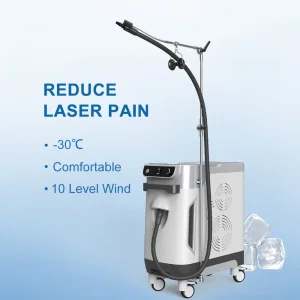
Historically, clinics relied on dynamic cooling devices (DCD) using cryogenic sprays (R134a) or direct contact cooling. However, sub-zero air cooling machines (delivering continuous chilling down to -30°C or -35°C) have captured global market share due to zero consumable costs, non-contact hygiene, and uninterrupted airflow during fast-scanning laser treatments.
Global distributors and aesthetic device brands are actively seeking direct OEM skin cooling system manufacturers. White-labeling customized air cooling units allows device brand owners to bundle branded cooling platforms alongside their primary laser consoles, maintaining design cohesion and capturing higher gross margins.
A technical whitepaper overview of sub-zero thermal dynamics, closed-loop compressor mechanics, and next-generation smart sensing technology in professional skin chillers.
When high-fluence laser light impacts cutaneous chromophores (melanin, hemoglobin, or water), target tissues absorb energy rapidly. Epidermal cooling works by creating a negative thermal gradient in the upper papillary dermis, absorbing collateral heat before conductive transfer burns surrounding basal keratinocytes.
Industrial OEM skin cooling machines utilize high-capacity variable-speed compressors coupled with custom evaporator coils. Unlike cheap thermoelectric (Peltier) coolers that freeze up rapidly, dual-compressor refrigeration circuits sustain continuous duty cycles in high-volume clinics without internal frost accumulation.
The future technology roadmap features non-contact infrared thermometry integrated into the cooling nozzle arm. Closed-loop AI microcontrollers dynamically adjust airflow velocity based on live epidermal surface temperature feedback, preventing localized frostbite while ensuring optimal thermal suppression.
| Cooling Technology Category | Continuous Forced Air (-30°C) | Contact Sapphire Crystal | Cryogenic Spray (DCD) |
|---|---|---|---|
| Operating Consumable Cost | $0 / Hour (Zero Consumables) | $0 / Hour (Requires Gel) | High ($50–$120 / Canister) |
| Patient Comfort & Pre-Analgesia | Excellent (Pre/Mid/Post Cooling) | Moderate (Mid-Cooling Only) | Moderate (Short Burst Only) |
| Hygiene & Cross-Contamination Risk | 100% Non-Contact (Zero Risk) | Direct Contact (Sanitization Needed) | Non-Contact |
| Suitability for Ablative Lasers (CO2) | Ideal (Blows Away Plume & Heat) | Not Applicable (Cannot Touch Open Micro-Wounds) | Poor (Sub-zero Spray Risk) |
| System Maintenance & Uptime | Low (Self-Defrosting Compressor) | Low (Water Chiller Loop) | High (Valve & Nozzle Clogging) |
How specialized skin cooling equipment interfaces across diverse dermatological treatments and energy-based medical devices.
During high-speed body sweeps with 808nm diode or 755nm Alexandrite lasers, continuous cold air at -30°C numbs cutaneous pain receptors (A-delta and C nerve fibers), replacing topical anesthetic creams while protecting the epidermis during high fluence energy pulses.
Picosecond photomechanical ink shattering generates rapid acoustic shockwaves and residual thermal buildup. Directing a focused air stream calms post-treatment erythema immediately, reduces edema, and prevents blister formation over sensitive pigment sites.
Fractional ablative resurfacing creates microscopic thermal zones (MTZs). Cold air blown over the treatment zone mitigates burning discomfort, clears post-laser plume from the operator's view, and accelerates initial vasoconstriction to reduce recovery downtime.
980nm and 1064nm vascular therapies require high energy to coagulate targeted vessel walls. Pre-cooling the overlying epidermis protects delicate vascular structures near the skin surface, preventing thermal stripping while maintaining deep vessel heating.
For patients sensitive or allergic to lidocaine/tetracaine topical numbing creams, sub-zero air cooling offers immediate, chemical-free cryo-anesthesia with no waiting window, reducing total patient consultation times by 30 to 45 minutes.
How integrated manufacturing infrastructure in Beijing enables scalable ODM customization, cost efficiency, and rigorous quality control for international medical brands.
China's comprehensive manufacturing ecosystem allows direct sourcing of premium medical compressors, precision sheet metal chassis fabrication, custom injection-molded hands-free support arms, and advanced PCB microcontrollers within localized industrial clusters. This reduces supply bottlenecks and lead times to under 14 days.
Every OEM skin cooling machine produced in our facility undergoes 72 hours of uninterrupted continuous stress-testing. Air output temperature stability, compressor pressure thresholds, defrost cycle efficiency, and electrical safety compliance (IEC 60601-1 standards) are systematically verified and recorded prior to shipping.
We provide global distributors with fully customizable OEM solutions: custom acrylic branding plates, localized UI software interface designs, custom exterior powder-coating colors, specialized hands-free mounting brackets tailored for third-party laser handles, and dual-voltage power supplies (110V/220V).
Empowering worldwide importers with complete technical dossiers, certification compliance, and engineer-led post-sales support.
Our OEM skin cooling platforms are manufactured in compliance with European CE directives, EMC electromagnetic compatibility standards, and Low Voltage Directives (LVD). Complete technical construction files (TCF) are made available to import partners to streamline regional registration.
To ensure smooth operational adoption across global clinics, our digital control panels feature multi-language UI operating systems (English, Spanish, German, French, Russian, Portuguese, Italian, and Arabic) with custom touch-screen calibration options.
Skip generic customer service representatives. Our clients enjoy direct access to our senior mechanical and electronic assembly engineers for real-time video troubleshooting, routine maintenance guidance, and spare parts dispatch within 48 to 72 hours via international air express.
In-depth technical answers curated by our R&D team to assist medical device buyers, importers, and clinic owners.
Discover our specialized skin coolers, DPL platforms, vascular laser systems, and high-power Nd:YAG solutions manufactured directly in our Beijing plant.