- +86 136 8127 5833
- [email protected]
- Shunyi, Beijing, China
Explore our flagship OEM laser & aesthetic medical platforms engineered for global distributors, clinical franchises, and aesthetic centers.
An executive briefing on the shifting market dynamics, clinical demands, and investment yields of Q-Switched Nd:YAG laser technologies across global markets.
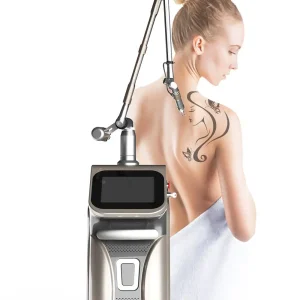
The global market for tattoo removal is projected to expand at a CAGR exceeding 9.4% through 2030. Shifts in corporate culture, tattoo regret, and cover-up preparation have converted tattoo clearance from a niche treatment into a predictable revenue stream for aesthetic practices worldwide.
Modern clinical consumers increasingly reject extended post-treatment downtime. High-power Q-Switched Nd:YAG devices configured for 1064nm dermal toning and 1320nm carbon peels deliver high-yield collagen stimulation and pigmentation reduction without epidermal ablation.
Distributors and clinical chains are seeking reliable original equipment manufacturers (OEMs) capable of offering medical-grade Q-switched laser units with low per-shot consumable costs, high lamp endurance, and compliant CE technical documentation.
Understanding the electro-optic switching mechanisms, energy density calculations, and photoacoustic chromatic target fragmentation.
Unlike passive Q-switches using saturable absorbers (Cr:YAG crystals) that experience power drift, professional OEM Q-switched Nd:YAG platforms utilize an active KD*P (Potassium Dideuterium Phosphate) Pockels Cell. By applying high voltage pulses, energy stored within the Nd:YAG crystal cavity is discharged within nanoseconds, achieving gigawatt-level peak power output.
Traditional lasers rely on photothermal heating to melt target chromophores, often incurring surrounding thermal damage. Q-switched lasers output pulse widths shorter than the target's thermal relaxation time (TRT), generating a powerful photoacoustic shockwave. This mechanical shockwave shatters ink particles into microscopic fragments cleared by macrophages.
Precision manufacturing guarantees a homogeneous Flat-Top (Top-Hat) beam profile rather than a hot-spot prone Gaussian distribution. Hot spots induce epidermal burning, scarring, and post-inflammatory hyperpigmentation (PIH). Flat-top delivery preserves uniform energy distribution across the entire spot area.
In clinical optics, radiant exposure ($Fluence, J/cm^2$) is defined by the energy output ($E$, in Joules) divided by the spot area ($A = \pi \cdot r^2$). When increasing the handpiece spot diameter, operators must adjust the source energy exponentially to maintain identical therapeutic energy density without risking undertreatment or localized epidermal tissue damage.
| Wavelength | Target Chromophore | Penetration Depth | Primary Clinical Indications | Safety Factor (Fitzpatrick) |
|---|---|---|---|---|
| 1064 nm Nd:YAG | Black / Blue Pigment, Dermal Melanin | Deep Dermis (3.0 – 5.0 mm) | Nevus of Ota, Dark Tattoo Removal, Melasma, Dermal Toning | Safe for Types I – VI |
| 532 nm KTP | Red / Orange / Tan Ink, Superficial Melanin | Epidermis (0.5 – 1.5 mm) | Freckles, Solar Lentigines, Red Tattoo Removal, Cafe-au-Lait spots | Caution for Types IV – VI |
| 1320 nm Carbon | Exogenous Carbon Powder Suspension | Superficial Dermis | Hollywood Carbon Peel, Sebum Regulation, Pore Reduction, Acne Control | Safe for All Skin Types |
| 585 nm / 650 nm Dye | Sky Blue, Green, Violet Tattoo Inks | Mid Dermis | Recalcitrant Colored Tattoo Clearance (Multi-Wavelength Extensions) | Specialized Application |
How Beijing Sano Laser leverages localized industrial supply chains, advanced CNC optics alignment, and strict ISO13485 manufacturing workflows to provide unbeatable B2B competitive advantages.
Situated within Beijing's high-tech industrial manufacturing cluster (Shunyi District), SANO Laser directly accesses world-class optical crystal growers, premium Xenon flashlamp suppliers, and high-precision CNC metal fabricators. This supply chain proximity lowers raw material procurement costs by 35–50% relative to Western assembly lines.
From initial industrial shell design, injection molding, and PCB circuit layout to handpiece optical cavity alignment and software programming, our engineer-led team handles every step. Custom OEM/ODM requests—such as specialized shell color schemes, branded user interfaces, or customized pulse width logic—are executed rapidly without relying on third-party design vendors.
Quality reliability is non-negotiable. Every Q-switched Nd:YAG system built in our Beijing facility undergoes a mandatory 72-hour continuous burn-in test, checking beam spot energy symmetry, cooling fluid flow rates, optical alignment retention under mechanical vibration, and electrical safety standards before packing.
Helping clinic managers and B2B buyers select the optimal technology based on pulse duration physics, thermal impact, and ROI capabilities.
| Feature Parameter | Q-Switched Nd:YAG (Nanosecond) | Picosecond Nd:YAG (Pico-domain) | IPL / DPL (Intense Pulsed Light) | Long-Pulsed 1064nm Laser |
|---|---|---|---|---|
| Pulse Duration | 3 – 8 nanoseconds ($10^{-9}$ s) | 350 – 800 picoseconds ($10^{-12}$ s) | 1 – 20 milliseconds ($10^{-3}$ s) | 10 – 40 milliseconds ($10^{-3}$ s) |
| Primary Tissue Action | Photoacoustic & Photothermal shockwave | Pure Photoacoustic fragmentation | Broadband Photothermal selective heating | Deep Photothermal vessel coagulation |
| Tattoo Removal Ability | High Efficiency (Black, Red, Dark Blue) | Ultra High (Including recalcitrant green/blue) | Contraindicated | Ineffective |
| Consumable & Lamp Life | Extremely low cost (1M+ shots per lamp) | Moderate to High pump laser cost | Flashlamp replacement required ~100k shots | Low to moderate replacement cost |
| Epidermal Safety (Fitzpatrick IV-VI) | High (When using 1064nm mode) | Very High | Moderate (High PIH risk on dark skin) | High (Requires strong surface cooling) |
| Average Equipment Purchase Capex | Balanced / Optimal B2B ROI | Premium / High initial capital investment | Low initial entry investment | Moderate capital investment |
Actionable clinical guidance derived from SANO's in-house clinical testing room for optimal parameter configuration across global patient demographics.
Tattoo removal protocols demand precise wavelength matching. 1064nm energy efficiently targets black, dark blue, and dark brown carbon-based inks residing deep within the dermis. Red, orange, and purple pigments respond rapidly to 532nm light. For dense professional ink, 4 to 8 sessions spaced 6 weeks apart allow complete lymphatic clearing of fragmented ink particles.
Treatment of complex dermal pigmentation such as Melasma, Hori’s Nevus, and Nevus of Ota requires a sub-thermolytic "Laser Toning" technique. By utilizing a 1064nm wavelength with a large spot size (7–10mm) and low energy fluence ($1.2 - 2.0 J/cm^2$), melanin granules inside melanocytes are gently fragmented without destroying cell viability, eliminating PIH rebound risks.
Popularized globally as a red-carpet skin rejuvenation procedure, a fine liquid carbon layer is applied to the facial epidermis. The 1320nm Q-switched laser beam vaporizes the carbon particles inside pores, blasting away keratin debris, tightening enlarged pores, regulating sebum secretion, and micro-stimulating collagen synthesis without patient downtime.
Essential checklist parameters that procurement officers, medical distributors, and private label importers must evaluate prior to issuing purchasing orders.
Ensure the laser cavity utilizes double laser rods and double Xenon flashlamps powered by a high-capacity water-to-air cooling circulation system with deionized water filtration to guarantee continuous operation in warm ambient climates.
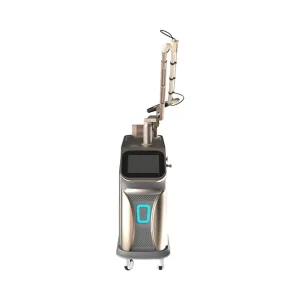
Premium stationary clinical units utilize a 7-joint Korean optical articulated arm for zero power loss over distance and superior beam delivery. Portable units integrate the Nd:YAG rod directly within the handpiece casing for lightweight mobility.
Confirm the OEM manufacturer supplies comprehensive technical files, including Medical CE certificates under EU MDR directives, EMC electromagnetic compatibility reports, and ISO13485 medical device quality management system compliance.
SANO Laser provides complete OEM white-label customization: custom exterior chassis color coatings, custom silkscreen logo placement, boot-up software logo integration, and multilingual touch-screen UI operating software.
Anticipating technological convergence, smart energy feedback loops, and diffractive optical element integration over the coming decade.
Integrating Micro-Lens Arrays (MLA) splits the single Q-switched laser beam into hundreds of high-density micro-spots. This creates localized optical breakdown in the dermis (LIOB - Laser-Induced Optical Breakdown), driving deep collagen remodeling while leaving the surface skin perfectly intact for zero-downtime scar treatment.
Next-generation OEM laser chassis incorporate real-time epidermal melanin sensors and skin color calibration cameras. The system dynamically adjusts the target pulse energy, frequency, and spot size recommendation based on real-time skin reaction feedback to safeguard patients from operator error.
The boundary between pure nanosecond Q-switches and picosecond platforms is blurring. Advanced hybrid optical cavities allow operators to toggle between traditional 5ns nanosecond pulses for bulk photoacoustic tattoo removal and sub-nanosecond pulses for delicate epidermal pigment toning on a single machine platform.
Detailed technical and commercial answers provided directly by SANO Laser’s senior optical engineering and export team.
Our industrial electro-optic Q-switched handpieces and laser cavities utilize high-grade UK-imported Xenon flashlamps rated for 1,000,000 to 2,000,000 continuous shots. When operated within recommended cooling parameters and maintained with deionized water changes every 30 days, lamp performance remains stable with less than 5% energy decay across its lifespan.
Active electro-optic Q-switching relies on a high-voltage Pockels cell (KD*P crystal) that triggers precise energy release on demand, yielding higher peak energy (up to 1500mJ) and an ultra-short pulse width (3-6ns). Passive Q-switched devices use saturable absorbers which experience energy degradation as temperature rises, resulting in inconsistent pulse energy and longer pulse durations that increase thermal damage risks.
Yes. The 1064nm wavelength exhibits significantly lower absorption in epidermal melanin compared to 532nm or 755nm wavelengths, while penetrating deep into the dermis. When paired with a large spot size (6-10mm) and sub-thermolytic fluence settings, 1064nm Q-switched lasers represent the safest gold standard for dermal pigmentation treatment on darker skin tones without causing post-inflammatory hyperpigmentation (PIH).
SANO Laser offers full-tier OEM/ODM white-label services for aesthetic equipment distributors, medical franchises, and brand owners. This includes custom structural chassis design, custom paint color matching, logo silkscreening, customized packaging cases, localized UI software languages, pre-set clinical parameter suites, and full CE/FDA technical documentation support.
Every equipment unit shipped by SANO Laser includes a 2-year factory warranty backed by online technical diagnostics and free spare part replacement. Global buyers receive direct access to our 24-hour engineer helpdesk, operator training video manuals, clinical parameter setup protocol documentation, and long-term optical replacement component availability.
Browse additional high-demand aesthetic devices, body sculpting platforms, micro-needling RF systems, and laser technologies available for direct OEM order.