- +86 136 8127 5833
- [email protected]
- Shunyi, Beijing, China
Explore our flagship medical aesthetic platforms engineered for commercial medspas, global distributors, and clinical practices.
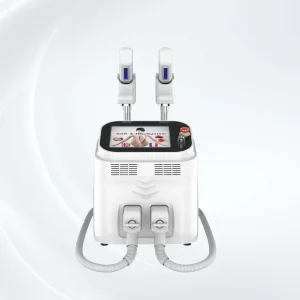
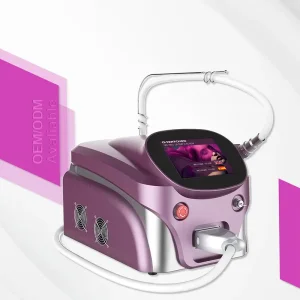
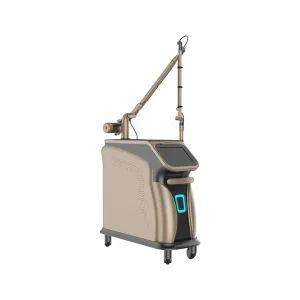
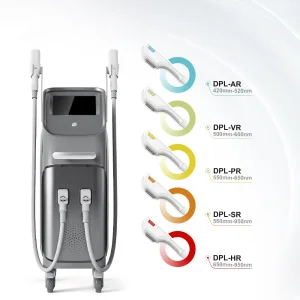
Deconstructing the commercial variables, supply chain dynamics, and optomechanical specifications that govern global procurement costs for tattoo removal devices.
The global market for non-invasive dermatological procedure equipment has experienced an unprecedented surge, with Neodymium-doped Yttrium Aluminum Garnet (Nd:YAG) laser systems serving as the undisputed gold standard for dermal pigment fragmentation and tattoo clearance. However, procurement officers, aesthetic clinic directors, and medical equipment distributors frequently encounter extreme price dispersion when evaluating an OEM Nd:YAG laser tattoo removal machine price across global supply channels. Factory quotes range from under $1,800 USD for basic passive Q-switched desktop units to upwards of $25,000 USD for advanced, medical-grade Electro-Optic (E-O) active Q-switched or Picosecond platforms utilizing articulated optical delivery arms.
Understanding this valuation matrix requires examining the internal optomechanical architecture. The primary driver of factory pricing is not merely exterior chassis design, but the structural integrity of the optical cavity, the power supply capacity, and the precision of the Q-switching mechanism. Passive Q-switched lasers utilize saturable absorbers (such as Cr4+:YAG crystals) integrated directly into handpieces; while highly cost-effective, they are thermally constrained, exhibit energy decay over prolonged sessions, and deliver wider pulse widths (10-20ns). Conversely, high-end OEM factories build active Electro-Optic Q-switched systems utilizing Pockels cells and polarizing optics inside the main chassis, delivering ultra-short pulse durations (<6ns) at significantly higher peak optical power without collateral thermal damage to surrounding tissue.
Active Electro-Optic Pockels cells vs. Passive Cr4+ crystal absorbers. Active switching quadruples peak power and guarantees pulse-to-pulse energy stability across high-frequency firing protocols.
Single-rod vs. Dual-rod cavity optics. Dual-rod tandem systems double optical amplification, enabling consistent energy output up to 2000mJ at 1064nm for dense, recalcitrant ink clearance.
Direct handpiece crystal emission vs. Korean 7-joint counterbalanced articulated arms. Articulated arms maintain flat-top beam profiles and exact spot-size transmission without beam divergence.
A technical examination of selective photothermolysis versus photo-acoustic chromophore shattering.
The foundational principle governing Nd:YAG laser tattoo removal is selective photothermolysis, expanded into the photo-acoustic realm. When targeting exogenous tattoo pigments or endogenous melanin, the laser wavelength must match the absorption spectrum of the target chromophore while delivering energy within a pulse duration shorter than the chromophore's thermal relaxation time (TRT). Standard ink particles range between 20 to 100 nanometers in diameter, corresponding to a TRT under 10 nanoseconds.
When an OEM Nd:YAG laser fires at 1064nm, it penetrates deeply into the dermis with minimal absorption by epidermal melanin, making it ideal for dark blue, black, and dark brown pigments across all Fitzpatrick skin types (I-VI). Passing the 1064nm fundamental beam through a Potassium Titanyl Phosphate (KTP) non-linear crystal induces frequency doubling, producing a 532nm wavelength highly absorbed by red, orange, and purple inks, as well as superficial epidermal lesions.
| Technical Specification | Standard Portable Passive Q-Switch | Professional OEM Active E-O Q-Switch | Next-Gen OEM Picosecond Nd:YAG |
|---|---|---|---|
| Pulse Width | 10 ns – 20 ns | 5 ns – 8 ns | 350 ps – 800 ps |
| Primary Mechanism | Photo-Thermal dominant | Balanced Photo-Thermal / Acoustic | Pure Photo-Acoustic Fragmentation |
| Peak Power Output | 20 MW – 50 MW | 100 MW – 250 MW | > 800 MW (Gigawatt range) |
| Beam Profile | Gaussian (Hot-spot central peak) | Homogeneous Flat-Top | Refractive Array Flat-Top |
| Cooling Integration | Basic Water-to-Air radiator | Compressor-based Refrigeration | Closed-loop Dual Heat Exchanger |
| Typical Factory OEM Price | $1,500 – $3,200 USD | $6,500 – $12,000 USD | $14,000 – $26,000 USD |
As illustrated in the technological roadmap above, transitioning from nanosecond domain Q-switched lasers to sub-nanosecond and picosecond domain devices fundamentally shifts the tissue interaction mechanism. Picosecond pulses generate extreme peak power density, creating a localized mechanical stress wave that pulverizes tattoo ink into microscopic dust-like particles. These smaller particles are phagocytosed by macrophages and cleared via the lymphatic system at significantly higher efficiency, reducing total required treatment protocols by up to 50% while virtually eliminating scarring risks.
Why Beijing and regional manufacturing hubs deliver unmatched price-to-performance ratios for global medical OEM brands.
The global dominance of Chinese OEM factories in the aesthetic laser sector is grounded in unparalleled supply chain integration, rigorous component standardization, and advanced optoelectronic manufacturing ecosystems. Chinese production facilities, particularly centered in tech corridors like Beijing's Shunyi District, leverage hyper-localized industrial clusters that lower raw material lead times and component sourcing costs by 40-60% compared to Western counterparts.
Direct partnerships with synthetic crystal growth labs (Nd:YAG, KTP, Cr4+) eliminate intermediary markups, guaranteeing high thermal conductivity laser rods and optical lenses with damage thresholds exceeding 15 J/cm².
In-house assembly of high-voltage capacitor banks (capable of discharging 1200V in milliseconds) ensures stable pulse excitation while maintaining strict electromagnetic compatibility (EMC) compliance.
ISO Class 7 cleanrooms prevent microscopic dust contamination of sensitive optical mirrors and beam expanders, ensuring lifetime energy throughput without optical burn marks or power degradation.
Furthermore, Chinese OEM manufacturing efficiency extends into flexible custom software engineering (UI/UX customization), modular chassis sheet-metal tooling, and rapid prototyping capabilities. Importers and brand owners can request customized shell geometries, multi-language system software, and proprietary treatment presets with minimal Minimum Order Quantity (MOQ) barriers, accelerating time-to-market for international distributors.
Deploying OEM Nd:YAG platforms across diverse demographic markets, clinical indications, and regulatory landscapes.
Utilizing 1064nm for black/cyan inks, 532nm for red/crimson pigments, and optional dye-impregnated handpiece tips (585nm / 650nm) to treat stubborn sky-blue and lime-green inks across diverse patient bases.
Treating Nevus of Ota, Hori's Nevus, cafe-au-lait macules, solar lentigines, and post-inflammatory hyperpigmentation (PIH) using low-fluence, multi-pass 1064nm "Laser Toning" modes without epidermal disruption.
1320nm micro-carbon facial skin rejuvenation. The laser vaporizes topical nano-carbon particles inside pores, exfoliating stratum corneum, controlling sebum, and stimulating dermal collagen synthesis.
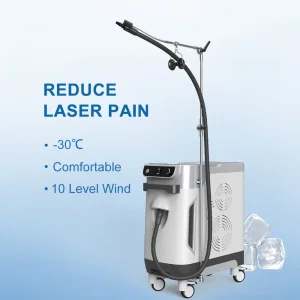
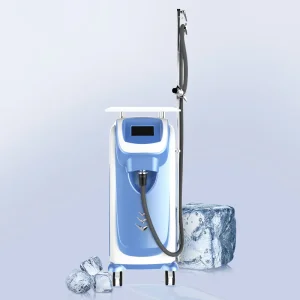
In mature North American and European aesthetic practices, tattoo removal procedures are heavily packaged alongside cold-air skin chilling units (such as -30°C Zimmer cryo cooling systems) to maximize patient comfort and prevent epidermal blistering. In Asian markets, where melasma and dermal pigmentation dominate clinical patient volume, OEM Nd:YAG lasers must offer precise low-fluence adjustment (down to 0.5 J/cm²) with large spot sizes (up to 10mm) to avoid inducing rebound hyperpigmentation in Fitzpatrick IV skin types.
Ensuring international market access through stringent medical device standards and comprehensive factory warranties.
Leading OEM factories maintain ISO 13485 Quality Management System certification, CE marking under Medical Device Regulation (MDR 2017/745), US FDA 510(k) clearances, and RoHS compliance for international distribution safety.
Robust OEM partnerships include 24-month hardware warranties covering power supplies, flashlamps, and cooling pumps. Modular internal wiring ensures field engineers can swap modular sub-assemblies rapidly.
Integrated IoT control boards enable remote system diagnostics, monitoring flashlamp pulse counts, water flow rates, and operating temperatures to provide preventive maintenance support globally.
In-depth answers addressing critical questions asked by medical laser importers, clinic owners, and procurement specialists.
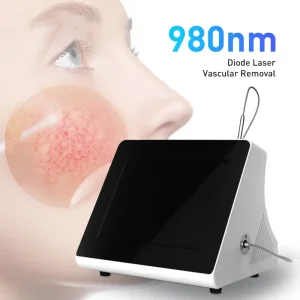
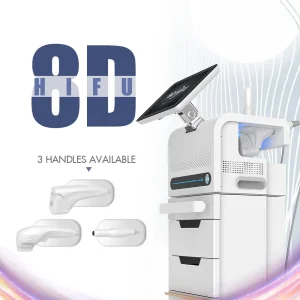
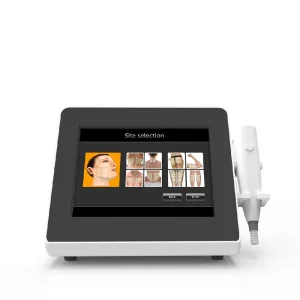
Complete product spectrum covering body shaping, cryo-cooling, photothermal vascular treatment, and multi-wavelength diode lasers.