- +86 136 8127 5833
- [email protected]
- Shunyi, Beijing, China
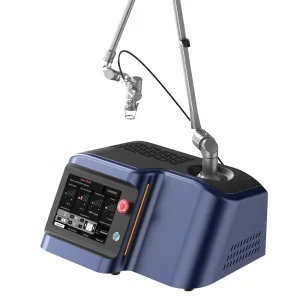
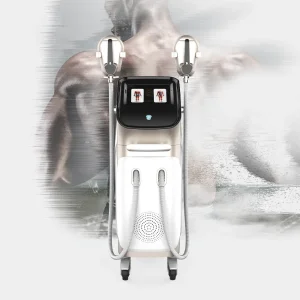
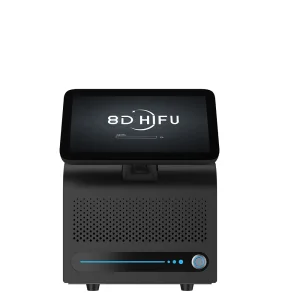
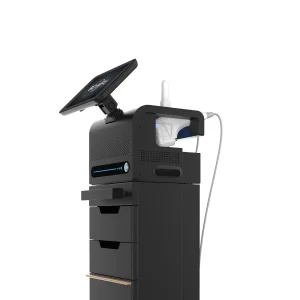
Explore our core clinical platforms manufactured under rigorous OEM/ODM protocols for global aesthetic distributors and medical practices.
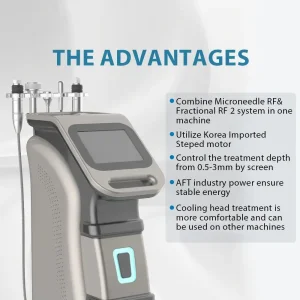
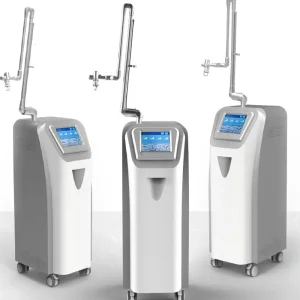
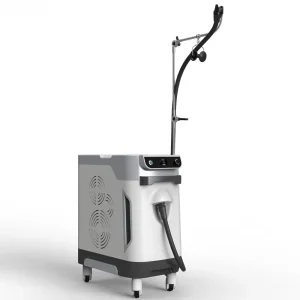
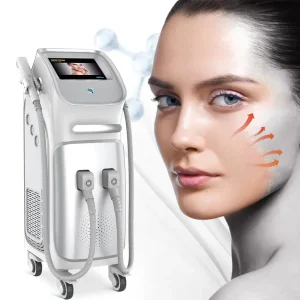
Understanding the biophysical mechanisms, photothermal optics, and structural collagen remodeling driving modern OEM scar removal devices.
Scar tissue management represents one of the most clinically challenging domains in medical dermatology and plastic surgery. Scarring—whether resulting from surgical procedures, traumatic injury, severe acne vulgaris, or deep dermal burns—is characterized by dis-organized collagen architecture, hyper-vascularization or extreme ischemia, and altered tissue elasticity. The modern laser scar removal machine functions as an advanced bio-photonic tool engineered to selectively re-structure abnormal extracellular matrix (ECM) components without inducing catastrophic secondary cutaneous necrosis.
At the technological core of modern OEM Laser Scar Removal Machine For Sale options lies fractional photothermolysis (FP). Unlike historic bulk-ablative lasers that removed the entire epidermal barrier, fractional technology creates arrayed microscopic treatment zones (MTZs). These micro-thermal columns penetrate deep into the papillary and reticular dermis, triggering a controlled cascade of wound healing while leaving surrounding tissue bridges intact. These non-irradiated tissue reservoirs accelerate re-epithelialization, reducing patient downtime from weeks to mere days.
When sourcing equipment from a reliable laser scar removal machine manufacturer, B2B buyers must evaluate the underlying optical cavity physics. The primary modalities currently dominating global commercial demand include:
Why leading global aesthetic brands and medical device suppliers partner with Chinese OEM manufacturing facilities for scalable, compliant production.
Chinese aesthetic technology hubs in Beijing and Guangdong leverage complete end-to-end component ecosystems. From precision optical lenses and sapphire cooling crystals to high-grade industrial chassis and advanced power modules, direct local component sourcing slashes production lead times while maximizing component quality control.
Leading Chinese manufacturers do not compromise on key optical generators. Systems feature imported RF metal laser tubes from Coherent/Synrad (USA), 7-joint articulated light guide arms from South Korea, and German-engineered galvo scanner motors, ensuring medical-grade reliability and output stability.
Mature factories operate strictly under ISO 13485 quality management systems for medical devices. Finished products undergo extensive burn-in testing, electrical safety verification (IEC 60601-1), and electromagnetic compatibility testing (IEC 60601-1-2) to ensure seamless registration with international regulatory bodies.
From industrial outer casing redesign and custom color schemes to fully localized GUI software, custom parameter presets, and proprietary handpiece designs, Chinese suppliers empower brands to create unique market identity backed by robust engineering support.
Key technological shifts and market dynamics changing how medical aesthetic lasers are designed, sold, and operated globally.
The global market for scar treatment technologies is expanding at an unprecedented compound annual growth rate (CAGR). Driven by increasing awareness of post-acne aesthetic interventions, a rise in surgical aesthetic procedures worldwide, and growing disposable income in emerging markets, demand for advanced Laser Scar Removal Machine For Sale units has moved beyond simple clinical practices into high-volume medical spas and wellness centers.
To maintain market competitiveness, modern device manufacturers are incorporating several pioneering technological breakthroughs into their standard production lines:
Next-generation fractional CO2 and RF microneedling platforms are adopting artificial intelligence algorithms to evaluate local skin moisture, epidermal thickness, and dermal density prior to pulse delivery. The system automatically adjusts spot density, pulse width, and fluence to optimize thermal delivery while suppressing the risk of post-inflammatory hyperpigmentation (PIH).
Rather than relying on a single monochromatic source, modern scar removal workstations combine dual-wavelength emitters (such as 10,600 nm ablative CO2 paired with 1540 nm non-ablative Er:Glass). This allows simultaneous epidermal vaporization and deep dermal collagen contraction in a single rapid pass.
The integration of high-peak-power picosecond optics allows practitioners to shatter stiff micro-scar rings in acne scars via localized mechanical shockwaves (LIOBs - Laser Induced Optical Breakdowns) without accumulating excessive micro-heat, virtually eliminating recovery downtime.
To eliminate patient discomfort and protect sensitive dark skin types during high-fluence scar ablations, manufacturers are pairing optical handpieces with continuous target-area cryogenic air cooling systems (operating down to -35°C), significantly reducing local nerve pain response.
Diverse clinical environments require specialized laser configurations to manage distinct scar morphotypes and patient demographics.
Recommended Modality: High-density Fractional CO2 or Fractional RF Microneedling.
Clinical Mechanism: Fractional laser columns ablate rigid fibrotic bands anchoring down boxcar and rolling scars. Subsequent thermal stimulation activates heat shock proteins (HSP70 & HSP47), driving long-term fibroblast proliferation and filling depression deficits over 3 to 6 months.
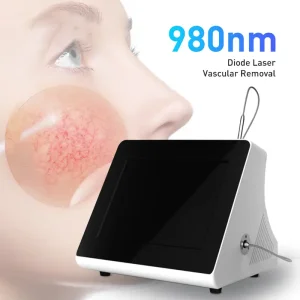
Recommended Modality: Dual 980nm Vascular Laser + Fractional CO2 Laser.
Clinical Mechanism: Hypertrophic scars present with pathological hyper-vascularity. 980nm diode lasers photocoagulate supporting vessel beds to deprive excess scar tissue of nutrient supply, followed by micro-ablative CO2 scanning to flatten raised collagen bundles.
Recommended Modality: Ultra-Pulse Deep Ablative Fractional CO2 (up to 2.0mm depth).
Clinical Mechanism: Deep thermal channels release micro-contractures across expansive post-burn scars, significantly expanding joint range of motion and improving skin pliability while reducing persistent pruritus and pain.
Recommended Modality: Non-Ablative 1540nm Er:Glass or DPL Precise Light.
Clinical Mechanism: Targeted thermal energy reaches the reticular dermis to repair damaged elastic fiber networks without disrupting fragile epidermal surfaces in post-pregnancy or rapid-weight-gain patients.
A structured step-by-step methodology for international distributors and hospital networks purchasing OEM laser scar removal systems.
When procuring industrial medical equipment from an OEM laser scar removal machine supplier, enterprise buyers must navigate technical specification matching, regulatory compliance validation, and long-term aftermarket parts logistics. Below is the standardized procurement workflow established by premier Chinese medical device exporters:
| Procurement Phase | Engineering & Business Milestones | Key Deliverables |
|---|---|---|
| 1. Technical Scoping | Define optical wavelength (CO2, Pico, Er:YAG), laser power output (30W, 40W, 60W RF tubes), scanning modes, and desired handpiece attachments. | System Specification Sheet & Performance Target Matrix |
| 2. Industrial & GUI Customization | Design customized external casing geometry, choose branded metallic paint colors, and embed proprietary multi-lingual touchscreen software UI. | 3D CAD Renderings & Software Prototype APK |
| 3. Regulatory & Quality Verification | Execute electrical safety testing, energy output calibration via power meters, and assemble technical documentation dossiers for regional authority filing. | CE Test Reports, ISO13485 File & Certificate of Conformity |
| 4. Pilot Production & Burn-In | Assemble initial sample batch, conduct continuous 72-hour operational burn-in tests, and verify beam alignment across all scanner grid patterns. | Factory Quality Inspection (QC) Pass Certificate |
| 5. Bulk Logistics & After-Sales Setup | Pack in flight-grade aluminum cases, arrange sea/air freight handling, and provision spare components (optic lenses, mirrors, power supplies) with 2-year warranty support. | Global Logistics Tracking & Lifetime Technical Support Line |
Compare performance parameters across common scar treatment hardware options available for OEM manufacturing.
| Technology Platform | Primary Wavelength / Energy Source | Penetration Mechanism | Average Downtime | PIH Risk (Fitzpatrick IV-VI) | Ideal Clinical Indication |
|---|---|---|---|---|---|
| Fractional CO2 Laser | 10,600 nm Light (RF Metal Tube) | Ablative Micro-Thermal Columns | 5 - 7 Days | Moderate (Mitigated with Cooling) | Deep Atrophic Scars, Surgical Scars, Resurfacing |
| Picosecond Fractional Laser | 1064 nm / 532 nm Solid State Nd:YAG | Photoacoustic Disruption (LIOB) | 1 - 2 Days | Very Low | Pigmented Scars, Acne Scars, Dark Skin Resurfacing |
| Vacuum Fractional RF Microneedling | 1 - 5 MHz Bipolar / Monopolar RF | Insulated Micro-Needle Matrix Thermal Injection | 2 - 3 Days | Extremely Low | Skin Laxity, Moderate Acne Scars, Body Stretch Marks |
| 980nm Vascular Laser | 980 nm Diode Laser Energy | Hemoglobin Photocoagulation | 0 - 1 Days | Low | Erythematous Hypertrophic Scars, Telangiectasia |
Expert answers addressing technical, clinical, and commercial queries regarding OEM scar removal laser platforms.
Sealed metal RF (Radio Frequency) laser tubes (such as those supplied by Coherent or Synrad) offer an operational lifespan exceeding 10,000 hours (typically 7 to 10 years of clinic operation) with zero gas refill maintenance and ultra-fast pulsing capabilities. Glass DC water-cooled tubes have a limited lifespan of 1,000 to 3,000 hours, suffer from energy drift over prolonged sessions, and require complex water-cooling circuits. For commercial OEM scar removal platforms, RF metal tubes are highly recommended.
High-tier Chinese factories utilize high-speed dual-axis Galvanometer scanner motors driven by proprietary digital control boards. The beam passes through a specialized German F-Theta field lens that maintains focal point diameter across the entire scan area (up to 20x20mm grid), preventing edge energy drop-off and ensuring uniform thermal depth in every micro-dot.
Yes, provided the operator adjusts parameters to lower density coverage (5% to 10% spot coverage), uses ultra-short pulse widths (under 1 millisecond), and pairs the treatment with aggressive active skin cooling (such as Zimmer air chillers down to -35°C). Additionally, using picosecond fractional handpieces or vacuum RF microneedling presents lower melanocyte irritation for darker skin tones.
Standard software GUI customization (logo placement, color themes) and custom metallic body painting typically require a low MOQ of 2 to 5 units. Complete industrial design redesigns (custom plastic/metal mold fabrication) generally carry an MOQ of 10 to 20 units depending on chassis complexity.
The 10,600 nm wavelength cannot pass through standard silica glass optical fibers without severe energy attenuation. A Korean-imported 7-joint articulated light guide arm uses front-surface high-reflectivity gold mirrors inside precision swivel joints, maintaining over 90% transmission efficiency and allowing flexible 360-degree practitioner manipulation without beam distortion.
Routine maintenance includes periodic inspection and cleaning of the galvo scanner protective windows with isopropyl alcohol, checking cooling water levels and conductivity in flashlamp-pumped systems, and verifying optical alignment every 12 months using a laser power meter.
Clinics combine ablative laser scar treatments with immediate topical application of recombinant human epidermal growth factor (rhEGF), hyaluronic acid hydrogels, and strict broad-spectrum SPF 50+ mineral sunscreens. Occlusive petroleum-based ointments are used for the first 48 hours to maintain a moist wound environment.
Surgical excision replaces one scar with another linear surgical scar, making it suitable only for severe contractures or narrow keloids. Chemical peels provide broad epidermal exfoliation but lack the depth control needed for deep dermal fibrotic bands. Fractional lasers offer micro-precise depth control up to 2.0mm with fast healing times, serving as the most versatile non-surgical modality.
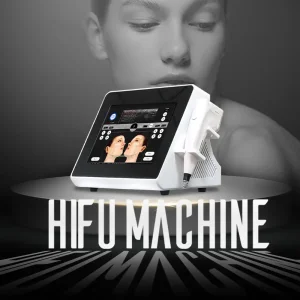
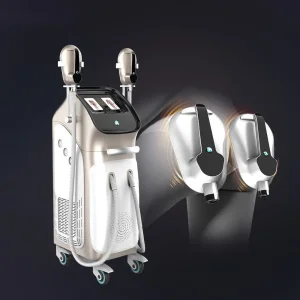
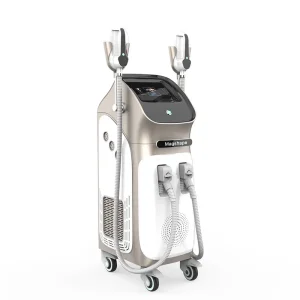
Review our supplementary specialized clinical systems, including HIFU, Picosecond, EMS, and DPL platforms ready for global distribution.