1. Technical Paradigm & Thermodynamic Mechanics of Forced-Air Cooling Systems
In modern dermatological surgery, aesthetic laser treatments, and non-invasive energy-based therapies, thermal management of the epidermis is the single critical variable governing patient compliance, safety margins, and clinical efficacy. High-power optical energy systems—such as 808nm diode lasers, picosecond Nd:YAG lasers, fractional CO2 skin resurfacing platforms, and intense pulsed light (IPL/DPL) equipment—target deep dermal chromophores including melanin, hemoglobin, water, and tattoo pigments. However, as optical energy traverses the skin barrier, significant photon absorption occurs within superficial epidermal melanocytes. Without targeted thermal mitigation, this unintended absorption induces acute thermal tissue trauma, resulting in erythema, edema, epidermal blistering, hyperpigmentation (PIH), and operational downtime.
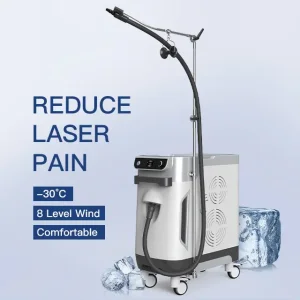
The Zimmer Air Cooling system (such as the ICOOL-III platform) operates on the thermodynamic principle of continuous forced-convective thermal dissipation. Unlike contact cooling methods (such as integrated chilled sapphire tips) or dynamic cooling devices (DCD cryogen sprays), forced-air cryo technology delivers a continuous, controlled jet of sub-zero air (-30°C to -35°C) directly onto the target region before, during, and immediately after the emission of laser pulse energy. By dramatically increasing the convection coefficient ($h_c$) across the stratum corneum, cold air extraction removes excess heat energy from the superficial skin layers at a rate exceeding heat diffusion from deep dermal structures.
Key Thermodynamic Advantages of Forced Cold Air Cryo Therapy:
- Thermal Relaxation Time (TRT) Preservation: Rapid superficial cooling reduces epidermal temperature without lowering the target tissue temperature within the hair follicle, vascular lumen, or dermal collagen matrix.
- Selective Photothermolysis Amplification: Allows practitioners to safely elevate laser fluence (J/cm²) by 20% to 35%, achieving superior therapeutic outcomes per session while remaining strictly within safe epidermal thresholds.
- Non-Contact Hygienic Integrity: Eliminates direct contact with broken skin or ablative laser zones, completely removing risks of cross-contamination during aggressive fractional CO2 or RF microneedling protocols.
- Constant Anesthetic Effect: Sub-zero air stimulation numbs cutaneous nerve endings via localized cryo-anesthesia, reducing Pain Visual Analog Scale (VAS) scores by up to 70% without topical numbing creams.
2. Global Market Landscape & Search Intent Mining for Zimmer Chillers
Global demand analysis for aesthetic medical cold air chillers reveals a distinct structural transition among B2B buyers—including dermatology clinics, commercial medspas, medical device distributors, and original equipment manufacturers (OEMs). Search intent mining across global commercial queries demonstrates that buyers searching for terms like "Zimmer Cooler For Sale," "Chiller Air Cooling Machine," and "Cold Air Cryo System Supplier" are seeking more than simple pricing quotes. They require detailed evidence regarding total cost of ownership (TCO), continuous operational stability, system compatibility, and global supply chain reliability.
North American & European Market Trends
Driven by strict safety compliance, high throughput demands, and zero-consumable mandates. Clinics prioritize heavy-duty chillers capable of operating non-stop for 12+ hours daily.
Asia-Pacific & LATAM Procurement Dynamics
Rapid expansion of chain aesthetic clinics demands versatile skin cooling units compatible with diverse energy platforms (Diode, Pico, CO2, RF) at scalable cost structures.
B2B OEM System Integrators
Global laser machine factories seek OEM suppliers who provide customizable housing, dedicated mounting brackets, and synced auto-start triggering protocols.
Commercial analysis proves that consumable-based cooling methods (such as R134a/R134a-derived chemical sprays) impose ongoing financial penalties on busy practices. A clinic consuming 4 to 6 canisters of cryogen spray per week incurs over $3,000 to $5,000 in annual recurring overhead. Conversely, investing in a high-grade Zimmer-style forced air cooler—such as the SANO ICOOL-III—offers a 100% consumable-free solution powered purely by ambient air compression and refrigeration cycles. The initial capital expenditure is typical amortized within 4 to 6 months of clinic operation.
3. Comparative Technological Analysis Matrix
To provide clear information gain for technical directors and clinic buyers, the table below contrasts the three dominant epidermal cooling modalities utilized across the global aesthetic industry:
| Evaluation Parameter |
Forced Cold Air System (Zimmer / ICOOL-III) |
Integrated Sapphire Contact Cooling |
Dynamic Cryogen Spray (DCD) |
| Operating Temperature |
-30°C to -35°C (Continuous) |
0°C to 4°C (Statically limited) |
-20°C (Intermittent burst) |
| Consumable Overhead |
ZERO Consumables (Uses room air) |
Zero (Requires conductive gel) |
High (Gas canisters required) |
| Treatment Timing |
Pre, During, and Post-treatment continuous flow |
Only during glass contact |
Micro-second pulses during laser shot |
| Ablative/Non-Contact Suitability |
100% Ideal (Fractional CO2, Microneedle RF) |
Unsuitable (Cannot touch broken skin) |
Moderate (Chemical residue risk) |
| Operator Flexibility |
Hands-free articulated arm & multi-adapter tips |
Handpiece-integrated (Adds heavy weight) |
Handpiece-integrated (Fixed nozzle angle) |
| Epidermal Safety Margin |
Maximum (Prevents thermal buildup over large areas) |
Medium (Can lose chill under rapid firing) |
High risk of frostbite if mist pools |
4. China Industry 4.0: SANO's Manufacturing & Supply Chain Resilience
In the competitive global medical device manufacturing sector, Beijing Sano Laser Development S&T Co., Ltd. stands out as a high-precision OEM/ODM manufacturer. Founded in 2010, SANO Laser has integrated Industry 4.0 automation, smart supply chain architecture, and modular assembly protocols within its Shunyi manufacturing base in Beijing, China.
When evaluating a Zimmer cooler supplier, hardware reliability depends heavily on internal refrigeration component selection and thermodynamic engineering. SANO's manufacturing ecosystem provides distinctive engineering advantages:
Engineering Integrity & Component Architecture:
- High-Displacement Rotary Compressor Core: SANO air cooling units utilize industrial-grade, ultra-quiet compressors engineered for continuous duty cycles without thermal throttling or compressor freezing.
- Multi-Stage Moisture Extraction & Auto-Defrost: Built-in dual moisture traps prevent ice blockages within the air delivery hose, guaranteeing uninterrupted airflow even in humid tropical environments.
- Medical-Grade Variable Speed Blower: Precision fan controls allow practitioners to adjust air speed across 10 distinct levels, delivering up to 1500 liters per minute of continuous cold air output.
- Silent-Operation Acoustic Insulation: Sound-dampening interior acoustic baffles keep operational noise below 55 decibels, maintaining a tranquil clinic atmosphere.
- OEM Customization & Rigorous QC: Shell colors, software branding, custom hose lengths, and hands-free support arms can be fully customized. Every unit undergoes a rigorous 72-hour continuous burn-in test before international dispatch.
5. Localized Clinical Application Scenarios & Parameter Guidelines
To maximize clinical utility, forced cold air cooling must be tailored to specific energy modalities. Below are verified clinical protocols developed by SANO's in-house biomedical engineering team:
A. High-Power Diode Laser Hair Removal
Protocol: Continuous Level 6–8 cold airflow (-30°C) focused 2 cm ahead of the laser handpiece trajectory.
Benefit: Protects high-melanin skin (Fitzpatrick IV–VI) while enabling higher fluence on coarse terminal hair.
B. Picosecond & Q-Switched Tattoo Removal
Protocol: Maximum air speed (Level 9–10) applied 10 seconds prior to laser discharge and throughout photo-acoustic shattering.
Benefit: Minimizes epidermal pinpoint bleeding, prevents blistering, and alleviates intense acute pain.
C. Fractional CO2 & Er:YAG Resurfacing
Protocol: Moderate air flow (Level 4–5) via hands-free articulated arm directed at the active scanner zone.
Benefit: Removes plume particles, cools ablative micro-zones without blowing debris into tissue, and reduces post-op heat sensation.
D. 980nm Vascular & Spider Vein Removal
Protocol: Precise narrow nozzle attachment at Level 5 cold air directly over the target vascular pathway.
Benefit: Prevents epidermal thermal destruction while hemoglobin absorbs 980nm energy for vessel coagulation.
E. Microneedling RF Skin Tightening
Protocol: Pre-cooling skin surface for 3 seconds per zone, followed by post-treatment continuous soothing airflow.
Benefit: Eases needle penetration discomfort and rapidly dissipates residual RF thermal accumulation.
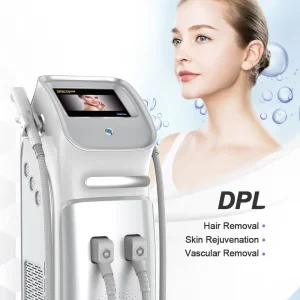
F. High-Intensive DPL / IPL Photorejuvenation
Protocol: Co-administered continuous cooling during wide-spectrum pulse trains.
Benefit: Prevents superficial optical burns from un-filtered flash lamp wavelengths.