- +86 136 8127 5833
- [email protected]
- Shunyi, Beijing, China
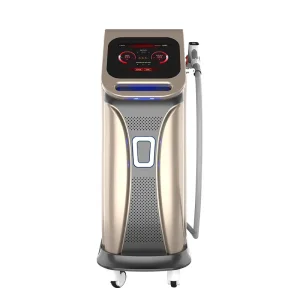
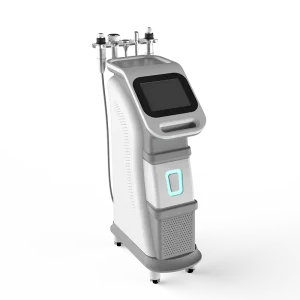
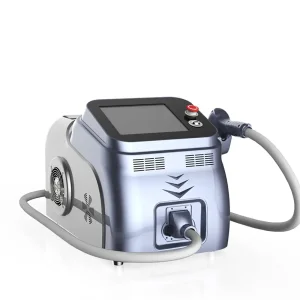
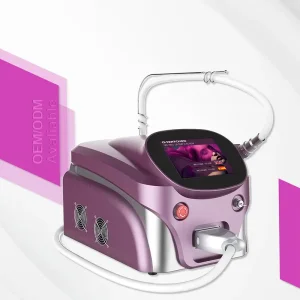
Explore our engineering portfolio of high-performance air cryo chillers, diode laser systems, and RF platforms manufactured for global B2B procurement.
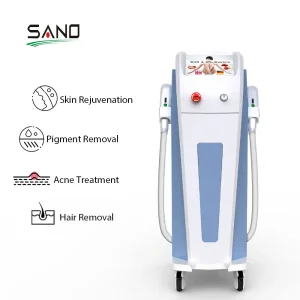
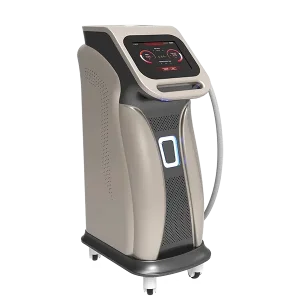
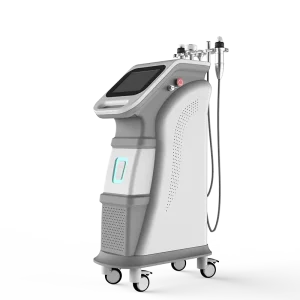
In high-energy photothermal dermatological procedures, managing basal layer thermal buildup is the primary factor dictating clinical safety, treatment velocity, and patient tolerance.
Based on Anderson and Parrish’s theory of selective photothermolysis, epidermal protection requires maintaining the basal layer temperature below 45°C during pulse emission. Forced sub-zero cold air cooling dissipates heat continuously before, during, and after energy delivery.
Effective external epidermal chillers allow dermatologists and clinical operators to safely increase laser fluence (J/cm²) by 20% to 40%. Higher energy density directly correlates with superior hair follicle clearance and fewer total treatment sessions.
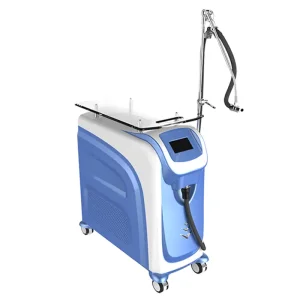
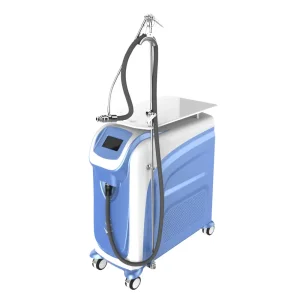
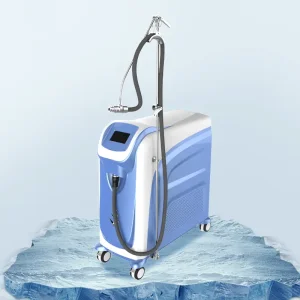
Unlike cryogen spray canisters that require constant replacement and create recurring operational expenses, compressor-driven forced-air skin cooling systems operate continuously on ambient atmospheric air, eliminating clinic consumables.
Analyzing global procurement data, hospital supply requirements, and aesthetic distributor specifications across North America, Europe, the Middle East, and Asia-Pacific.
A rigorous engineering benchmark comparing the four predominant epidermal cooling modalities used in clinical laser dermatology today.
| Cooling Modality | Operating Temp Range | Cooling Timing | Consumable Cost | Clinical Risk & Risk Profile | System Integration |
|---|---|---|---|---|---|
| Forced Cold Air (-30°C System) | -20°C to -35°C adjustable | Pre, Parallel & Post Cooling | $0 (Zero Consumables) | Lowest risk; uniform air blanket over large surface areas | Stand-alone cart or synchronized laser bracket |
| Sapphire Contact Cooling | -5°C to +4°C static contact | Parallel Contact Only | Low (Chiller maintenance) | Moderate; requires constant skin contact and optical gel | Built directly into diode handpiece assembly |
| Dynamic Cryogen Spray (DCS) | -20°C pulse burst | Pre-laser millisecond burst | High ($300-$800/mo canisters) | High; risk of cryogen burns or spatial mismatching | Integrated gas line and solenoid nozzle |
| Chilled Hydrogel Layer | +4°C to +10°C passive | Static pre-application | Moderate (Gel usage) | High variability; gel warms quickly under high fluence | Manual operator application |
The evolutionary trajectory of intelligent skin cooling platforms from basic compression units to closed-loop thermal sensor feedback systems.
Future-ready cooling machines feature non-contact infrared thermographic sensors built directly into the air delivery nozzle. The internal microcontroller monitors real-time epidermal skin surface temperature 100 times per second, dynamically modulating airflow speed to keep skin temperature locked between 15°C and 20°C regardless of laser energy intensity.
Transitioning from standard rotary compressors to dual-stage variable-frequency inverter compressors allows air delivery temperatures to reach -35°C to -40°C in under 3 minutes from a cold start. Advanced internal heat exchangers prevent internal frost accumulation, ensuring continuous multi-hour clinical operation.
Using standardized RS232, CAN bus, or wireless BLE protocols, the cooling system pairs directly with main laser control consoles. When the operator presses the laser foot pedal, the cooling system instantly ramps to max speed 500ms before laser pulse emission, ramping down during standby to save energy.
Inside the manufacturing chain: Component sourcing, precision assembly, and rigorous quality assurance protocols that define high-reliability medical chillers.
Utilizing high-efficiency hermetic compressors imported from top-tier Japanese and German refrigeration leaders. Engineered with environmental-friendly R404a / R290 refrigerants, providing rapid thermal pull-down without ozone depletion.
Ultra-flexible, insulated silicone and polyurethane air hoses lined with thermal insulation barriers. Prevents condensation dripping onto the patient while ensuring zero flexibility loss even at -35°C temperatures.
Integrated dual particulate air filters capture dust, hair, and airborne impurities. Ensures that the high-velocity air stream blasted onto open or laser-ablated skin tissue is clean, sterile, and non-irritating.
Ensuring seamless market entry for international importers, medical distributors, and private-label OEM brands.
All skin cooling units and laser platforms carry Medical CE compliance documentation under Directive 93/42/EEC and transition protocols for EU MDR (2017/745). Standardized according to EN IEC 60601-1 (Electrical Safety) and EN IEC 60601-1-2 (EMC Compatibility).
Built with UL-recognized electrical components, flame-retardant ABS chassis materials, and standard NEMA power connectivity. Technical dossiers support FDA 510(k) predicate device equivalency submissions for distributor partners.
Our Beijing production facility operates under strict ISO 13485 quality management standards. Every single unit undergoes a rigorous 72-hour continuous burn-in testing cycle and air flow calibration before export packaging.
Detailed answers to key technical, clinical, and B2B ordering questions regarding skin cooling systems for laser machines.
Explore our complete catalog of professional aesthetic solutions, laser systems, and cold air chillers manufactured by SANO Laser Development.