- +86 136 8127 5833
- [email protected]
- Shunyi, Beijing, China
Direct-from-factory medical-grade aesthetic lasers, RF microneedling, and skin rejuvenation platforms manufactured under ISO 13485 quality management.
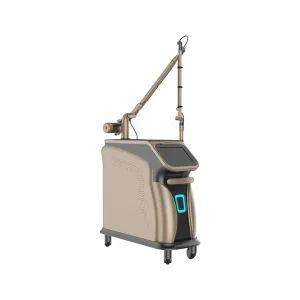
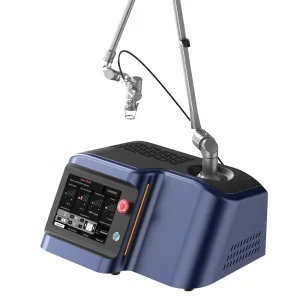
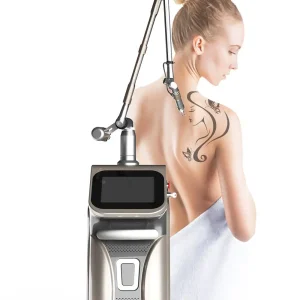
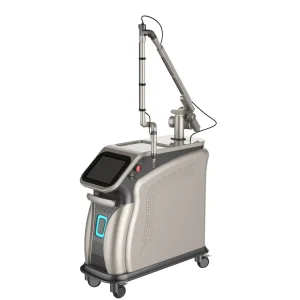
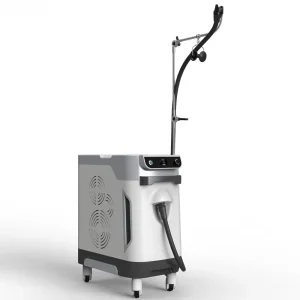
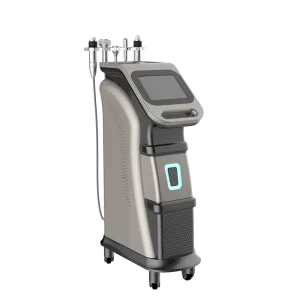
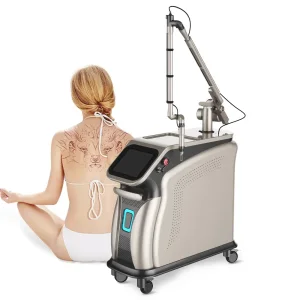
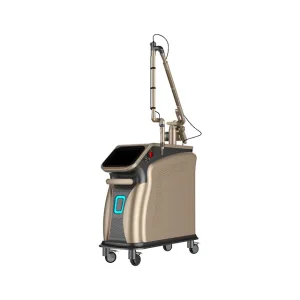
In the rapidly evolving aesthetic device sector, the transition from traditional nanosecond Q-switched lasers to ultra-short pulse portable picosecond laser platforms represents a fundamental paradigm shift in dermatological photo-acoustics. While traditional nanosecond systems rely predominantly on photothermal breakdown—exposing surrounding tissue to prolonged thermal diffusion and increasing the risk of post-inflammatory hyperpigmentation (PIH)—true picosecond technology operates within the temporal regime of picoseconds (typically 300ps to 600ps).
For medical aesthetic equipment distributors, clinic chain procurement managers, and hospital administrators, sourcing high-quality portable picosecond laser devices from certified OEMs and factories requires evaluating critical engineering parameters: cavity stability, semiconductor cooling efficiency, optical beam quality ($M^2$ factor), and power supply duty cycles. Miniature optical resonator designs now allow manufacturers to package multi-wavelength outputs (1064nm, 532nm, and optional 755nm/650nm/585nm) into compact, transportable chassis weighing under 30kg without sacrificing peak power output.
The market for portable picosecond lasers has expanded beyond traditional dermatology suites into concierge medical spas, mobile aesthetic clinics, and multi-branch franchise practices. Analysis of global clinical supply chains highlights four dominant macro-trends driving product iteration and manufacturer OEM investments:
Historical picosecond systems were floor-standing behemoths weighing over 120kg, constrained by long optical paths and heavy power transformers. Factory innovations in folded-cavity optical benches and high-density switching power supplies have made high-output portable chassis standard, enabling versatile clinic placement.
Modern clinical practices require comprehensive pigment clearance. Manufacturers are standardizing 1064nm (dermal pigment/dark inks) and 532nm (epidermal lesions/red inks) dual-wavelength outputs, complemented by dye-impregnated or crystal-based conversion handpieces for 585nm and 650nm targeted ink spectrums.
The integration of Diffractive Lens Arrays (DLA) and Fractional Honeycomb Lens attachments allows portable devices to perform non-ablative skin rejuvenation, acne scar remodeling, and collagen synthesis via localized skin micro-injuries while leaving the stratum corneum intact.
Top-tier factories are embedding closed-loop energy monitoring systems within portable handpieces. Real-time energy attenuation feedback ensures consistent fluence output dot-by-dot, preventing therapeutic energy drift over extended clinical sessions.
International buyers—ranging from regional medical equipment distributors in Europe and North America to chain aesthetic clinics in Southeast Asia—maintain strict evaluation criteria when selecting a portable picosecond laser OEM/ODM manufacturing partner. Sourcing managers evaluate suppliers across key criteria:
| Evaluation Vector | Technical Benchmark / Requirement | Impact on Business & ROI |
|---|---|---|
| Pulse Width Veracity | Sub-600ps verified via fast-photodiode oscilloscope bench tests. | Prevents thermal diffusion, eliminates PIH risk, and secures clinical credibility. |
| Optical Rod & Pump Source | High-grade Nd:YAG rods coupled with imported xenon flashlamps or diode pumps. | Guarantees 10,000,000+ stable pulse shots without rapid fluence degradation. |
| Cooling System Architecture | Dual TEC (Thermoelectric Cooling) + copper radiator + high-flow water pump. | Allows continuous 12-hour clinic operation without thermal shutdown alarms. |
| Handpiece Ergonomics | Lightweight articulated arm or high-transmittance fiber-coupled handpieces. | Reduces operator wrist fatigue during high-volume tattoo removal protocols. |
| Regulatory Compliance | CE (Medical MDR), ISO 13485 manufacturing standard, FDA 510(k) clearance dossiers. | Ensures smooth customs clearance and legal operation in regulated healthcare markets. |
Leading aesthetic device manufacturers do not merely sell standalone hardware; they engineer holistic clinical solutions. Integrating portable picosecond lasers into multi-technology treatment rooms amplifies patient outcomes and boosts clinic profitability:
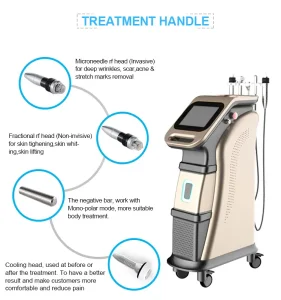
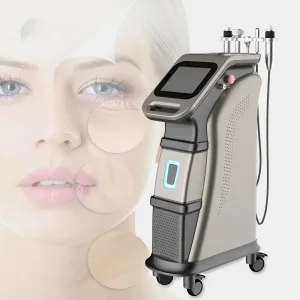
Combining Picosecond Photomechanical Lasering with Fractional RF Microneedling (such as the Pinxel-2 platform) delivers comprehensive dermal restoration. The picosecond laser shatters deep pigment cluster deposits, while RF microneedling stimulates Type I and Type III collagen contraction in the reticular dermis.
Pairing portable picosecond laser sessions with forced ultra-cold air cooling systems (e.g., Zimmer-compatible cold air chillers operating at -30°C) mitigates epidermal pain receptors and eliminates heat accumulation, enabling comfortable high-fluence treatments for stubborn dermal nevus clearance.
Deploying multi-wavelength portable picosecond units alongside Q-switched Nd:YAG workhorses allows clinics to target complex multi-color ink profiles (black, blue, red, green, yellow) with tailored pulse durations, reducing total treatment protocols from 12+ sessions down to 4 to 6 sessions.
True manufacturing authority is demonstrated through rigorous quality assurance pipelines, comprehensive technical documentation, and reliable international post-purchase engineering support:
All optical cavity assemblies, crystal alignments, and laser diode mounts are conducted inside dust-free cleanrooms. Every portable unit undergoes a 72-hour continuous burn-in test cycle and energy stability validation before export packaging.
Our engineering export team supplies complete technical dossiers—including IEC 60601-1 electrical safety tests, IEC 60601-2-22 laser safety reports, Medical CE mark documentation, and EMC compliance testing—to support seamless regional registration.
To guarantee zero clinic downtime, factory contracts include modular plug-and-play replacement components (power modules, handpiece shells, cooling pumps) shipped via express global logistics, complemented by 24/7 engineer video guidance.
As solid-state laser physics advances, manufacturing research for portable picosecond platforms is focusing on three key technology fronts:
Transitioning from traditional flashlamp excitation to semiconductor laser diode pumping reduces heat generation within the resonator cavity by over 60%, unlocking pulse repetition rates up to 20Hz while shrinking power supply dimensions.
Integrating optical sensors into the handpiece tip will enable real-time skin melanin indices and tattoo ink depth scanning. Embedded microprocessors will automatically adjust pulse duration and fluence to maximize clearance without over-treatment.
Next-generation optical pulse compression techniques aim to drive commercial portable laser pulse durations below 200ps, achieving near-pure photomechanical fragmentation for resistant yellow and green ink pigments.
Detailed responses to common technical, procurement, and clinical queries submitted to our engineering export desk.
Explore our complete range of certified medical laser systems, HIFU lifting devices, diode hair removal platforms, and body contouring technologies.