- +86 136 8127 5833
- [email protected]
- Shunyi, Beijing, China
Explore our flagship certified aesthetic systems engineered for high clinical efficacy, robust duty cycles, and competitive ROI across global medical spas and dermatology centers.
In the rapidly expanding medical aesthetics domain, high-frequency fractional radiofrequency (RF) microneedling has established itself as the gold-standard modality for non-surgical dermal tightening, acne scar remodeling, and deep neocollagenesis. However, procurement officers, aesthetic clinic owners, and regional distributors encounter extreme price variance when evaluating microneedling machine costs. Capital expenditure (CAPEX) for professional systems spans from $2,500 for entry-level portable OEM platforms to over $45,000 for legacy Western brand names.
Understanding the true cost matrix requires analyzing the underlying engineering components, manufacturing methodologies, regulatory compliance tiers, and recurring operational expenditure (OPEX)—specifically consumable cartridge economics. This technical whitepaper provides B2B buyers with an uncompromised breakdown of microneedling machine costs, evaluating how source manufacturers, hardware architecture, and supply chain resilience dictate long-term clinic profitability.
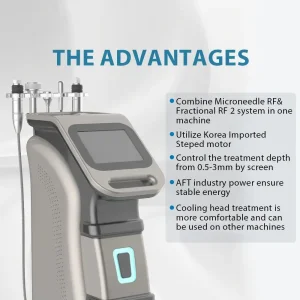
Precision stepping motors, gold-plated biocompatible needle arrays, robotic vacuum integration, and stable 1MHz-5MHz RF power generators represent the core manufacturing drivers.
Single-use sterilized needle tip cartridges (10, 25, 64 pins, nano-chip) range from $3.50 to $85 per tip depending on supply chain markup and proprietary chip locks.
Medical CE (MDR), US FDA 510(k), and ISO 13485 certification processes add rigorous testing and clinical trial overhead, reflected in the final wholesale pricing structure.
Modern clinical practices require versatile platforms capable of treating multi-depth dermal pathology without triggering post-inflammatory hyperpigmentation (PIH), particularly in Fitzpatrick skin types IV through VI. RF microneedling bridges the gap between non-ablative rejuvenation and aggressive fractional CO2 laser resurfacing.
Advanced Chinese manufacturing facilities have integrated mechanical vacuum suction directly into the handpiece tip. Negative pressure lifts and stabilizes the target skin tissue against the needle array prior to penetration. This guarantees uniform needle penetration depth—ranging from 0.5mm to 4.0mm—regardless of skin laxity or anatomical contour variations (e.g., jawline, periorbital region). Vacuum assistance reduces patient discomfort by up to 40% and ensures 100% consistent energy deposition at the targeted dermal depth.
The choice between insulated and non-insulated needle configurations significantly impacts unit production cost and clinical versatility:
| Specification / Parameter | Entry-Level Desktop RF | Mid-Tier Professional RF | Premium Factory OEM (SANO Grade) |
|---|---|---|---|
| Wholesale Cost Range | $1,800 – $3,200 | $3,500 – $6,800 | $7,500 – $14,000 |
| RF Frequency Output | 1 MHz – 2 MHz (Fixed) | 2 MHz – 4 MHz (Dual) | 2 MHz – 5 MHz (Variable Monopolar/Bipolar) |
| Motor Mechanism | Solenoid / Spring Actuator | Standard Stepper Motor | Japanese Smooth Robotic Stepper Motor |
| Penetration Depth | 0.2mm – 2.0mm | 0.5mm – 3.5mm | 0.5mm – 4.0mm (0.1mm Precision Steps) |
| Vacuum Mechanism | None | Basic Suction | Intelligent 4-Stage Negative Pressure Vacuum |
| Needle Tip Options | 10 / 25 Pin Standard | 10 / 25 / 64 Pin Gold-Plated | 10 / 25 / 64 Pin Insulated/Non-Insulated + Nano Tip |
The shift in global aesthetic equipment manufacturing toward China is driven by deep industrial cluster integration, advanced precision machining, and streamlined component sourcing. Located in premier manufacturing hubs such as Beijing and Guangdong, modern factories like Beijing Sano Laser Development S&T Co., Ltd. leverage automated assembly lines and strict ISO 13485 quality control protocols.
Unlike Western brand aggregators who outsource sub-assemblies across multiple international vendors—driving up logistics and distribution overhead—Chinese Industry 4.0 infrastructure enables end-to-end vertically integrated production:
High-precision aluminum alloy chassis frames and handpiece housings are milled internally, reducing structural assembly costs by over 45%.
Automated microscopic soldering of gold-plated medical stainless steel pins guarantees 0.01mm needle alignment and eliminates mechanical jamming.
Every RF generator unit undergoes uninterrupted high-power load testing and thermal imaging validation before final packaging and export clearance.
The next generation of high-frequency microneedling equipment is undergoing rapid technological convergence with artificial intelligence and bio-impedance feedback monitoring.
Skin hydration, epidermal thickness, and collagen density vary across facial zones and individual patient demographics. Future microneedling platforms integrate real-time tissue impedance sensing algorithms into the RF generator circuit. The handpiece measures local skin resistance in milliseconds prior to emitting RF pulses, automatically modulating voltage and frequency to achieve optimal thermal coagulation without over-cooking adjacent non-target tissue.
By pairing high-resolution ultrasound skin diagnostic scanners with microneedling UI software, modern systems will automatically map epidermal-dermal junction depths. The stepping motor dynamically adjusts its needle stroke depth on-the-fly as the practitioner moves from thin forehead skin (0.8mm) to dense cheek tissue (2.5mm), reducing manual adjustments and operator error.
Instead of single continuous RF bursts, novel micro-pulsing technology delivers rapid sequences of sub-millisecond energy spikes. This minimizes pain sensation by staying below the thermal nociceptor threshold while generating discrete zones of fractional coagulation that accelerate wound healing.
For international distributors and multi-location medical spa groups, equipment acquisition involves strict regulatory oversight and ongoing technical operational support. Purchasing a low-cost machine without verifiable compliance documentation introduces severe legal exposure and operational risk.
Leading manufacturers like SANO Laser provide international partners with full engineering back-end support. This includes modular plug-and-play internal circuit design for rapid field repair, 24/7 technical video support direct from assembly engineers, spare parts buffer stocks located in regional hubs, and comprehensive OEM software customization (GUI branding, custom presets, and multi-language support).
Direct technical answers to common B2B procurement queries answered by medical device manufacturing engineers.
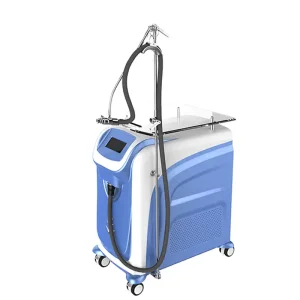
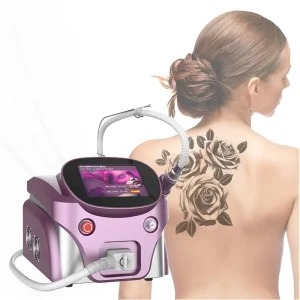
Explore our full line of specialized body sculpting, vascular treatment, cryogenic cooling, and picosecond laser platforms.