- +86 136 8127 5833
- [email protected]
- Shunyi, Beijing, China
Explore our certified medical aesthetic laser platforms, high-power diode hair removal units, fractional RF, and body contouring systems manufactured under ISO 13485 quality standards.
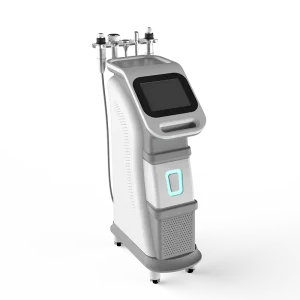
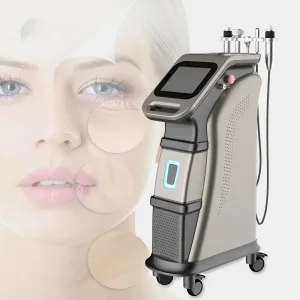
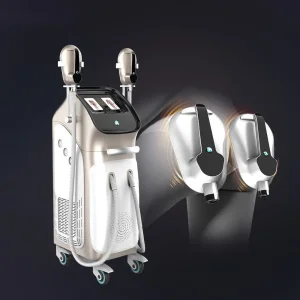
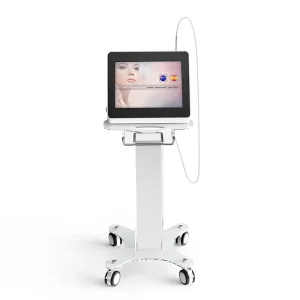
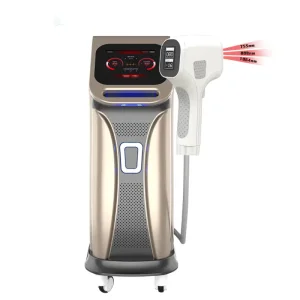
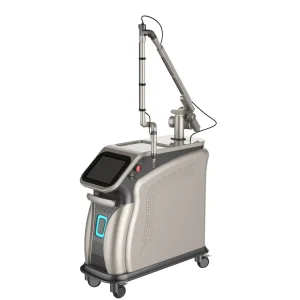
Understanding the transition from photothermal ink vaporization to ultra-short pulse photomechanical shockwave shattering in dermatological lasers.
The evolution of dermatological tattoo removal is rooted in modern laser physics. For decades, medical practitioners relied on continuous-wave or long-pulse lasers that executed thermal vaporization of ink pigments. However, because exogenous tattoo ink particles measure between 20 to 100 nanometers in diameter, their Thermal Relaxation Time (TRT) is exceptionally brief—typically under 10 nanoseconds. Standard thermal lasers delivered energy slower than the ink's ability to dissipate heat, leading to non-selective thermal diffusion into surrounding dermal structures, resulting in scarring, persistent dyschromia, and incomplete ink clearance.
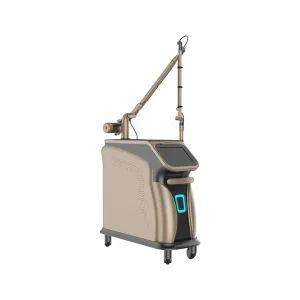
Engineered platforms manufactured by premium suppliers like Beijing Sano Laser Development S&T Co., Ltd. leverage Q-Switched Electro-Optic Modulators and Picosecond domain architecture. By compressing multi-megawatt peak optical power into gigawatt-level pulses lasting merely hundreds of picoseconds, the interaction shifts from photothermal heating to Photo-Acoustic Shockwave Generation. The acoustic stress generated exceeds the mechanical threshold of the encapsulated ink granules, fracturing them into microscopic dust-like remnants without transferring destructive thermal loads to neighboring collagen bundles or basal keratinocytes.
No single wavelength can clear the complete chromatic spectrum of modern inks. Precision manufacturing requires the integration of dual, triple, or quadruple wavelength paths within a single chassis:
Emitted by Nd:YAG crystals, 1064nm experiences minimal epidermal melanin absorption. It penetrates deep into the reticular dermis to shatter dark pigments including black, deep blue, and dark brown inks safely on dark skin types (Fitzpatrick IV–VI).
Passing 1064nm through a Potassium Titanyl Phosphate (KTP) crystal cuts the wavelength in half. 532nm targets warm-tone chromophores such as red, orange, purple, and yellow pigments residing in the superficial papillary dermis.
Optional dye-impregnated or solid-state handpiece modules provide 694nm and 755nm outputs specifically calibrated for refractory green, lime, sky blue, and teal inks that resist standard 1064nm/532nm treatment protocols.
Analysis of worldwide market growth, OEM supply chain dynamics, quality tiering, and return on investment for clinical aesthetics enterprise buyers.
The global tattoo removal market is experiencing exponential growth, driven by shifting demographic preferences, career transitions, and the demand for Permanent Makeup (PMU) revision. Clinical data indicates that over 28% of individuals with tattoos experience regret within five years. As tattoo application rates expand globally, the demand for non-invasive, scarring-free reversal solutions expands proportionally. However, medical spas, dermatological clinics, and laser surgery centers face a complex procurement ecosystem. High-tier European and American brands often carry prohibitive capital expenditure requirements ($120,000 to $250,000 USD), coupled with high maintenance contracts and proprietary consumable locking devices.
This dynamic has elevated Beijing-based medical aesthetic equipment manufacturers—specifically established players such as SANO Laser—to global prominence. By combining Tier-1 international component supply chains (German xenon lamps, Korean 7-joint articulated arms, US optoelectronic sensors) with optimized Chinese manufacturing efficiency, high-performance picosecond and Q-switched devices are accessible at a fraction of Western capital investment without compromising clinical fluence stability or structural longevity.
Not all manufacturing standards are created equal. Enterprise buyers must evaluate laser tattoo removal equipment suppliers across critical optoelectronic indicators:
| Component Architecture | Standard Commercial Grade | Industrial Medical Grade (SANO Standard) | Clinical & Commercial Impact |
|---|---|---|---|
| Optoelectronic Generator | Single glass laser rod with passive cooling | Dual-lamp, dual-rod Nd:YAG crystal array | Delivers double peak power, uniform beam profiles, and zero energy drop during long sessions. |
| Light Delivery Arm | Flexible plastic optical fiber or 5-joint arm | Korean 7-Joint Articulated Arm with 360° counter-weight balance | Zero optical transmission loss, perfectly circular beam spots, and effortless positioning for clinicians. |
| Pulse Control Mechanism | Passive Q-Switching (bleachable dye shutters) | Active Electro-Optic Pockels Cell Q-Switching | Ensures sub-nanosecond/picosecond precision, consistent gigawatt energy pulses, and minimal heat accumulation. |
| Cooling Subsystem | Standard air cooling + small water pump | Integrated Compressor Refrigeration + Modular Copper Radiators | Guarantees 24-hour continuous clinic operation without thermal shutdown or fluence drift. |
In-depth technical breakdown of flat-top beam shaping, active Q-switching, and laser pulse energy calibration.
A primary factor in treatment safety is the spatial energy profile of the laser beam. Lower-cost laser devices project a Gaussian energy distribution, where energy peaks intensely in the center and tapers off at the periphery. This causes central tissue blistering and pinpoint bleeding while leaving peripheral ink sub-treated. Industrial manufacturers implement refractive beam-shaping optical elements to convert raw Gaussian output into a uniform Flat-Top (Top-Hat) Profile. Energy density remains 100% homogeneous across the targeted spot radius, eliminating hot spots, minimizing skin trauma, and accelerating clearance schedules.
Utilizes high-voltage crystal drivers to open and close the optical cavity within nanoseconds, achieving crisp, giant pulse release without pulse-tail energy leakage.
Allows practitioners to tailor spot diameters dynamically without changing handpieces. Maintains calibrated energy density automatically via intelligent software interfaces.
Internal photodiode sensors measure output energy prior to every pulse, dynamically compensating for flashlamp degradation to ensure 100% dosing precision.
Ensuring seamless international market entry through CE MDR, FDA 510(k), technical documentation, and regional service networks.
Exporting high-tech medical devices requires absolute compliance with local health authorities. Equipment produced by Beijing Sano Laser Development S&T Co., Ltd. is manufactured under strict ISO 13485 Quality Management Systems. SANO provides comprehensive technical documentation packages for global distributors and importers:
Equipment downtime directly impacts clinic revenue. SANO Laser mitigates operational risk by backing every medical platform with a comprehensive support ecosystem:
Direct access to factory engineers via dedicated video protocols and diagnostic log file analysis to resolve operational queries instantly.
Standardized plug-and-play internal power modules and cooling pumps stocked in international hubs for rapid replacement dispatch within 48 hours.
Every platform ships with standard operating procedures (SOPs), energy fluence matrices, Fitzpatrick skin safety guides, and operator video training.
Deployment strategies tailored for medical dermatology practices, commercial aesthetic medspas, and dedicated tattoo removal studios.
In high-volume medical practices, multi-modality versatility is vital. SANO Q-Switched and Picosecond laser platforms are deployed not only for tattoo removal, but also for complex dermal piggyback indications: Nevus of Ota, Ito’s Nevus, Becker’s Nevus, melasma management, solar lentigines, and post-inflammatory hyperpigmentation (PIH). The high energy stability allows dermatologists to execute high-fluence fractional laser toning protocols without thermal risk.
Dedicated studios require high speed and complete ink clearance capabilities. Tattoo artists utilize SANO picosecond systems for target lightening prior to cover-up work, reducing the required laser sessions from 12 down to 3–5 treatments. Furthermore, specialized 532nm low-fluence handpiece attachments enable safe, non-scarring removal of failed permanent eyebrows, microblading iron-oxide pigments, and lip liner tattoos.
Anticipating the next era of optoelectronic aesthetic manufacturing: AI pulse feedback, sub-picosecond domain physics, and multi-wavelength laser integration.
R&D efforts focus on pushing pulse durations below 300 picoseconds. Shorter pulse widths increase peak photomechanical pressure while driving thermal transfer down to absolute zero, rendering ink clearance 40% faster.
Integration of optical coherence sensors into handpieces to measure dermal melanin concentration and ink depth in real-time, automatically adjusting fluence to prevent epidermal injury.
Replacing mechanical filter switching with electronically tuned crystal arrays that seamlessly toggle between 532nm, 585nm, 650nm, 755nm, and 1064nm in microsecond intervals.
Explore our specialized vascular removal lasers, medical air chillers, Q-switched systems, and muscle toning platforms designed for global aesthetic suppliers.
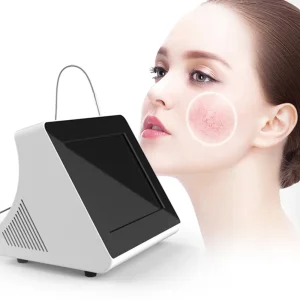
Technical answers provided by SANO Laser optoelectronic engineering team regarding physics, OEM manufacturing, and clinical safety.