Follow SANO 
Direct supply line engineered by Beijing Sano Laser Development S&T Co., Ltd. for medical clinics, cosmetic surgery hospitals, and wholesale distributions worldwide.
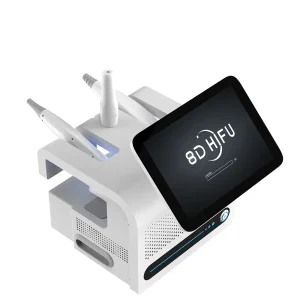
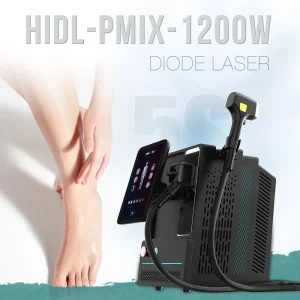
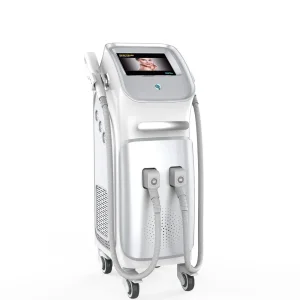
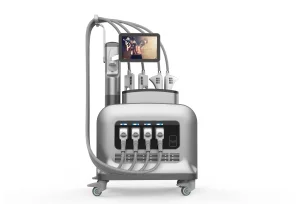
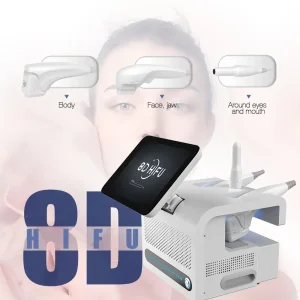
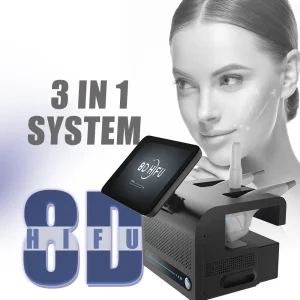
The transition from classical single-line ultrasound units to enterprise-tier 4D HIFU platforms represents an exponential leap in clinical efficiency, precision energy deposition, and patient safety profiles. Unlike optical platforms (IPL, DPL) or standard RF machines whose acoustic impedance or photon scattering limits their biological penetration depth, 4D HIFU bypasses the epidermal boundary layer without non-specific optical attenuation.
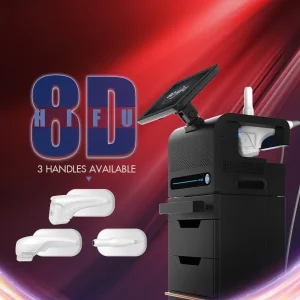
Modern clinical 4D HIFU systems induce Thermal Coagulation Points (TCPs) directly into the Superficial Musculoaponeurotic System (SMAS) at calibrated depths of 1.5mm, 3.0mm, 4.5mm, and extended body depths (8.0mm, 13.0mm). By converting high-frequency mechanical vibration into localized focal thermal energy, the targeted tissue contracts immediately, triggering a long-term cascade of neo-collagenesis and elastogenesis without ablating the surface epidermis.
| Transducer Depth | Target Anatomical Plane | Primary Clinical Endpoint | Thermal Coagulation Zone Profile |
|---|---|---|---|
| 1.5 mm Cartridge | Superficial Papillary Dermis | Fine lines, pore size tightening, superficial texturing | 0.8 mm³ micro-coagulation dots; high-density rastering |
| 3.0 mm Cartridge | Deep Reticular Dermis | Collagen rebuilding, nasolabial fold reduction | Volumetric heating triggering procollagen Type I & III production |
| 4.5 mm Cartridge | SMAS (Musculoaponeurotic System) | True surgical-grade non-invasive facelifting & contouring | Point focal contraction along facial structural ligaments |
| 8.0 mm / 13.0 mm | Subcutaneous Adipose Layer | Localized adipocyte lysis, skin tightening on arms/flanks | High acoustic energy causing mechanical cell membrane disruption |
Medical procurement officers, aesthetic clinic chains, and national medical device distributors face complex challenges when qualifying high-precision ultrasound equipment manufacturers. Inconsistent transducer calibration, acoustic wave dispersion, and sub-standard internal motor stepping can lead to inconsistent clinical results or risk patient safety (such as dermal burning or nerve trauma).
Factory-grade acoustic stability relies on custom-sintered PZT-4 or PZT-8 ceramic discs. Premium Chinese factories employ automated laser capacitance and impedance matching to eliminate power variation between central and peripheral arrays.
4D matrices generate up to 12 parallel lines of 25 micro-dots each in a single discharge cycle. Medical-grade stepping actuators provide 0.1 mm position accuracy, completely eliminating uneven energy overlapping during procedures.
Degassed mineral or synthetic acoustic transmission oil inside the handpiece is treated via multi-stage degassing chambers to eliminate cavitation micro-bubbles, ensuring 100% acoustic transmission without hot spots.
High-volume aesthetic centers no longer deploy single-wavelength or isolated platforms in silos. In the contemporary market, medical directors require integrated treatment journeys. A patient presenting with facial laxity and subcutaneous fat accumulation benefits significantly when 4D HIFU is mapped alongside complementary technologies within the clinic’s armamentarium.
While 4D HIFU contracts deep ligamentous structures and the SMAS layer at 4.5mm, insulated vacuum RF microneedling addresses mid-to-superficial dermal crepiness at 0.5–2.0mm depths. Staging these procedures 4 to 6 weeks apart yields comprehensive multi-plane facial rejuvenation.
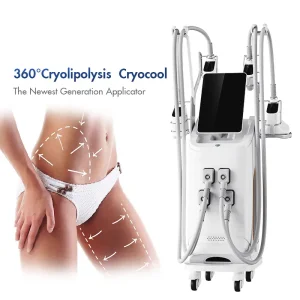
For submental fullness and abdominal contours, high-density 360° cryolipolysis induces localized cold-induced apoptosis of bulk adipocytes. Following cold therapy recovery, targeted deep-focal ultrasound (8.0mm/13.0mm) tightens underlying skin laxity to eliminate sagging contours.
Structural lifting creates profound volumetric recovery, yet photodamage and pigmentation remain visually apparent. Integrating DPL narrow-band vascular/pigment filters and Picosecond acoustic photoacoustic toning ensures structural lifting is paired with clear, radiant skin.
The field of non-invasive ultrasonic aesthetics continues to evolve toward higher automation, real-time safety telemetry, and customized acoustic energy mapping. Factory R&D centers are currently commercializing the following advancements:
Dynamic acoustic impedance detection within the transducer tip stops firing instantly if contact is broken, preventing accidental epidermal burns and wasted pulses.
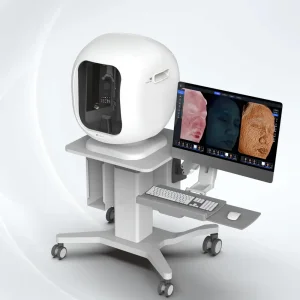
Integration with multi-spectral 3D skin analyzers allows automated ultrasound depth adjustments according to real-time dermal thickness measurements.
Shifting from traditional discrete dot-stepping to smooth, continuous ultrasonic gliding significantly reduces procedure times while maintaining identical TCP density.
Development of single transducers capable of multi-frequency switching (4MHz, 7MHz, 10MHz), minimizing physical cartridge swaps during treatment sessions.
Founded in 2010 in Beijing, China, Beijing Sano Laser Development S&T Co., Ltd. upholds rigorous medical device fabrication protocols. Every machine leaves our facility with fully documented quality assurance records designed for seamless international customs clearance, tender submission, and local healthcare compliance.
Supplied with complete Low Voltage Directive (LVD) and Electromagnetic Compatibility (EMC) test dossiers, electrical isolation reports, and clinical parameter verification books.
Tailored outer housing industrial design, branded UI screen software localization (15+ global languages), customized cartridge pulse configurations, and confidential drop-shipping support.
Flight-grade aluminum packaging cases, critical spare part inventories maintained for 7+ years post-production, and direct access to bilingual biomedical support engineers.
Direct technical answers from factory biomedical engineers on 4D HIFU face lifting equipment.
Precision medical laser, RF, and ultrasound platforms manufactured to international performance standards.