- +86 136 8127 5833
- [email protected]
- Shunyi, Beijing, China
Direct OEM/ODM industrial solutions engineered for global medical aesthetics distributors, dermatological practices, and laser institutes.
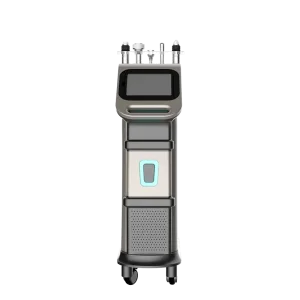
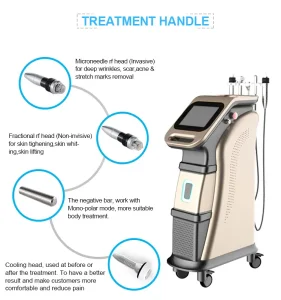

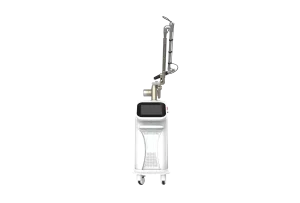
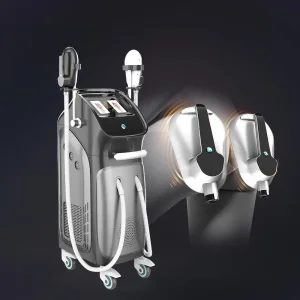
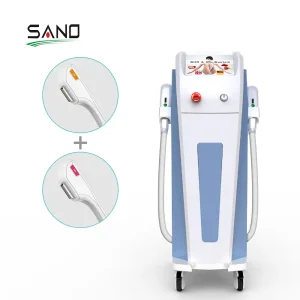
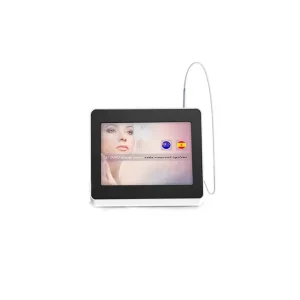
The global demand for non-invasive aesthetic skin procedures—specifically tattoo erasure, dermal hyperpigmentation treatment, and photo-rejuvenation—has experienced compound annual growth rates (CAGR) exceeding 11.4% over the last decade. Within this market, the role of a premier China Q-Switch tattoo machine manufacturer & suppliers has transitioned from cost-effective alternative to optical innovation powerhouse.
Modern medical dermatology relies heavily on Q-Switched Neodymium-doped Yttrium Aluminum Garnet (Nd:YAG) lasers. Historically, Western OEMs dominated the high-end clinical sector. However, the consolidation of Chinese optical engineering supply chains in high-tech manufacturing clusters like Beijing, Shenzhen, and Wuhan has radically leveled the playing field. China-based manufacturers now produce electro-optically Q-switched platforms capable of gigawatt-level peak power output with exceptional spatial beam uniformity.
Information Gain Insight: The primary technological divide in tattoo removal machinery lies between Passive (Passive Q-switching via saturable absorbers) and Active (Electro-Optic Pockels Cell Q-switching) systems. Chinese manufacturers specializing in Electro-Optic Pockels Cell technology deliver pulse durations under 5 nanoseconds, producing purely acoustic shattering rather than thermal tissue scarring.
To evaluate a commercial Q-Switched Nd:YAG tattoo removal system, global distributors must understand the underlying physics of Selective Photothermolysis versus Selective Photo-Acoustic Fragmentation. When laser light targets exogenous ink particles or endogenous melanin, the target chromophore absorbs the optical energy within a timeframe shorter than its thermal relaxation time (TRT).
Cheap, low-tier laser devices utilize passive Q-switches (typically a Cr4+:YAG crystal). These systems suffer from energy degradation as the crystal heats up, resulting in long pulse widths (15–30 ns) that burn surrounding dermal tissue. Professional China manufacturers utilize Active Electro-Optic Pockels Cells (Lithium Niobate or KD*P crystals) controlled by high-voltage fast-switching electronics. This permits instantaneous Q-factor modulation, holding back light energy until the cavity reaches maximum inversion population, then releasing a massive pulse within 3 to 6 nanoseconds.
A high-performance Q-Switched Nd:YAG machine utilizes fundamental and frequency-doubled wavelengths to address the full spectrum of dermal pigment colorations:
| Wavelength | Optical Source / Crystal | Target Chromophore | Clinical Applications |
|---|---|---|---|
| 1064 nm | Nd:YAG Fundamental (Infrared) | Black, Dark Blue, Dark Brown Ink; Deep Dermal Melanin | Tattoo removal, Nevus of Ota, Melasma, Carbon Peel Facial |
| 532 nm | KTP Frequency-Doubled Crystal (Green) | Red, Orange, Purple Ink; Epidermal Melanin | Solar lentigines, Freckles, Superficial pigmentation, Red ink erasure |
| 585 nm | Dye-Pumped Handpiece (Yellow Light) | Sky Blue, Cyan, Green Pigments | Stubborn blue/green recalcitrant tattoo removal |
| 650 nm | Dye-Pumped Handpiece (Deep Red Light) | Green and Lime Green Inks | Complex multicolored tattoo pigment clearance |
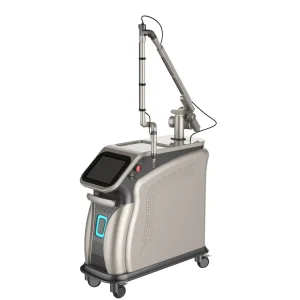
A critical engineering differentiator in OEM China suppliers is the optical optical relay system. Standard budget lasers output a Gaussian Beam Profile where central energy spikes dangerously high (causing localized bleeding) while peripheral energy remains ineffective. Premium OEM manufacturers integrate a 7-joint Korean articulated arm with internal diffractive optical elements (DOE) to homogenize energy into a flat-topped Top-Hat Beam Profile.
Leading Chinese suppliers supply multifaceted hardware solutions engineered for specialized aesthetic indications. Below are the key revenue-generating modalities powered by Q-Switched technology.
Utilizing high pulse fluency (up to 15 J/cm²) combined with sub-nanosecond photo-acoustic fragmentation to pulverize recalcitrant ink particles into micro-dust, enabling lymphatic macrophages to flush them efficiently without thermal tissue necrosis.
Treating complex pigment disorders such as Melasma, Nevus of Ota, Hori's Macules, and Post-Inflammatory Hyperpigmentation (PIH). Precision 1064nm low-fluence collimated toning selectively targets melanosomes while keeping the basal layer intact.
By applying medical-grade nano-carbon lotion into dilated pores and detonating it with quasi-long-pulse 1064nm laser energy, operators achieve instant pore tightening, sebaceous excretion suppression, and collagen neocollagenesis.
True authority (E-E-A-T) in medical device supply stems from rigorous quality management systems. Premium Chinese factories adhere strictly to global medical equipment regulatory frameworks.
Top-tier manufacturers maintain ISO 13485-certified cleanrooms for optical assembly. Standard quality control workflows include:
When importing Q-Switched laser platforms from China, verifying regulatory credentials prevents customs blockages and ensures clinical liability safety.
Partnering directly with a original equipment manufacturer (OEM) in China offers distinct commercial and customization advantages for brands, importers, and large aesthetic chain clinics.
Engineered chassis designs ranging from heavy-duty vertical clinic consoles to portable tabletop units. Custom injection-molded acrylic casings tailored to your brand’s corporate identity.
Custom Android-based touchscreens supporting multi-language interfaces, operator preset protocols, cloud telemetry for usage metrics, and encrypted IC card rental software.
Dedicated international technical desks delivering 24-hour remote video troubleshooting, modular plug-and-play internal spare part replacement kits, and localized engineer training workshops.
As optical technology advances, Chinese R&D centers are leading next-generation breakthroughs that redefine energy delivery and clinical efficacy.
Transitioning from pure nanosecond (3–5ns) to true picosecond (300–450ps) pulse durations. Shorter pulse widths boost photomechanical pressure waves by 400%, shattering micro-ink particles that nanosecond lasers cannot clear.
Integrating optical spectrometers directly into the handpiece tip. The AI real-time sensor measures dermal melanin concentration and automatically adjusts wavelength energy and pulse rate to prevent epidermal burns.
Replacing high-maintenance Xenon flashlamps with Diode-Pumped Solid-State (DPSS) modules. This extends laser pumping lifespans from 5 million shots to over 50 million shots with near-zero heat generation.
Crucial technical and commercial considerations addressed by senior laser optical engineers for importers and distributors.
Electro-Optic (Active) Q-switched lasers utilize a Pockels Cell to electronically control laser release, yielding pulse widths as low as 3–6 nanoseconds with gigantic peak power (up to 1.2GW). Passive Q-switched devices use a saturable absorber crystal resulting in long pulse widths (15–30ns), lower peak power, and significant thermal heat transfer which increases risks of scarring and hypopigmentation. For medical-grade tattoo removal, Electro-Optic Q-switching is mandatory.
High-peak-power nanosecond and picosecond pulses (megawatts to gigawatts) will destroy silica optical fibers due to non-linear optical damage thresholds. A Korean-engineered 7-Joint Articulated Arm uses high-reflectivity dielectric mirrors sealed inside precision aluminum joints to guide the raw laser beam without energy attenuation or optical distortion, ensuring maximum spot size fidelity and Top-Hat beam profiling.
On average, professional dark ink tattoos require between 4 to 8 sessions spaced 6 to 8 weeks apart. Factors influencing clearance velocity include ink depth, pigment density, patient lymphatic clearance capacity, and whether a Top-Hat beam profile is used to prevent epidermal damage between passes.
Routine maintenance includes: 1) Distilled water replacement every 30–45 days to prevent mineral scaling in the laser cavity; 2) Deionized water filter cartridge replacement every 6 months; 3) Optical mirror cleaning in the articulated arm tip; 4) Xenon flashlamp replacement after its rated lifespan (typically 5 to 10 million shots).
Yes. The 1064nm fundamental wavelength bypasses epidermal melanin much more effectively than shorter wavelengths (such as 532nm or 755nm). When operated in collimated, low-fluence toning mode (1.5 - 2.5 J/cm²), 1064nm Q-switched lasers safely treat hyperpigmentation on darker skin tones with minimal PIH risk.
OEM options include customized metal chassis sheet design, brand logo silkscreening, custom acrylic casing paint finishes, pre-loaded software start screens with distributor branding, unique handpiece color schemes, custom spot size adjustment tips, and bespoke transport flight cases.
Leading suppliers provide a 2-Year comprehensive warranty covering core components (laser power supply, mainboard, cavity assembly). Technical support includes 24/7 online video diagnostics, modular spare parts express shipping, complete user manuals, clinical treatment protocols, and engineer maintenance documentation.
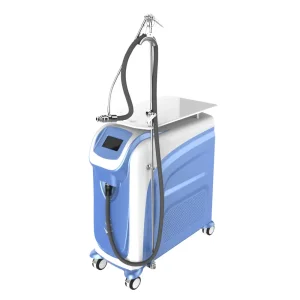
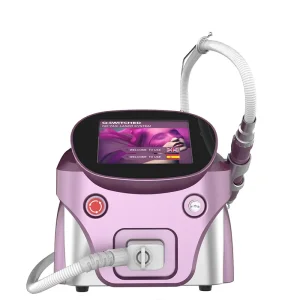
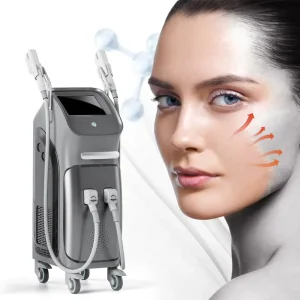
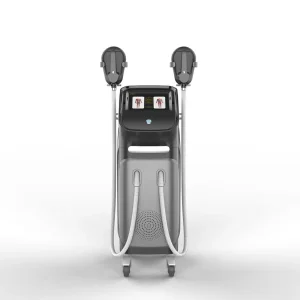
Explore our extended portfolio of certified slimming platforms, cryo systems, multi-wavelength diode lasers, and therapeutic skin platforms.
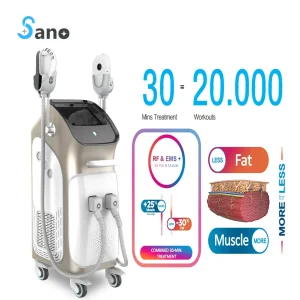
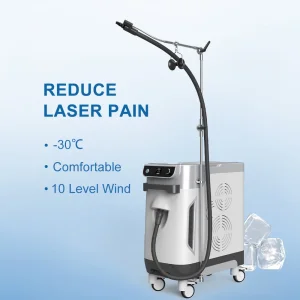

Connect with our optical engineering desk today to request comprehensive equipment catalogs, wholesale pricing tiers, factory audit virtual tours, and OEM software customization kits.