- +86 136 8127 5833
- [email protected]
- Shunyi, Beijing, China
Engineered to strict European CE and ISO13485 standards. Select a model below to explore technical parameters or request direct factory quotes.
Understanding market growth drivers, supply chain consolidation, and China's leadership in high-power Nd:YAG laser production.
The global market for medical aesthetic laser systems has experienced a structural shift over the past decade. Among the various energy-based modalities, the Nd:YAG (Neodymium-doped Yttrium Aluminum Garnet) laser remains the fundamental gold standard for dermatological pigementary correction, multi-color tattoo shattering, and vascular lesion management. Driven by an expanding global market projected to reach over USD 4.2 Billion by 2030, medical clinics, dermatology groups, and aesthetic equipment distributors require rigorous insight into manufacturing supply chains, optical engineering standards, and total cost of ownership (TCO).
China has established itself as the world's primary industrial manufacturing hub for precision medical lasers, combining mature optical component supply chains—such as synthetic crystal growth (Nd:YAG rod synthesis and KTP frequency-doubling crystals)—with advanced electro-optical Q-switching technologies. China's top-tier manufacturers, particularly those concentrated in specialized high-tech hubs like Beijing's Shunyi District, operate vertically integrated facilities. This allows for rigorous component selection, precision optical bench assembly, and comprehensive ISO 13485 quality control protocols at capital expenditure points significantly lower than traditional Western or South Korean OEMs.
Unlike tier-3 assembly trading companies that repackage consumer-grade glass tubes or low-energy passive Q-switched modules, leading Chinese factories utilize imported UK flashlamps, electro-optical (E-O) Pockels cell Q-switches, and Korean-designed 7-joint articulated arms. This ensures spatial beam homogeneity (Flat-Top profile) and sustained optical stability across millions of shots without energy decay.
Deconstructing pulse duration, laser cavity design, beam profiling, and wavelength conversion mechanics.
The efficacy of an Nd:YAG medical laser relies on the principle of Selective Photothermolysis (pioneered by Anderson and Parrish) and, in modern picosecond systems, Photomechanical Stress Shattering. The Nd:YAG crystal emits light at a fundamental infrared wavelength of 1064 nm. When frequency-doubled using a Non-Linear Optical (NLO) crystal such as Potassium Titanyl Phosphate (KTP), it generates a visible green beam at 532 nm. Advanced multi-wavelength platforms also incorporate dye-impregnated polymer handpieces to yield 585 nm (cyan) and 650 nm (red) output.
Utilizes a high-voltage Pockels cell combined with a polarizing prism inside the resonant optical cavity. By rapidly altering polarization state within nanoseconds (3–5 ns pulse width), gigantic peak powers (up to 200MW–1GW) are released, preventing thermal diffusion into surrounding dermal structures.
Operating in the picosecond regime (<375–450 ps), the laser energy is delivered faster than the thermal relaxation time of microscopic pigment granules. This induces acoustic shockwaves rather than heat, pulverizing tattoo inks and melanosomes into fine dust-like particles for rapid macrophage clearance.
Industrial-grade Nd:YAG platforms feature specialized micro-lens array (MLA) optical homogenizers. This converts a traditional Gaussian beam (which risks epidermal hot-spots and scarring) into a uniform, flat-top energy distribution across the entire spot diameter (2–10 mm adjustable).
| Engineering Parameter | Passive Q-Switched (Entry) | Active Electro-Optical (Medical Grade) | True Picosecond Platform (Premium) |
|---|---|---|---|
| Pulse Width | 10 – 20 nanoseconds (ns) | 3 – 6 nanoseconds (ns) | 300 – 450 picoseconds (ps) |
| Primary Mechanism | Photothermal (Heat accumulation) | Photothermal + Mild Photoacoustic | Pure Photoacoustic (Pressure wave) |
| Peak Power Output | 10 – 30 Megawatts (MW) | 100 – 500 Megawatts (MW) | 1.0 – 2.5 Gigawatts (GW) |
| Risk of PIH (Darker Skin) | Moderate to High | Low (With proper fluence protocol) | Extremely Low |
| Optical Delivery System | Direct Handpiece Crystal Cavity | 7-Joint Articulated Arm (Korean optics) | 7-Joint Articulated Arm with MLA zoom |
| Target Indications | Basic carbon peels, black ink tattoos | Dermal pigment, recalcitrant tattoos, PIH | Full spectrum tattoo, Melasma, Skin Resurfacing |
Mapping physical hardware modalities to exact patient indications and aesthetic revenue channels.
Tattoo pigment particles vary widely in chemical composition and depth within the dermis. SANO Nd:YAG laser systems utilize target-specific optical wavelengths:
Epidermal and dermal hyperpigmentation—including Nevus of Ota, Hori's Nevus, Solar Lentigines, and Post-Inflammatory Hyperpigmentation (PIH)—demand precise sub-thermolytic energy control. Using sub-nanosecond 1064 nm "Laser Toning" with a large 8–10 mm spot size and low fluence (1.2–2.0 J/cm²), melanin is selectively fragmented without disrupting basement membrane integrity or inducing melanocyte hyperactivity.
By applying a medical-grade nanoparticulate liquid carbon suspension to the facial tissue, the 1064 nm Nd:YAG laser operates in dual-pulse mode (quasi-long pulse pre-heating followed by Q-switched optical destruction). The laser vaporizes the carbon particles inside the pores, exfoliating dead stratum corneum, shrinking sebaceous glands, stimulating Type I collagen synthesis, and instantly refining skin texture.
How aesthetic practice requirements vary across international markets and demographics.
Different global geographic regions exhibit distinct patient demographics, dominant skin photo-types (Fitzpatrick Scale I through VI), regulatory oversight regimes, and practice business models. Top Chinese factories engineer customizable hardware and software parameter presets tailored specifically for local clinical deployment:
Clinical Focus: High-volume tattoo removal, anti-aging collagen stimulation, and combination therapies with skin cooling devices.
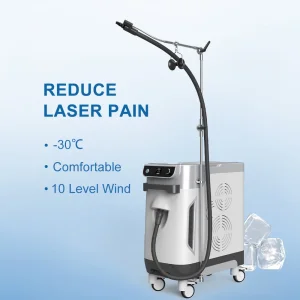
System Requirements: Seamless integration with external air chillers (e.g., I-Cool or Zimmer chiller units), strict electrical safety compliance (UL/IEC 60601-1), intuitive GUI with preset medical protocols, and fast dual-pump water cooling systems allowing 12+ hours of continuous daily operation.
Clinical Focus: Melasma treatment, post-acne erythema, and deep dermal pigmentation without hypopigmentation risks.
System Requirements: Extended pulse delay options, fractionated beam delivery tips to preserve surrounding melanocytes, robust dust-proof optical housing, and internal water-to-air cooling condensers designed to operate reliably in high-humidity ambient clinic environments up to 40°C.
Clinical Focus: "Instant-Glow" non-downtime carbon peeling, facial rejuvenation, and body pigment toning.
System Requirements: Premium industrial chassis design with luxury metallic finish, high pulse repetition rates (up to 10–20 Hz), and motorized spot-size selection directly from the handpiece screen interface.
Ensuring operational longevity, seamless certification compliance, and white-label distributor scaling.
Sourcing aesthetic laser hardware directly from tier-1 Chinese manufacturers like Beijing Sano Laser Development S&T Co., Ltd. provides B2B buyers with comprehensive technical protection and customized OEM integration options:
Professional factories supply complete technical construction files (TCF), test reports for Electrical Safety (IEC 60601-1) and Electromagnetic Compatibility (IEC 60601-1-2), alongside Medical CE certification under European MDR standards to enable straightforward local medical device registration.
Distributors can customize exterior chassis industrial design, inject corporate brand color schemes, upload bespoke GUI software interfaces in 15+ local languages, and modify handpiece ergonomics—establishing strong brand equity without spending millions in initial R&D.
Every platform ships with a comprehensive 2-year factory warranty. Beijing-based optical engineers provide 24/7 remote diagnostic support, modular plug-and-play replacement components, optical bench calibration video tutorials, and on-site training sessions for regional distributor technical teams.
Where solid-state medical laser technology is heading next.
Transitioning from traditional xenon flashlamp optical pumping to high-density Diode-Pumped Solid-State (DPSS) modules. DPSS technology doubles electrical-to-optical efficiency, eliminates flashlamp bulb replacements (extending shot lifespans to >20 million shots), and delivers near-zero thermal drift during continuous usage.
Integrating real-time epidermal melanin index sensors directly into the handpiece tip. The artificial intelligence system automatically measures target tissue pigmentation and adjusts pulse duration, spot size, and fluence dynamically before each laser discharge—virtually eliminating operator error.
Next-generation optical cavities are reaching down to sub-200 picosecond and femtosecond domain pulse durations. This allows for pure photomechanical ionization of target chromophores with zero micro-thermal transfer, dramatically expanding safe treatment options for sensitive post-inflammatory condition cases.
Expert technical clarity addressing direct operational, clinical, and importing inquiries.
Explore additional specialized medical platforms, body contouring systems, and multi-wavelength laser devices.