- +86 136 8127 5833
- [email protected]
- Shunyi, Beijing, China
Explore our core certified production line designed for high-volume commercial clinics, dermatology practices, and global distributors.
Why combining Alexandrite, Gold Standard Diode, and Nd:YAG wavelengths into a single synchronized emission matrix revolutionizes clinical outcomes across all Fitzpatrick skin types.
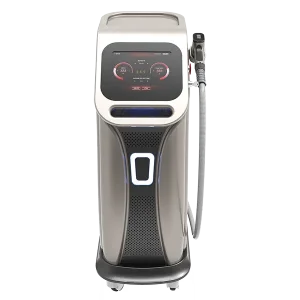
In modern aesthetic medicine, achieving permanent hair reduction requires delivering precise light energy to destruct the germative stem cells located within the hair follicle's bulb and bulge. Traditional single-wavelength systems—such as legacy 808nm diode lasers or standalone 755nm Alexandrite lasers—exhibit clear physiological limitations when encountering diverse patient demographics. Leading China 3 Wavelength Laser Hair Removal Manufacturers have solved this clinical challenge through optical integration, creating multi-wavelength diode arrays that fire 755nm, 808nm, and 1064nm simultaneously.
The principle of selective photothermolysis (pioneered by Anderson and Parrish) dictates that the target chromophore (eumelanin) must absorb sufficient energy to generate temperatures exceeding 70°C to induce thermal denaturation of follicular stem cells, while the pulse duration remains shorter than the Thermal Relaxation Time (TRT) of the surrounding epidermis. The synergistic mechanism of the triple-wavelength platform acts as follows:
Characterized by a high melanin absorption coefficient ($8.5 \text{ cm}^{-1}$ relative to baseline), the 755nm band offers maximum energy absorption for light-colored and fine vellus hair. It targets the superficial anatomical depth of the hair follicle (the bulge) and is particularly effective for eyebrows and upper lip treatment in Fitzpatrick skin types I–III.
The universal workhorse in laser epilation. Its moderate melanin absorption combined with deep tissue penetration (up to 3.0mm) targets the main bulb of the hair follicle. High average power capability, high repetition rate (up to 10Hz to 20Hz), and rapid coverage make it the primary wavelength for arm, leg, cheek, and beard treatment.
Exhibiting lower melanin absorption but the deepest biological penetration (up to 5.0mm), 1064nm bypasses epidermal melanin, depositing thermal energy directly into the vascular papilla feeding dark, deep-seated hair. It is the gold standard safety protocol for Fitzpatrick dark skin types V–VI and deeply rooted hair in scalp or pubic zones.
| Parameter | 755nm Waveband | 808nm Waveband | 1064nm Waveband | Tri-Wavelength (Co-axial) |
|---|---|---|---|---|
| Melanin Absorption | Very High | Moderate to High | Low | Optimized Dynamic Blend |
| Tissue Penetration Depth | Superficial (~1.5 - 2.0mm) | Deep (~2.5 - 3.5mm) | Deepest (~4.0 - 5.0mm) | Full-Depth Coverage (1.5-5.0mm) |
| Target Follicular Anatomy | Hair Bulge / Fine Vellus | Hair Bulb / Main Matrix | Vascular Papilla / Deep Root | Bulge, Bulb & Papilla simultaneously |
| Ideal Fitzpatrick Skin Type | Types I – III | Types I – V | Types IV – VI (Dark Skin) | Universal (Types I – VI) |
| Epidermal Burn Safety Margin | Requires High Cooling | Standard Safe Window | Maximum Safety Window | Protected by Sapphire Contact Cold |
An engineering evaluation of macrochannel vs microchannel laser diode bars, gold-tin bonding techniques, and quality control systems in tier-1 China factories.
China has established itself as the global epicenter for medical aesthetic hardware production, blending advanced optical engineering with streamlined component supply chains. However, purchasing managers and clinical importers must understand the internal technical architecture of a 3 wavelength diode laser handpiece to evaluate true operational reliability, handpiece lifespan, and pulse delivery stability.
Leading Chinese OEMs integrate premium semiconductor laser bars (e.g., Coherent / Dilas imported bars or high-grade domestic GaAs wafers). The transition from traditional indium soldering to AuSn (Gold-Tin) hard solder bonding prevents solder thermal migration under high thermal stress, extending bar lifetime up to 50 million shots.
Micro-channel stack designs utilize microscopic copper channels directly beneath each emitter layer, allowing ultra-high heat dissipation rates suitable for 3000W+ optical output power. Macro-channel systems offer robust resistance against deionized water mineral buildup, delivering high reliability in regions with varying water quality standards.
The stability of pulse duration (from 5ms up to 400ms) depends entirely on the switching power supply and capacitor banks. Premier factories employ high-voltage medical-grade power supplies (up to 3000W electrical capability) to maintain square-wave laser pulses without energy degradation during rapid continuous firing.
Individual 755nm, 808nm, and 1064nm semiconductor chips are mounted onto thermal copper submounts using precision robotics. Micro-lenses align the fast-axis and slow-axis beam divergence to ensure homogenous light mixing within the lightguide.
The assembled optical block undergoes nitrogen purging and hermetic sealing to prevent moisture condensation on optical facets during aggressive sub-zero TEC cooling operations.
Every handpiece undergoes a rigorous 72-hour automated pulse test connected to thermal power meters (Coherent LabMax) to verify fluence linearity, spot uniformity, and heat dissipation efficiency before final machine integration.
How direct sourcing from certified Chinese manufacturers reduces capital equipment expenditure (CapEx) while maximizing clinical revenue potential.
The global laser hair removal market is projected to surpass $3.5 Billion by 2030, driven by shifting consumer preferences toward non-invasive, painless, and rapid permanent hair reduction. For medical spa owners, aesthetic chain operators, and equipment distributors, navigating the capital cost structure is critical to operational profitability.
Acquiring Western European or North American branded triple-wavelength devices often entails a capital expenditure between $60,000 and $120,000 USD per unit. Direct OEM procurement from certified Chinese manufacturers yields equivalent optical specifications (up to 2000W-3000W handpiece output) at a fraction of the cost ($3,500 – $9,000 USD), drastically shortening payback cycles.
Unlike IPL systems requiring frequent flashlamp replacements or cryogen spray platforms with ongoing gas costs, diode laser systems built by tier-1 China factories utilize long-life solid-state stacks. Treatment cost per patient approaches zero (excluding coupling gel and disposable hygienic sleeves), driving gross margins above 85%.
Featuring spot sizes up to 15x25mm² or 12x38mm² and in-motion sliding delivery up to 10Hz, full-body treatments can be completed in under 35 minutes. Increased patient throughput enables clinics to double daily appointment capacity without escalating room overhead.
tailoring treatment parameters for distinct clinic models, geographical demographics, and anatomical zones.
Requires high peak power, static pulse-stacking mode, and fine-tuned pulse duration settings (5-400ms) for targeted therapeutic clearing of resistant hirsutism, hypertrichosis, and pseudofolliculitis barbae (PFB).
Utilizes Fast-In-Motion sweeping mode (10Hz continuous frequency) paired with contact sapphire cooling to treat large areas (backs, full legs) rapidly with minimal operator fatigue.
Essential for urban clinics treating a broad spectrum of skin tones. The active presence of 1064nm allows safe hair removal on Fitzpatrick IV–VI skin without requiring a separate standalone Nd:YAG system.
Preset clinical smart software allows technicians to select target skin tone, hair color, and hair density, automatically calculating safe fluence baseline numbers for consistent operations.
Essential certifications and technical documentation standards required for seamless importation, legal operation, and risk mitigation in global markets.
Importing electro-medical devices from China requires strict adherence to international regulatory frameworks. Reputable manufacturers provide exhaustive compliance dossiers ensuring smooth customs clearance and legal operating status for medical practitioners.
Professional manufacturing facilities operate under ISO 13485 quality management systems specific to medical devices. For European distribution, devices carry Medical CE certification under Directive 93/42/EEC or Regulation (EU) 2017/745 (MDR), validating rigorous testing for electromagnetic compatibility (IEC 60601-1-2) and laser electrical safety (IEC 60601-2-22).
Distributors targeting the United States require devices manufactured in FDA-registered facilities adhering to Good Manufacturing Practices (21 CFR Part 820). 510(k) cleared laser systems verify substantial equivalence to existing predicate devices, authorizing clinical commercialization across all US states.
To eliminate operational downtime, top manufacturers provide a 2-year full structural warranty paired with modular plug-and-play internal components. Global distribution hubs supply replacement handpieces, power modules, and cooling pumps with fast international courier delivery (24-72 hours).
The next evolution of China-manufactured aesthetic platforms: AI-driven parameter modulation, real-time epidermal protection sensors, and fiber-coupled diodes.
Next-generation handpieces incorporate optical spectrophotometer sensors in the applicator tip. The system automatically measures epidermal melanin concentration prior to pulse delivery, instantly configuring optimal fluence and pulse width limits to prevent accidental burns.
Moving diode bars out of the handpiece and into the main chassis console. Laser light is transferred via a flexible optical fiber bundle to an ultra-lightweight handpiece (weighing < 300g). FCD technology significantly increases thermal dissipation capacity and reduces technician fatigue.
Rather than fixed ratio outputs, emerging optical platforms allow practitioners to manually adjust the output proportion of 755nm, 808nm, and 1064nm in real time (e.g., set 60% 1064nm for a dark skin session), providing unmatched clinical customization.
Authoritative answers directly from OEM engineering specialists regarding selection, maintenance, legal imports, and operational parameters.
A single 808nm diode laser provides excellent results for dark hair on medium skin types but can struggle with fine, light hair (due to lower 808nm melanin absorption) and presents higher epidermal safety risks on dark skin types V-VI. A 3-wavelength system fires 755nm, 808nm, and 1064nm simultaneously, capturing fine superficial hair (755nm), medium depth hair (808nm), and deep vascular hair roots (1064nm) in a single pass without swapping handpieces.
For busy commercial practices, handpiece optical output power should be at least 1200W to 2000W (not to be confused with total electrical power of the chassis). Higher optical power allows the system to emit high energy fluence ($10-40 \text{ J/cm}^2$) at extremely short pulse durations (<30ms), ensuring follicle destruction while keeping contact cooling cold enough to protect the epidermis.
Diode laser stacks require high-purity distilled or deionized water ($<5 \text{ }\mu\text{S/cm}$ conductivity) to prevent mineral oxidation and electrical conductivity within micro-channel cooling blocks. Water filters (PP cotton and deionizer resin cartridges) must be replaced every 6 months, and water should be drained and refilled every 3 months.
Yes, provided the pulse duration is lengthened and sapphire contact cooling is active. The inclusion of the 1064nm spectrum in the emission mix reduces overall epidermal melanin absorption compared to pure 755nm or 808nm emitters, rendering simultaneous triple-wavelength platforms safe for dark skin when operated under recommended clinic protocol guidelines.
Reputable OEMs offer comprehensive customization including custom injection-molded chassis casing, branded GUI software interfaces, localized language software presets, variable spot size magnetic handpiece tips, custom handpiece spot dimensions, and co-branded packaging with compliance documentation.
Explore our full catalog of medical vascular, body slimming, fractional skin resurfacing, and IPL multi-technology platforms.