- +86 136 8127 5833
- [email protected]
- Shunyi, Beijing, China
Direct factory supply of certified aesthetic devices engineered for high-throughput medspas, dermatology centers, and regional distributor portfolios.
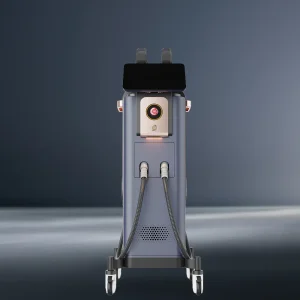
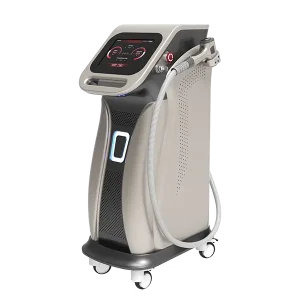

An empirical analysis of global market expansion, demographic shifts in tattoo regret, and B2B procurement trends for CE certified aesthetic devices.
The global market for medical aesthetic laser equipment is witnessing unprecedented demand for non-invasive pigment removal solutions. Key structural market drivers include:
Different regional aesthetic markets prioritize specific technological configurations and certification standards based on local regulatory frameworks and skin phototypes:
When purchasing tattoo removal devices for sale from international suppliers or factories, price per unit should never be evaluated in isolation. Long-term profitability is determined by optical bar longevity (measured in total pulse lifespan before energy degradation), cooling efficiency under 8-hour continuous clinic loads, availability of modular replacement parts, and direct factory technical documentation for local medical device registration.
Understanding the photomechanical breaking of tattoo ink: Nanosecond Q-Switched Nd:YAG versus Ultra-Short Picosecond optical technology.
| Parameter / Specification | Traditional Q-Switched Nd:YAG | Advanced Picosecond Platform | Clinical & Operational Impact |
|---|---|---|---|
| Pulse Width Range | 5 ns – 10 ns (Nanoseconds) | 300 ps – 750 ps (Picoseconds) | Pico creates stronger photoacoustic pressure waves with minimal collateral thermal damage. |
| Primary Disruption Mechanism | Photothermal (Heat buildup inside ink) | Photomechanical / Photoacoustic Shockwave | Shatters ink particles into microscopic "dust" (10-50nm) easily cleared by macrophages. |
| Target Wavelength Options | 1064nm (Black/Blue) / 532nm (Red/Orange) | 1064nm, 532nm, 755nm Alexandrite, 585nm/650nm | Broader wavelength spectrum enables clearance of resistant green, yellow, and violet inks. |
| Peak Power Capacity | 100 MW – 300 MW | 1.0 GW – 2.5 GW (Gigawatts) | Higher peak power allows lower overall energy fluence, reducing blister risk and PIH. |
| Average Treatment Sessions Needed | 8 to 14 Sessions | 4 to 7 Sessions | Picosecond systems double client turnaround and maximize clinic revenue velocity. |
| Factory Component Architecture | Single Xenon Lamp + Nd:YAG Crystal Rod | Dual-Pump Rods + Korean 7-Joint Articulated Arm | Articulated arms maintain pristine top-hat beam energy uniformity over prolonged use. |
The 1064nm wavelength is predominantly absorbed by black, dark blue, and dark brown pigments. Due to its deeper dermal penetration and lower melanin absorption, it is the safest wavelength for Fitzpatrick IV–VI skin types. The frequency-doubled 532nm wavelength targets superficial red, tan, orange, and purple inks.
Lower-grade factory devices utilize Gaussian beam profiles, resulting in central energy hot-spots that cause epidermal burning surrounded by under-treated peripheral zones. Premium CE certified factory platforms utilize optical homogenizers to project a true "Top-Hat" flat-top beam profile, guaranteeing homogeneous energy distribution.
Industrial-grade tattoo removal platforms incorporate Korean-engineered 7-joint articulated optical arms with adjustable spot sizes (2mm–10mm). Precise mechanical spot scaling allows clinicians to adjust fluences dynamically without changing handpiece tips or compromising calibration accuracy.
Navigating global regulatory requirements: Demystifying Medical CE (EU MDR 2017/745), EMC/LVD compliance, and factory audits.
Not all CE certificates are equal. Importers must distinguish between simple Industrial LVD/EMC CE (Directive 2014/35/EU) and true Medical Device CE Certificate under EU MDR 2017/745. Medical grade classification (Class IIb for therapeutic lasers) requires rigorous Notified Body clinical evaluations (e.g., TÜV, SGS, DNV).
Certified tattoo removal devices must comply with strict international standards:
An OEM/ODM factory supplier producing tattoo removal devices for sale must operate under an ISO 13485:2016 certified quality system. This ensures full traceability of key components, cleanroom assembly of optical cavities, standardized energy output calibration, and strict final burn-in testing prior to global export.
Strategic deployment of laser tattoo removal devices across diverse commercial environments and skin care practices.
Requires high-throughput vertical chassis devices with industrial water-chiller cooling systems capable of continuous 10-hour daily operation without energy thermal decay.
Demands maximum clinical precision, multi-wavelength versatility (1064/532/755nm), and advanced sub-nanosecond pulse controls for treating stubborn dermal nevus of Ota and complex ink layers.
Requires low-fluence micro-spot handpieces specially tuned for iron oxide and organic pigments commonly found in microblading, eyebrow, and cosmetic lip liner tattoos.
Utilized by professional tattoo artists to selectively fade dense black ink prior to applying detailed cover-up art, saving skin integrity and expanding creative options.
Inside the factory: How leading Chinese aesthetic equipment manufacturers build reliable, customized laser platforms for global brands.
Factory-direct customization including specialized injection-molded housing, custom brand colorways, laser-etched stainless steel bezels, and localized ergonomic handpiece holsters.
Multilingual user interface design supporting over 15 languages, pre-programmed clinical skin type parameter algorithms, remote telemetry diagnostic logging, and custom bootup branding.
Integration of high-efficiency TEC (Thermoelectric Cooling) semiconductor modules, large-capacity copper radiators, and quiet magnetic water pumps to maintain water temps under 28°C.
Anticipating next-generation optical innovations in non-invasive pigment removal devices.
Transitioning from picoseconds (10-12s) to sub-femtosecond pulse durations, virtually eliminating all thermal diffusion and achieving 100% pure photoacoustic shockwave disruption.
Real-time multispectral imaging handpieces that analyze dermal ink depth and melanin concentrations before auto-setting optimal fluence and repetition rates.
Widespread adoption of Micro-Lens Arrays to generate laser-induced optical breakdown (LIOB) in the dermis, stimulating rapid collagen remodeling while shattering ink.
Replacing traditional flashlamps with ultra-durable diode-pumped solid-state (DPSS) laser modules, extending handpiece lifespans beyond 10 million pulses with zero maintenance.
Expert engineering and commercial insights answering key questions during laser tattoo removal machine sourcing.
Expand your clinic operations with certified multi-modality platforms for skin rejuvenation, body contouring, and vascular therapy.