- +86 136 8127 5833
- [email protected]
- Shunyi, Beijing, China
Explore our certified medical aesthetic equipment lines, directly integrated from our Beijing R&D hub to support dermatologists, aesthetic clinics, and regional distributors worldwide.
A comprehensive examination of photomechanical ink fragmentation, pulse optics, and clinical efficacy standards for modern B2B medical buyers.
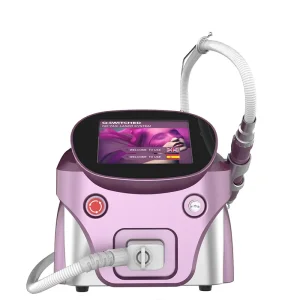
The global demand for non-invasive tattoo removal and benign pigmented lesion treatments has driven rapid evolution in solid-state laser engineering. At the apex of this market standard is the Q-Switched Nd:YAG (Neodymium-doped Yttrium Aluminum Garnet) laser platform. Designed to produce mega-watt peak powers within nanosecond duration windows, these medical-grade systems operate under the physical principles of selective photothermolysis and photomechanical acoustic disruption.
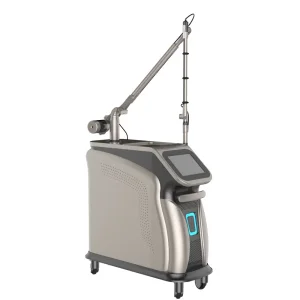
For dermatologists, cosmetic surgeons, and commercial aesthetic equipment distributors, choosing a certified CE Certification Q Switched Laser Tattoo Removal Machine Supplier & Factory requires evaluating the quantum electronic architecture of the optical cavity. Unlike passive Q-switched lasers that rely on saturable absorbers, premier industrial manufacturers utilize active Electro-Optic (EO) Pockels Cell Q-switching. This mechanical-optical integration allows instantaneous energy release, minimizing pulse durations to under 6 nanoseconds while maintaining peak stability.
Conventional thermal lasers rely on prolonged heating to melt target pigments, which inadvertently spreads heat to adjacent collagen structures and causes thermal necrosis, scarring, or post-inflammatory hyperpigmentation (PIH). Q-switched technology compresses high energy into a duration shorter than the target's Thermal Relaxation Time (TRT). The result is a high-intensity acoustic shockwave that shatters pigment granules mechanically into microscopic debris for macrophage clearance, leaving the surrounding epidermal structure intact.
A high-performance commercial Q-switched workstation incorporates single- and multi-wavelength optical converters to handle diverse pigment spectrums:
Analyzing global market trends, regional clinical demands, and the manufacturing capabilities of leading OEM/ODM aesthetic laser facilities in China.
Over 30% of tattooed individuals in Western Europe and North America express interest in partial or total tattoo removal. This shift drives consistent clinical revenue, making Q-switched platforms an essential core investment for modern aesthetic centers.
Beyond tattoo removal, demand for melasma management, post-acne hyperpigmentation correction, and skin brightening protocols has expanded across East Asia, South America, and the Middle East, broadening the unit's clinical utility.
Beijing aesthetic laser manufacturing hubs combine high-purity optical component procurement, automated robotic assembly, and rigorous ISO 13485 quality control to deliver high-tier equipment at competitive prices.
A enterprise-level laser supplier must maintain robust internal infrastructure. Standard trading companies often re-box low-power, single-lamp desktop units that lack thermal stability. In contrast, verified medical laser factories operate dedicated ISO Class 7 cleanroom optical alignment labs, constant-temperature aging chambers, and beam-profiling diagnostic benches.
When selecting a supply chain partner, B2B importers must scrutinize the manufacturer's internal sourcing for core components: high-refractivity Nd:YAG laser rods, UK-imported Xenon pump lamps, German-engineered optical mirrors, and military-grade high-voltage pulse capacitors. This robust engineering foundation guarantees millions of stable laser shots with minimal energy degradation over years of continuous clinical operation.
Direct comparison of key industrial metrics between standard commercial Q-switched units and SANO's advanced medical-grade laser platforms.
| Engineering Specification | Standard Commercial Grade | SANO Medical Industrial Grade | Clinical Advantage |
|---|---|---|---|
| Q-Switching Mechanism | Passive (Cr4+ Dye Sheet) | Active Electro-Optic Pockels Cell | Instantaneous pulse timing, 3x higher peak power, zero pulse bleeding. |
| Pulse Width | 10 ns – 20 ns | < 6 ns (Single Pulse) | Enhanced acoustic shockwave; minimizes thermal conduction to surrounding skin. |
| Beam Delivery System | Direct Handpiece Cavity / Fiber | 7-Joint Articulated Arm (Korean Import) | Homogenous 360° transmission, uniform spot energy, zero optical loss. |
| Beam Profile | Gaussian (Hot-spot Center) | Flat-Top (Top-Hat) Uniform Profile | Eliminates epidermal hot spots, bleeding, and focal scarring risks. |
| Laser Rod Configuration | Single Cavity / Single Rod (Φ5) | Dual Rod + Dual Xenon Lamp Setup (Φ7+Φ8) | Provides true 2000mJ output energy for rapid ink clearing. |
| Cooling System | Basic Radiator + Fan | TEC Semiconductor + Closed Water Loop | Supports continuous 24-hour clinic operation without thermal shutdown. |
A fundamental differentiator between budget aesthetic systems and medical-grade Q-switched lasers lies in beam energy distribution. Standard low-cost devices generate a Gaussian profile, where energy peaks intensely in the center and trails off at the perimeter. This central peak often exceeds the skin's damage threshold—causing focal blistering, pinpoint bleeding, and scarring—while the weak perimeter fails to fragment the pigment.
Advanced factories engineer specialized optical homogenizers to output a uniform Top-Hat beam profile. Energy density (fluence) is delivered evenly across the entire spot area, ensuring consistent chromophore fragmentation, faster treatment times, and predictable clinical outcomes.
Structuring multi-modality treatment protocols to elevate client satisfaction, optimize recovery, and build scalable clinic service lines.
Modern aesthetic centers rarely rely on a single standalone machine. To achieve fast clearing of multi-colored tattoos and complex dermal pigmentation (such as refractory melasma), elite practices combine multiple technologies into integrated treatment packages.
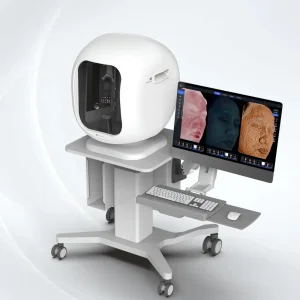
Utilizing high-resolution 3D Skin Analysis Systems allows practitioners to assess dermal pigment depth, baseline vascularization, and UV damage prior to laser exposure, establishing precise diagnostic baselines.
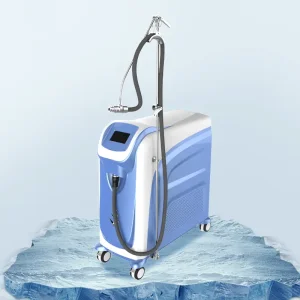
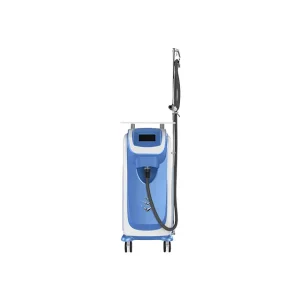
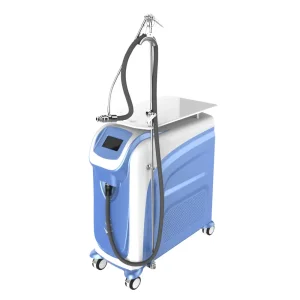
Pairing Q-switched lasers with forced cold-air systems (such as the ICOOL Air Cooling System at -30°C) numbs the treatment area continuously, mitigating patient discomfort and reducing post-treatment erythema without interrupting the laser beam.
Integrating non-ablative resurfacing or DPL (Dye Pulsed Light) modules in subsequent sessions targets residual vascularity and accelerates lymphatic drainage of shattered pigment particles.
Different tattoo pigments exhibit varied absorption spectrums. The following matrix details parameters for safe, high-efficacy clearing:
Essential regulatory guidelines, international electrical safety standards, and factory quality assurance procedures for international B2B importers.
In medical aesthetic equipment procurement, compliance is non-negotiable. Importing non-certified laser platforms into regulated markets introduces severe legal liability, customs seizures, and operational risks. Partnering with a verified manufacturer holding complete CE documentation and medical ISO accreditations ensures full regulatory compliance.
Compliance with European Medical Device Regulation (EU MDR 2017/745) and CE Mark standards confirms that laser systems meet strict safety, clinical performance, and risk management criteria.
Full testing under IEC 60601-1 (General Safety) and IEC 60601-2-22 (Particular requirements for surgical and aesthetic laser equipment) guarantees electromagnetic compatibility and electrical protection.
Manufacturing under ISO 13485 quality management systems ensures full traceability for every sub-assembly, optical component, and high-voltage circuit board across the supply chain.
Before leaving the factory floor, each Q-switched laser system undergoes rigorous multi-stage quality assurance protocols:
Adapting laser configurations, user interface languages, and maintenance plans to regional aesthetic clinic demands across global markets.
Demands heavy-duty floor-standing units with sleek aesthetics, high pulse-energy output, fast treatment speed, and full compliance support for state medical board certifications.
Prioritizes rigorous CE MDR regulatory dossiers, high-precision flat-top beam delivery, ergonomic 7-joint articulated arms, and low sound emissions during operation.
Requires dedicated 1064nm low-fluence toning modes for melasma and post-inflammatory pigmentation, combined with cost-effective maintenance contracts and OEM branding options.
To support global deployments, our manufacturing facilities offer complete OEM/ODM customization options. B2B partners can specify custom exterior shell colors, localized UI software in over 12 languages, integrated clinic management software, and custom-branded physical chassis designs.
Exploring next-generation solid-state optical breakthroughs, sub-nanosecond pulse control, and smart diagnostic laser integration.
As aesthetic laser technology advances, the boundary between nanosecond Q-switched and picosecond platforms continues to converge. Future optical R&D focuses on three primary innovations:
Technical, regulatory, and commercial insights answered directly by our senior medical laser engineering desk.
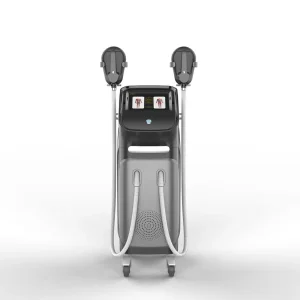
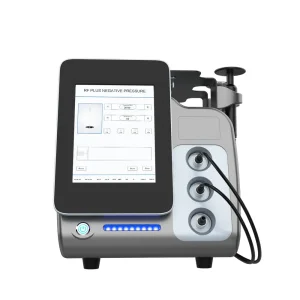
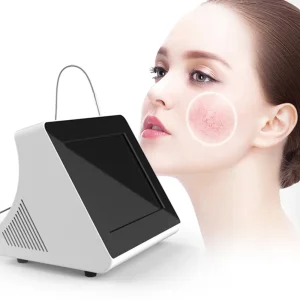
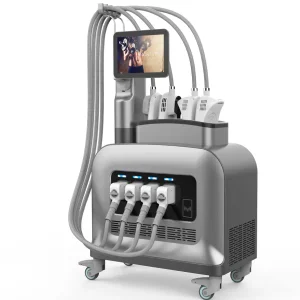
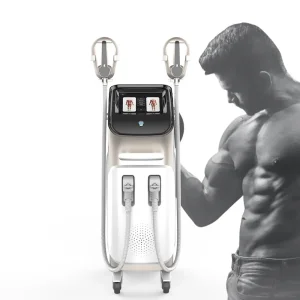
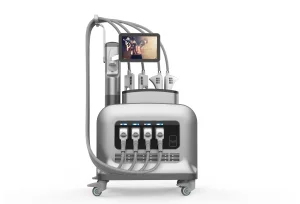
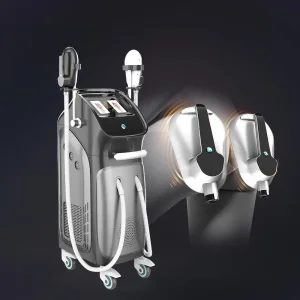
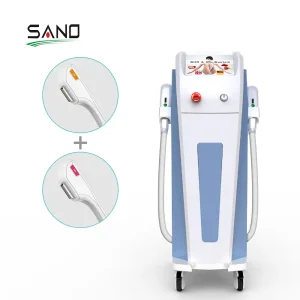
Explore our additional portfolio of high-demand aesthetic devices, body shaping platforms, and specialized vascular laser systems.
Upgrade your practice or distributor portfolio with CE-certified, electro-optic Q-switched Nd:YAG laser systems. Contact our Beijing engineering team today for factory-direct quotes, technical compliance dossiers, and clinical evaluation protocols.