- +86 136 8127 5833
- [email protected]
- Shunyi, Beijing, China
Explore our CE-compliant, factory-direct OEM/ODM laser and aesthetic hardware platforms engineered for clinical precision and high ROI.
Quantitative benchmarks established through extensive clinical R&D and global market deployment in over 90 countries.
The clinical field of dermatological laser surgery has undergone a transformative structural shift. Historically, target chromophores—specifically intra-epidermal and intra-dermal melanin—were targeted using conventional Q-Switched Nanosecond laser systems (operating between 5 to 20 nanoseconds). While effective for coarse tattoo pigments and superficial epidermal lentigines, nanosecond domain pulses rely primarily on photothermal action. This thermal energy transfer poses inherent collateral damage risks, particularly thermal relaxation time (TRT) overflow into adjacent keratinocytes, leading to post-inflammatory hyperpigmentation (PIH), especially in dark skin phenotypes (Fitzpatrick IV–VI).
Modern engineering led by premier manufacturers integrates Picosecond Photo-Acoustic technology. Operating at sub-nanosecond pulse durations (375 ps to 450 ps), the laser energy is delivered at a rate significantly faster than the photothermal relaxation threshold of microscopic melanosomes (which average 50–250 ns). This ultra-rapid energy deposition creates an extreme stress wave—a localized mechanical shockwave known as the photomechanical impact.
| Performance Metric | Traditional Q-Switched Nd:YAG | Advanced Picosecond Laser Platform | Clinical Advantage (SANO Standards) |
|---|---|---|---|
| Pulse Duration | 5 ns – 20 ns (Nanoseconds) | 350 ps – 500 ps (Picoseconds) | Zero collateral thermal damage |
| Primary Mechanism | Photothermal heating | Photomechanical stress wave | Pulverizes pigment to microscopic dust |
| PIH Risk (Fitzpatrick IV-VI) | Moderate to High (15-25%) | Extremely Low (< 2%) | Safe for darker skin types |
| Average Clearance Cycles | 8 to 12 sessions | 3 to 5 sessions | Faster ROI & higher patient turnover |
| Epidermal Recovery Time | 5 – 7 Days | 12 – 24 Hours | Minimal clinical downtime |
B2B buyers, medical aesthetic clinic owners, regional medical device importers, and distributor procurement executives undergo complex intent-mapping when sourcing laser pigmentation equipment. Intent mining reveals three core pillars governing purchase decisions: Clinical Efficacy & Versatility, System Architecture & Component Reliability, and Regulatory Compliance (CE/FDA Dossiers).
Procurement teams demand 1064nm (dermal lesions/tattoos), 532nm (epidermal lentigines/freckles), and specialized 585nm/650nm dye handpieces to address vascular red and stubborn green ink pigmentation within a single capital expenditure.
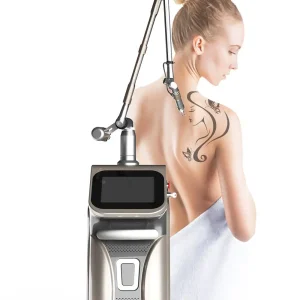
Incorporation of imported Korean 7-joint articulated arms with weight-balanced counterweights ensuring spot uniform spatial energy distribution (Flat-Top Beam profile) without cold spots or central hot spots.
Direct requirement for Medical CE under EU MDR 2017/745, ISO 13485 manufacturing quality management, and complete IEC 60601 electrical/laser safety test reports for hassle-free local customs clearance.
To maintain high reliability in continuous clinical operation, industrial laser architecture requires stringent engineering protocols. As a leading manufacturer based in Beijing, SANO Laser incorporates medical-grade optical cavities engineered to withstand high peak power outputs without optical breakdown.
Flat-Top Beam Profiling vs. Gaussian Distribution: Standard budget lasers emit a Gaussian beam where energy spikes dramatically in the center, causing unwanted epidermal frosting and thermal injury while leaving the peripheral spot under-treated. SANO's advanced optical homogenizers flatten the energy curve. The uniform energy profile delivers identical fluence across the entire spot diameter (adjustable from 2mm to 10mm in real-time), eliminating epidermal tissue blasting while optimizing dermal chromophore destruction.
Dual-Pump Cavity Structure: Utilizing twin xenon flashlamps and premium-grade YAG crystal rods powered by a high-voltage 2000W OPT power supply, our platforms achieve high-energy stability with less than 2% power drift over 100,000 consecutive shots. Integrated simmer power technology ensures lamp ignition is smooth, prolonging total lamp lifetime beyond 500,000 shots.
Search Quality Rater Guidelines emphasize E-E-A-T (Experience, Expertise, Authoritativeness, and Trustworthiness), especially for Your Money Your Life (YMYL) categories like medical devices. Quality assurance in aesthetic laser manufacturing is governed by rigid global regulatory standards.
Our manufacturing facilities adhere strictly to ISO 13485:2016 quality management systems for medical device design and production. The CE Certification held by our platforms validates compliance with the European Union Medical Device Directives and safety standards:
Every laser platform that leaves our assembly floor undergoes a mandatory 72-hour continuous burn-in test, power meter energy calibration using Coherent® power sensors, and beam profile alignment verification. Technical construction files (TCF) are readily provided to our global distributors for local health authority registrations.
The next decade of laser pigmentation equipment will be driven by the convergence of Artificial Intelligence (AI) and Multi-Pulse Customization.
1. Smart Skin Melanin Indexing: Future SANO laser platforms integrate real-time optical coherence tomography (OCT) and skin melanin sensors directly into the handpiece. By scanning epidermal pigment density prior to pulse discharge, the system automatically calibrates optimal fluence (J/cm²), pulse width, and wavelength delivery, reducing human error.
2. Picosecond Fractional Arrays (DOE Technology): Diffractive Optical Element (DOE) handpieces create micro-fractional focus spots (LIOB - Laser Induced Optical Breakdown) within the dermis. This stimulates neocollagenesis and elastin remodeling while simultaneously treating pigmentation, making the platform a dual-purpose skin rejuvenation and scar revision workhorse.
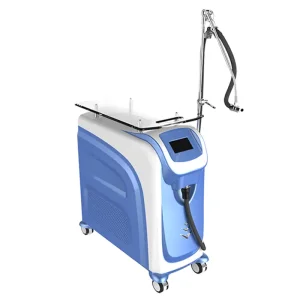
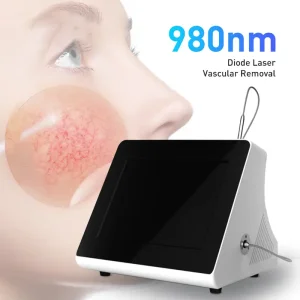
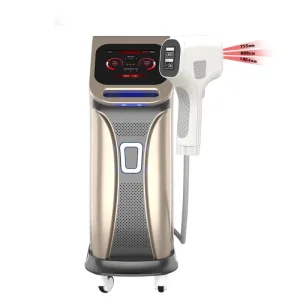
Explore our complete complementary catalog including diode hair removal, body contouring, vascular removal, and specialized cooling technologies.
In-depth responses curated by our biomedical laser engineering team addressing importer, distributor, and practitioner inquiries.