- +86 136 8127 5833
- [email protected]
- Shunyi, Beijing, China
Explore our factory-direct, CE-certified medical laser systems engineered for high-throughput dermatology clinics, aesthetic chains, and global OEM/ODM distributors.
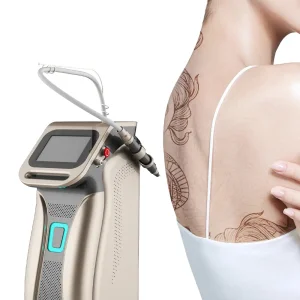
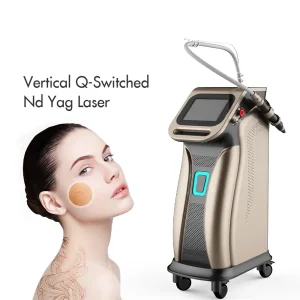
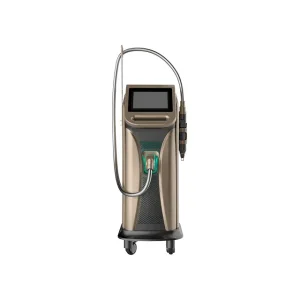
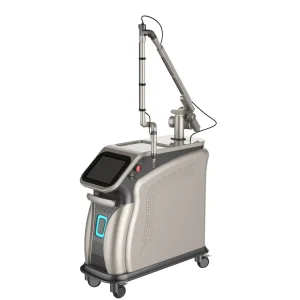
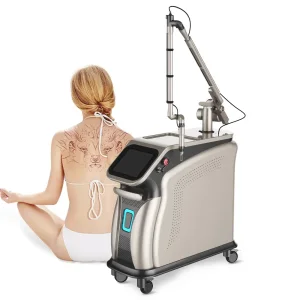
In the realm of advanced dermatological optical engineering, the structural transition from portable desktop chassis to medical-grade Vertical Q Switched Nd Yag Laser Systems represents far more than an aesthetic upgrade. It signifies a paradigm shift in energy density, thermal management, optical cavity stability, and pulse duration precision.
Unlike passive Q-switches utilizing saturable absorbers (such as Cr4+:YAG crystals) which suffer from energy jitter and thermal degradation, professional vertical platforms employ active Electro-Optic (EO) Pockels Cell Q-switching. By applying high-voltage pulses to a KD*P crystal, the system releases megawatt-level peak power with precise sub-nanosecond synchronization, virtually eliminating thermal diffusion to surrounding epidermal tissue.
Top-tier vertical chassis accommodate expanded optical rail dimensions. This allows industrial OEM factories to implement dual-stage Nd:YAG laser rods operating in oscillator-amplifier configurations. Dual-rod amplification doubles photomechanical shockwave output without exceeding the optical damage threshold of the laser crystal, rendering deep ink particles and recalcitrant dermal melasma vulnerable to rapid fragmentation.
Thermal lensing effects in laser rods severely distort beam quality under continuous operational loads. Vertical laser designs house a heavy-duty 15L stainless steel water reservoir, dual high-pressure diaphragm pumps, and compressor refrigeration loops. This guarantees crystal core temperatures remain locked at 20°C to 24°C, sustaining flat-top beam output across 12 consecutive hours of clinical operation.
The primary mechanism of action for a premium Vertical Q Switched Nd Yag Laser relies on selective photothermolysis combined with photoacoustic stress waves. When pulse duration drops below the thermal relaxation time (TRT) of targeted melanosomes or tattoo ink chromophores (<10ns), light energy is converted instantaneously into mechanical acoustic pressure waves. The target experiences micro-explosions and breaks down into micro-granules capable of phagocytic clearance by macrophages, completely bypassing tissue necrosis and scarring.
The demand for non-invasive dermatological light-based procedures is experiencing an unprecedented surge worldwide. As global consumer demographics expand and awareness regarding tattoo removal and skin rejuvenation increases, procurement mandates from hospital groups and aesthetic chains are undergoing structural transformations.
Global tattoo prevalence has reached an all-time high, with approximately 30% of tattooed individuals seeking partial or total pigment removal. The market is shifting decisively toward multi-wavelength platforms capable of targeting complex ink compositions (including resistant sky blue, vivid green, and recalcitrant red inks) using synchronized 1064nm, 532nm, and optional 585nm/650nm dye handpiece modules.
Patient preferences have pivoted sharply away from aggressive ablative resurfacing toward zero-downtime procedures. The "Hollywood Carbon Peel" (utilizing 1320nm laser modalities with localized carbon suspensions) and non-ablative laser toning for Fitzpatrick skin types IV–VI have established themselves as core recurring revenue generators for medical spas globally.
Global distributors are increasingly turning away from turn-key off-the-shelf devices in favor of direct factory partnerships that offer modular customization. Factories capable of offering customized shell industrial designs, tailored software UI, GUI multi-language support, and localized regulatory technical master files are capturing the dominant share of cross-border procurement contracts.
Selecting a reliable Vertical Q Switched Nd Yag Laser supplier requires rigorous evaluation beyond promotional spec sheets. Procurement officers and hospital engineering boards must audit potential manufacturing partners against four critical technical pillars.
| Evaluation Parameter | Standard Commercial Desktop Units | Premium Factory-Direct Vertical Platforms | Procurement Impact & Benefit |
|---|---|---|---|
| Optical Beam Profile | Gaussian (Hot-spot energy distribution) | Homogeneous Flat-Top Beam (7-Joint Articulated Arm) | Prevents epidermal blistering, uniform tissue coverage, zero hot-spot tissue damage. |
| Flashlamp & Cavity Origin | Generic domestic lamps (< 1-2M shots) | Imported UK Morgan Xenon Lamp (> 10M–50M shots) | Lowers long-term cost-per-shot, drastically extends maintenance intervals for clinics. |
| Cooling System Architecture | Basic radiator with small water pump | Compressor refrigeration + 15L Reservoir + Flow Sensor | Allows continuous 24/7 high-intensity operation without thermal emergency shutdowns. |
| Chassis & Structural Isolation | Plastic injection molded casing | Modular Heavy-Duty Steel Frame with Electrostatic Shielding | Protects delicate optical alignment during international sea/air freight transit. |
| Regulatory Master File | Basic CE Self-Declaration | Medical CE (NB 0197/1639), ISO 13485, FDA 510(k) Ready | Ensures smooth customs clearance and legal operation in North America, EU, and LATAM. |
Deploying a high-performance vertical laser platform into a multi-room aesthetic clinic or regional hospital network delivers transformational operational advantages, maximizing treatment speed, safety margins, and clinical throughput.
Our vertical platforms integrate real-time skin resistance and fluence monitoring. Pre-programmed treatment menus guide operators through spot-size selection (2mm to 10mm continuous zoom), frequency settings (1Hz to 10Hz high-repetition rates), and skin-type calibrations, reducing operator dependency and training ramp-up times.
With high repetition pulse rates up to 10Hz and large spot sizes powered by robust energy supplies, full-back tattoo removal sessions or comprehensive facial laser toning sessions can be completed in under 15 minutes. This doubles daily patient capacity per treatment room.
By eliminating high consumable costs associated with alternative modalities, direct factory procurement ensures medical facilities reach capital outlay break-even within 3 to 6 months of active clinical launch.
As a leading OEM/ODM factory and technology pioneer, our R&D engineering division continuously pushes the boundary of solid-state laser physics. Key roadmap developments shape the next decade of medical laser systems.
Transitioning optical cavity designs toward ultra-short pulse regimes (bridging nanosecond Q-switched lasers and picosecond pulse drivers) allows maximum photo-acoustic impact while dramatically shortening ink clearing cycles for patients.
Integrating embedded micro-spectrometers within the 7-joint articulated arm to auto-calibrate power output in real-time, compensating automatically for optical mirror degradation and environmental fluctuations.
Expanding standard 1064/532nm wavelengths with advanced solid-state polymer dye handpieces (585nm for vascular/sky blue ink, 650nm for green ink) into single plug-and-play vertical consoles.
Navigating international regulatory frameworks and establishing reliable after-sales infrastructure is critical for global distributors. Our factory provides end-to-end support to guarantee zero market friction.
All production lines operate inside medical-grade dust-free cleanroom environments. Every optical component undergoes 72-hour burn-in stress testing, water pressure seal validation, and digital energy beam profiling prior to final wooden-case export packaging.
We provide global partners with ready-to-file Technical Construction Files (TCF), EMC/LVD electrical safety reports (IEC 60601-1, IEC 60601-2-22), clinical trial summaries, and RoHS compliance certificates to streamline local health authority registrations.
Distributors benefit from dedicated senior engineer access, modular plug-and-play internal component design for swift field servicing, 24-hour spare part dispatch guarantee, and customized online/onsite technical training video modules.
In-depth answers to common engineering, clinical, and procurement queries submitted by global distributors, hospital procurement teams, and dermatologists.
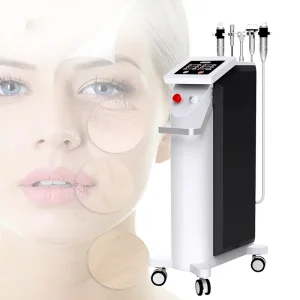
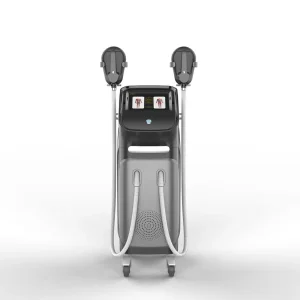
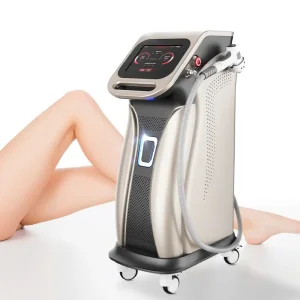
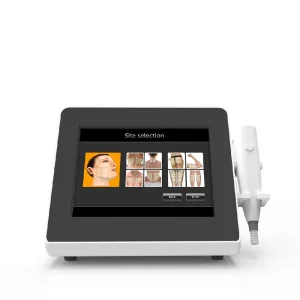
Explore our full line of complementary medical aesthetic platforms including CO2 Fractional Lasers, Diode Laser Hair Removal, Cryolipolysis, Microneedle RF, and Muscle Sculpting equipment.