- +86 136 8127 5833
- [email protected]
- Shunyi, Beijing, China
Explore our factory-direct aesthetic equipment, engineered to European CE and ISO13485 standards for clinical efficacy.
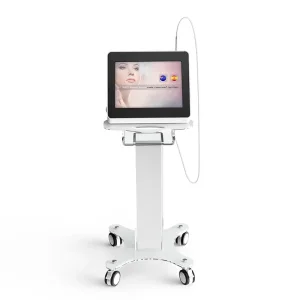

A comprehensive analysis of how hardware innovation, optical sensor miniaturization, and deep learning algorithms are reshaping global dermatological procurement.
Transitioning from basic RGB photography to 8-spectrum deep dermal scanning, revealing porphyria, hidden hyperpigmentation, and sub-surface vascular structures before they manifest visibly.
AI-driven convolutional neural networks (CNN) trained on over 10 million clinical dermatological profiles simulate 3 to 5-year skin morphing trajectory under various treatment scenarios.
Medical aesthetic practices deploying standardized 3D facial skin analysis report an average 42% increase in treatment plan acceptance and a 65% rise in long-term client compliance.
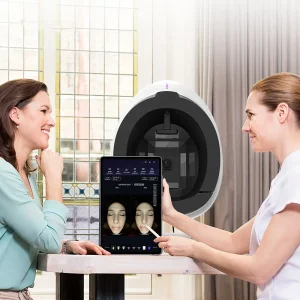
In the contemporary landscape of clinical dermatology and aesthetic medicine, the paradigm has decisively shifted from intuitive practitioner assessments to data-driven diagnostic visualization. As an established Skin Analyzer Manufacturer & Factory, SANO Laser has spearheaded this technological transition by bridging industrial-grade optoelectronics with advanced cloud computing. Today’s global aesthetic consumer demands objective validation before investing in high-energy treatment modalities such as fractional CO2 lasers, 4D HIFU, or microneedling radiofrequency (RF).
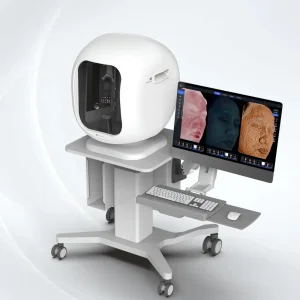
Modern skin analysis equipment serves as the primary gateway for clinic monetization. By capturing ultra-high resolution imagery across multiple spectrums—including standard daylight (RGB), cross-polarized light, parallel-polarized light, UV fluorescence, and specialized Wood’s light—these systems expose early-stage pathological changes in the stratum corneum, dermal-epidermal junction (DEJ), and subcutaneous vascular network. This objective baseline allows clinicians to construct hyper-personalized treatment regimens while providing empirical proof of post-treatment efficacy.
According to clinical procurement data across 90+ countries, clinics utilizing multi-spectral skin analyzers close high-ticket treatment packages at a rate 2.4x higher than practices relying solely on visual inspection. Factory-direct OEM customization allows regional distributors to embed proprietary diagnostic indexes directly into the software user interface.
Inside the hardware pipeline: How hardware stability and light spectrum purity determine diagnostic repeatability.
We source medical-grade Sony CMOS image sensors featuring high dynamic range (HDR) and ultra-low noise under low-light conditions. Paired with custom non-distortion telecentric lenses, our skin analyzers ensure zero spatial warping across peripheral facial contours.
Unlike commercial cameras that suffer from light decay, SANO’s optical engine employs narrow-band LED arrays calibrated to exact color temperatures (5500K daylight, 365nm UV peak wave). This ensures consistent baseline illumination across years of clinical operations.
How each distinct light spectrum reveals specific epidermal and dermal dermatological indicators.
| Light Spectrum Mode | Wavelength Range | Target Depth | Primary Clinical Indicators Detected |
|---|---|---|---|
| RGB Standard White Light | 400nm – 700nm | Epidermis (Surface) | Pore density, fine lines, visible wrinkles, surface skin texture, macro roughness. |
| Cross-Polarized Light | 400nm – 700nm (Polarized) | Superficial Dermis | Sub-surface erythema, vascular dilation, rosacea, telangiectasia, active inflammation. |
| Parallel-Polarized Light | 400nm – 700nm (Aligned) | Stratum Corneum | Skin lipid film uniformity, moisture loss patterns, keratinization, pore blockage. |
| UV Light (Fluorescence) | 365nm Peak Wavelength | Pilo-Sebaceous Unit | Propionibacterium acnes porphyrins, sebum distribution, hidden UV damage. |
| Wood's Light Emulation | 320nm – 400nm | Dermal-Epidermal Junction | Melanin accumulation, chloasma, deep freckles, hypopigmentation, dyschromia. |
Beyond two-dimensional flat imaging, advanced 3D skin analyzers utilize structured light triangulation to construct a high-density mesh model of the patient’s face. This 3D spatial mapping allows practitioners to measure volume loss, nasolabial fold depth, and jawline sagging with sub-millimeter precision. When integrated with non-invasive lifting technologies like 4D HIFU or Microneedle RF, the analyzer provides verifiable volumetric proof of structural skin tightnening over treatment courses.
Custom OEM/ODM workflows tailored to your specific commercial model and market compliance requirements.
Complete white-label solutions, localized SDK integration, robust spare parts supply chain, and comprehensive engineering training manuals for regional maintenance hubs.
Centralized cloud database synchronization allowing multi-location clinic chains to access client skin history from any branch, integrated with CRM software APIs.
Customized product recommendation algorithms embedded into the diagnostic report, matching specific skin deficiencies directly with your branded skincare formulations.
Ensuring compliance with international medical device directives and regional data protection regulations.
As a leading Skin Analyzer Factory, Beijing Sano Laser Development S&T Co., Ltd. operates under strict ISO13485 quality management systems. Every machine undergoes rigorous optoelectronic calibration, thermal stress testing, and electromagnetic compatibility (EMC) validation prior to leaving our Shunyi facility. Our commitment to build quality guarantees zero optical displacement during international transport.
With skin analyzers capturing high-definition patient facial biometrics, data privacy is paramount. Our cloud system architecture complies with GDPR and HIPAA mandates, utilizing AES-256 bit encryption for localized patient storage and secure cloud backups.
SANO skin analysis systems feature 14 natively supported languages (English, Spanish, German, French, Russian, Arabic, Portuguese, Japanese, etc.), allowing your regional staff to operate the system smoothly without language barriers.
Pioneering the next decade of dermatological AI sensing and therapeutic synergy.
Upgrading deep learning engines from standard CNNs to Vision Transformers, enabling micro-lesion attention mapping across diverse ethnic skin phenotypes.
Automated parameter syncing between skin analyzers and therapeutic aesthetic machines (e.g., auto-setting laser fluence based on real-time hydration and melanin index).
Researching non-contact optical spectroscopy to detect sub-dermal collagen density loss and free-radical oxidative stress in vivo.
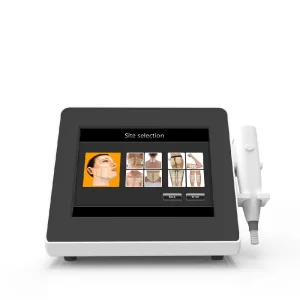
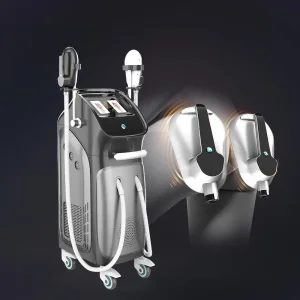
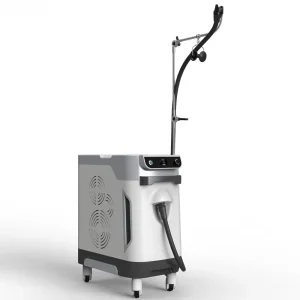
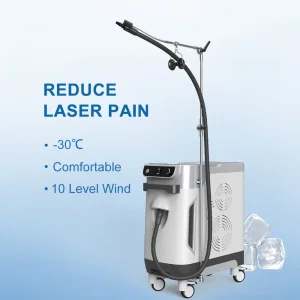
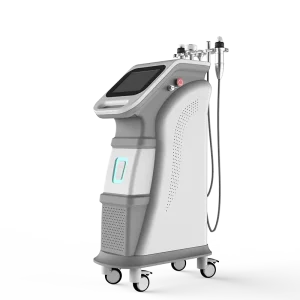
Explore our full range of medical aesthetic systems designed to work synergistically with skin diagnostic outputs.
Technical, procurement, and clinical queries addressed directly by our senior engineering team.