- +86 136 8127 5833
- [email protected]
- Shunyi, Beijing, China
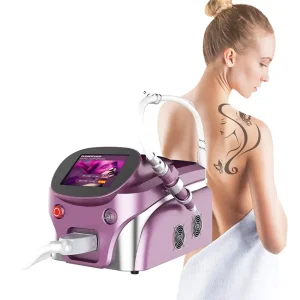
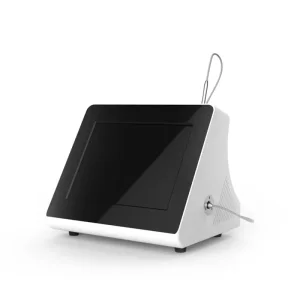
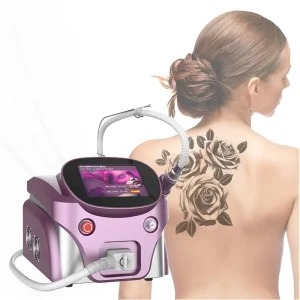
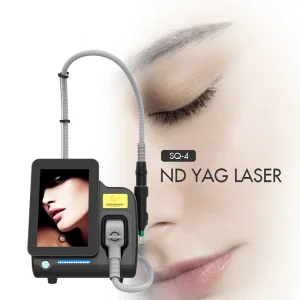
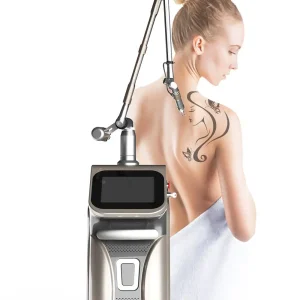
The modern aesthetic and medical dermatology landscape relies heavily on high-peak-power solid-state laser platforms. Among these, the Portable Q-Switched Nd:YAG Laser represents a pinnacle of miniaturized electro-optical engineering. Designed to deliver high pulse energy within ultra-short nanosecond pulse durations (typically 3ns to 10ns), these compact platforms enable clinical practitioners to execute complex pigmentary clearance, tattoo removal, and dermal rejuvenation without requiring large, floor-standing clinical consoles.
At the core of Neodymium-doped Yttrium Aluminum Garnet (Nd:YAG) physics lies the principle of Selective Photothermolysis augmented by Photoacoustic Stress Waves. By lasing at a fundamental wavelength of 1064nm, energy penetrates deep into the dermal matrix with minimal absorption by epidermal melanin, making it an exceptional tool for treating deep-seated chromatic targets across Fitzpatrick skin types I through VI. When coupled with non-linear Potassium Titanyl Phosphate (KTP) frequency-doubling crystals, the system generates a secondary harmonic wavelength of 532nm, perfectly optimized for superficial epidermal lesions and warm-spectrum tattoo pigments (red, orange, and purple).
Engineering a portable chassis requires strict trade-off management between thermal dissipation, capacitor charging speeds, and optical cavity dimensions. Original equipment manufacturers (OEMs) select between two distinct Q-switching methodologies:
Utilizes a saturable absorber crystal within the laser cavity. As flashlamp pumping populates the upper laser level of the Nd:YAG rod, energy builds until the absorber saturates, releasing a nanosecond pulse. While highly cost-effective and lightweight, passive Q-switches experience pulse energy drift as thermal load increases, making them ideal for entry-level medspas.
Incorporates a Pockels cell crystal driven by high-voltage fast-switching electronics. This allows precise temporal control over pulse emission, guaranteeing uniform peak energy output across extended high-frequency treatments (up to 10Hz). Leading tier-1 China factories now integrate miniaturized EO modulators into portable frames, elevating clinical performance to floor-standing standards.
As semantic search data and clinical intent mining reveal, enterprise buyers are actively seeking systems that bridge the gap between nanosecond pulse technology and true picosecond performance. The technical roadmap of portable Q-switched Nd:YAG systems is undergoing unprecedented acceleration across three distinct vectors:
Traditional Xenon flashlamps induce significant thermal dissipation requirements. Next-gen portable architectures are shifting toward Diode-Pumped Solid-State (DPSS) modules. Direct diode pumping yields narrower spectral emission matching the 808nm absorption peak of Nd:YAG rods, dramatically reducing waste heat and allowing power supply scaling by over 40% in weight-restricted enclosures.
By reducing pulse durations from 6-8ns down to 600-800ps, energy is delivered well within the Thermal Relaxation Time (TRT) of micro-pigments. This shift converts thermal fragmentation into acoustic shatter, reducing post-inflammatory hyperpigmentation (PIH) risks on darker skin types while minimizing patient discomfort.
Integrating embedded photodiode arrays directly inside the articulated handpiece or connector coupling allows real-time measurement of per-shot spot energy. Intelligent microcontrollers automatically adjust capacitor discharge voltages to compensate for optical component heating and flashlamp aging, ensuring perfect fluence fidelity.
| Architecture Feature | Legacy Portable Q-Switched | Next-Gen China Factory 4.0 Standard | Enterprise Clinical Impact |
|---|---|---|---|
| Laser Cavity Pumping | Simmer-mode Xenon Flashlamp | High-Efficiency Micro-Diode / Pulsed Xenon | 5x extension in operational lifespan; zero downtime |
| Pulse Duration Range | 8ns – 15ns | 3ns – 6ns (Nanosecond) / 450ps (Pico-hybrid) | Photoacoustic ink fragmentation with reduced thermal burn |
| Beam Profile (M²) | Gaussian (Hot-spot concentration) | Flat-Top / Top-Hat Uniform Profile | Homogeneous tissue coverage, lower risk of epidermal scarring |
| Cooling System Integration | Basic Radiator + Small Water Tank | Dual TEC Semiconductor + Copper Heat Exchangers | Continuous 12-hour continuous heavy clinic operational capacity |
The competitive edge of leading Chinese laser manufacturers stems from structural shifts toward Factory 4.0 automation, vertical supply chain integration, and rigorous optical engineering standards. China's aesthetic equipment manufacturing ecosystem in hubs such as Beijing, Guangdong, and Jiangsu accounts for over 65% of global solid-state aesthetic hardware output.
Optical paths in Q-switched lasers are extremely sensitive to particulate contamination. Standard-setting factories operate ISO Class 7 dust-free cleanrooms for cavity sealing, mirror coating, and crystal alignment. Automated optical alignment benches utilize He-Ne guide lasers to center high-reflectivity (HR) and output-coupler (OC) mirrors with arc-second precision.
The fundamental limitation of legacy portable units was thermal shutdown after 15 minutes of continuous use. Modern Chinese manufacturing solves this via custom microchannel copper heat exchangers coupled with Thermoelectric Cooling (TEC) modules. Water flow rate sensors and digital temperature transducers ensure the laser rod maintains an optimal ΔT within ±0.5°C.
Prior to packaging, complete systems undergo 72-hour continuous burn-in testing. Power meters record energy output across 100,000 continuous shots to chart slope efficiency, beam spatial profile, and high-voltage stability under fluctuating thermal conditions, guaranteeing out-of-the-box reliability for international importers.
By sourcing raw crystal materials (Nd:YAG rods, KTP, BBO), optical glass, high-voltage capacitors, and injection-molded enclosures within localized industrial clusters, Chinese manufacturers reduce Bill of Materials (BOM) costs by 40-60% relative to Western counterparts without compromising optical grade standards.
The versatile operational parameters of portable Q-switched lasers allow commercial operators to construct highly profitable service menus across different clinical business models.
Clinics leverage dual-wavelength flexibility to treat a broad matrix of indications:
For specialized tattoo clearance chains and mobile aesthetic providers, machine portability (weight under 25kg) with high energy density (up to 1500mJ per pulse) provides unprecedented agility. The ability to easily pack platforms into heavy-duty flight cases enables multi-location service delivery without purchasing multiple capital-heavy floor systems.
Global distributors seeking to build proprietary brand equity utilize China factory customization capabilities:
When evaluating procurement choices from Chinese manufacturers, corporate buyers must look beyond initial FOB purchase price and calculate the 3-year to 5-year Total Cost of Ownership (TCO).
A high-tier portable Q-switched laser from an established Chinese OEM ranges from $2,500 to $6,500 USD, compared to $35,000 to $80,000 USD for Western branded equivalents with comparable energy specs. This dramatic reduction in CAPEX allows clinics to achieve full ROI within 2 to 4 months of operation.
Primary consumable components include the Xenon flashlamp and water filter cartridges. Superior factories design modular handpieces allowing rapid flashlamp replacement (rated for 1,000,000+ flashes) without requiring full optical recalibration by a field engineer, holding consumable cost per treatment below $0.50 USD.
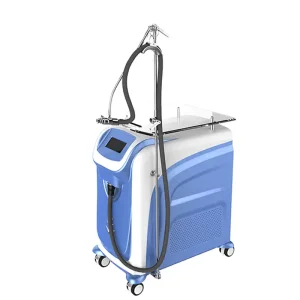
Unplanned equipment downtime directly destroys clinic profitability. Systems engineered with dual water pumps, stainless steel tanks, and external TEC chillers support back-to-back patient scheduling without thermal pausing, protecting daily clinic throughput.
Cross-border procurement requires stringent adherence to international medical device directives and robust technical service level agreements (SLAs).
Leading factories operate certified ISO 13485 quality management systems. Equipment complies with EU Medical Device Regulation (MDR 2017/745) standards, IEC 60601-1 electrical safety, and IEC 60601-2-22 laser safety directives, ensuring seamless customs clearance and local medical device registration.
Top-tier manufacturers maintain modular spare parts inventory across global logistics hubs in Europe, North America, and LATAM. Key subsystems—such as plug-and-play power supplies, pre-calibrated replacement handpieces, and motherboard assemblies—can be dispatched via express air freight within 24-48 hours.
Modern systems feature Wi-Fi enabled diagnostic software. Factory engineers can remotely pull system log files, diagnose high-voltage charging curves, and update firmware over-the-air (OTA), empowering local distributor technicians to resolve software and operational queries instantly.
Clear engineering answers addressing key procurement, operational, and physical parameter questions from clinic managers and enterprise importers.
A genuine Q-switched Nd:YAG laser employs an active (Electro-Optic Pockels cell) or passive (Cr4+:YAG) optical shutter within the resonant cavity to constrain pulse duration between 3ns and 10ns. Pseudo Q-switched or long-pulse systems operate in the microsecond to millisecond regime (>200µs). Short pulse durations are essential for inducing photoacoustic acoustic disruption of ink particles; longer pulse durations result in photothermal heating, which increases tissue trauma, scarring, and hyperpigmentation risks.
The 1320nm or defocused 1064nm wavelength interacts with a topically applied medical-grade carbon slurry. The carbon particles penetrate deeply into the follicular infundibulum. When irradiated by the Q-switched laser pulse, the carbon instantly vaporizes, snapping micro-explosions that exfoliate the stratum corneum, clear impacted sebum, and stimulate heat-shock proteins in the papillary dermis to induce neocollagenesis.
A Gaussian beam profile delivers peak energy in the center of the spot with trailing low energy at the margins, often causing central tissue hot-spots (leading to pin-point bleeding) while leaving perimeter pigment undertreated. A Flat-Top beam distributes energy homogeneously across the entire spot area, ensuring uniform therapeutic fluence, reducing epidermal trauma, preventing hot-spot blistering, and providing consistent clinical endpoints.
Solid-state laser rods and Xenon flashlamps require high-purity deionized (DI) water with electrical conductivity below 5 µS/cm. Impure water causes mineral scale accumulation on the Nd:YAG rod surface and quartz flashlamp envelope, absorbing pump light, creating localized thermal hot spots, and drastically reducing optical conversion efficiency or causing rod cracking. Professional Chinese manufacturers integrate internal deionization filters and flow sensors into their portable chassis.
Typical Minimum Order Quantities (MOQ) for custom logo placement and software startup UI branding start at 1 to 5 units. Full industrial design customization—including bespoke injection-molded housing colors, custom handpiece shapes, and unique GUI layouts—generally requires an MOQ of 10 to 20 units with lead times ranging from 15 to 30 days depending on component availability and certification testing.
Potassium Titanyl Phosphate (KTP) frequency-doubling crystals require precise phase-matching angles sensitive to thermal fluctuation. As energy passes through the crystal during high-frequency firing (5Hz - 10Hz), absorption induces heating. Without active TEC temperature regulation around the KTP housing, phase matching drifts, leading to severe drop-offs in 532nm pulse energy. Premium portable systems integrate localized mini-TEC elements directly inside the handpiece head.