- +86 136 8127 5833
- [email protected]
- Shunyi, Beijing, China
Explore our precision-engineered aesthetic platforms manufactured under ISO13485 and CE standards for high-volume clinical practice and global distribution.

Understanding how picosecond pulse durations redefine clinical safety thresholds, pigment clearance efficiency, and tissue recovery dynamics in modern dermatological laser platforms.
In the landscape of medical aesthetic laser manufacturing, the transition from traditional Q-switched nanosecond lasers (operating in the 5–20 nanosecond domain) to true high-peak-power Picosecond Laser Machines represents a fundamental physics evolution. Traditional nanosecond devices rely predominantly on selective photothermolysis—converting light energy into localized heat to melt target chromophores such as tattoo inks and melanin granules. However, because nanosecond pulse durations exceed the thermal relaxation time of microscopic pigment particles, thermal diffusion into surrounding dermal structures is inevitable. This manifests clinically as prolonged erythema, elevated risk of Post-Inflammatory Hyperpigmentation (PIH), scarring, and extended patient recovery cycles.
Leading picosecond laser machine factories have engineered optical cavities capable of compressing optical pulse widths down to 350 to 600 picoseconds (1 picosecond = 10-12 seconds). When laser energy is delivered in a timeframe shorter than the target’s acoustic stress relaxation time, the energy absorption mechanism shifts dramatically from photothermal heating to photo-acoustic fragmentation (photomechanical disruption).
By producing massive peak power (exceeding 1.5 to 2.0 Gigawatts), picosecond lasers generate intense localized transient pressure waves exceeding tens of kilobars. Instead of heating the target pigment, these shockwaves shatter melanin granules and exogenous ink particles into ultra-fine "dust-like" micro-particles. These micro-particles are subsequently phagocytosed by macrophages and cleared via the lymphatic system at double the efficiency of nanosecond debris, with virtually zero thermal damage to adjacent epidermal layers.
For global procurement managers, distributor network directors, and aesthetic medical group CEOs evaluating Picosecond Laser Machine Factories & Factory capabilities, understanding this optical physics distinction is essential. A genuine picosecond platform requires advanced solid-state seed lasers, high-durability Pockels cells, specialized laser rods (such as Nd:YAG or Alexandrite), and precision-engineered power supplies capable of holding sub-nanosecond pulse stability across millions of continuous shots.
Next-generation technological vectors reshaping optical power delivery, multi-wavelength integration, and AI-assisted beam homogenization in industrial aesthetic equipment manufacturing.
Transitioning from traditional flashlamp-pumped cavities to semiconductor Diode-Pumped Solid-State (DPSS) modules. DPSS architectures eliminate flashlamp degradation, double optical wall-plug efficiency, and deliver perfectly consistent pulse-to-pulse stability over a 50-million-shot lifetime.
Advanced factory platforms integrate dual and quad-wavelength configurations—1064nm (dermal pigment & dark inks), 532nm (epidermal lesions & red/orange inks), 755nm Alexandrite (fine green/cyan inks), alongside KTP dye handpieces (585nm & 650nm) for full spectrum coverage.
Incorporating specialized Honeycomb Micro-Lens Arrays (MLA) or Diffractive Optical Elements (DOE) to generate dense arrays of high-fluence micro-spots. LIOB creates non-thermal intra-dermal cavitation pockets, triggering massive type-I and type-III collagen synthesis for acne scar remodeling without damaging the surface stratum corneum.
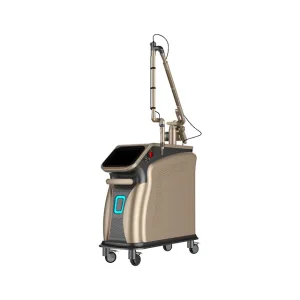
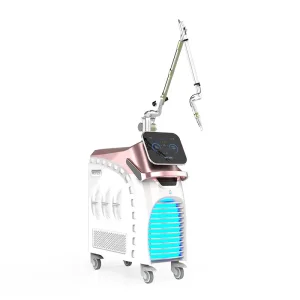
High-end picosecond factories utilize precision-machined 7-joint articulated transmission arms with imported dielectric gold mirror coatings, maintaining >92% energy transmission efficiency and zero polarization distortion regardless of handpiece orientation.
Closed-loop internal energy sensor feedback monitors every single pulse exit fluence. Auto-calibrating optical attenuate systems compensate for thermal lensing effects in real-time, preventing accidental hyper-pigmentation or under-treatment in clinical settings.
Embedded smart OS platforms that calculate optimal fluence, spot size (2–10mm zoom), repetition rate (1–10Hz), and pulse width based on skin phototype (Fitzpatrick I–VI), pigment depth, and tattoo ink saturation matrix inputs.
As the technological trajectory progresses, top-tier manufacturers like Beijing Sano Laser Development S&T Co., Ltd. are pushing pulse compression beyond current limits. Future factory roadmaps focus on sub-300-picosecond platforms that render photothermal thermal relaxation practically zero. For global distributors, partnering with a factory possessing dedicated optical R&D labs ensures access to upgradeable modular chassis, protecting capital investments from rapid technological obsolescence.
Inside the Beijing Sano Laser manufacturing ecosystem: How integrated optical supply chains, automated cleanroom assembly, and stringent QC protocols deliver world-class medical equipment at competitive TCO.
China's medical aesthetic equipment manufacturing sector has undergone a profound structural shift over the past decade. Far beyond basic assembly operations, modern Beijing-based factories represent sophisticated Industry 4.0 manufacturing hubs that combine localized optical component clusters with rigorous international quality systems (ISO13485 and ISO9001).
The competitive advantage of leading Chinese picosecond laser machine factories rests on five structural pillars of supply chain resilience and technical precision:
Optical laser cavities, crystal rods, and Q-switch Pockels cell alignment are performed in Class 10,000 dust-free cleanrooms. This prevents microscopic particulate contamination on mirrors, eliminating localized hot-spots and optical breakdown burnouts.
Leveraging proximity to world-class precision optical component manufacturers (supplying high-damage-threshold dielectric mirrors, Nd:YAG rods, and quartz lenses), reducing component lead-times from months to days while maintaining strict lot-to-lot traceability.
Every picosecond chassis undergoes a 72-hour continuous thermal stress test and a 500,000-shot energy decay burn-in protocol using high-speed optical oscillometers and laser power meters prior to final shell assembly.
Chassis designs incorporate modular sheet-metal and high-durability internal aluminum structural frames. Electrical power lines, water-cooling conduits, and optical path channels are strictly separated to prevent electromagnetic interference and liquid damage.
In-house industrial design teams provide rapid turn-around for custom shell molds, custom Pantone color choices, localized multi-language UI software, and private-label packaging for international brand owners.
Strategic warehouse stocking of essential spare parts (water pumps, power supplies, simmer boards, articulated arm joints) guarantees dispatch within 24 to 48 hours for global warranty support.
By establishing vertical integration across R&D, CNC machining, harness wiring, and clinical testing facilities under one roof in Shunyi District, Beijing, SANO Laser reduces manufacturing overhead by 45% to 60% compared to Western European or American manufacturers. These savings are passed directly to B2B procurement partners, enabling distributors to offer premium picosecond performance at market-disruptive price points.
How medical spa chains, dermatology clinics, and equipment importers evaluate technical parameters, warranty structures, and ROI metrics when sourcing from laser factories.
When global enterprises—ranging from multi-location clinic chains in North America and Europe to regional equipment distributors in Latin America and the Middle East—evaluate a Picosecond Laser Machine Factory, purchase price is only one component of the decision matrix. Strategic B2B buyers conduct rigorous Total Cost of Ownership (TCO) and ROI evaluations across five key operational vectors:
| Evaluation Metric | Nanosecond Q-Switched Laser | Standard Commercial Pico Laser | SANO Factory-Grade Picosecond Platform |
|---|---|---|---|
| Pulse Duration (ps) | 5,000 - 10,000 ps | 750 - 1,200 ps | 350 - 600 ps (Real Picosecond) |
| Peak Power (GW) | 0.1 - 0.3 GW | 0.6 - 1.0 GW | 1.8 - 2.0 GW Peak Output |
| Dominant Mechanism | Photothermal (High Heat) | Mixed Thermal/Acoustic | Pure Photomechanical Shockwave |
| Average Tattoo Sessions | 8 - 12 Treatments | 5 - 8 Treatments | 3 - 5 Treatments (High Clearance) |
| Thermal Relaxation Injury Risk | Elevated (High PIH Risk) | Moderate | Minimal (Safe for Fitzpatrick IV-VI) |
| Optical Beam Profile | Gaussian (Hot-Spot Risk) | Semi-Flat Top | Homogenized Flat-Top Top-Hat Beam |
| Consumable / Running Cost | Flashlamp replacement every 1M shots | High handpiece wear | Zero Consumables / Long-Life Optics |
| Expected Equipment ROI | 12 - 18 Months | 8 - 12 Months | 4 - 6 Months (High Clinic Throughput) |
For high-volume medical aesthetic practices, OPEX can quickly outpace initial CAPEX if an aesthetic machine requires frequent lamp replacements, fragile fiber optic replacements, or costly software licensing tokens. SANO Laser’s picosecond manufacturing model prioritizes direct-coupled articulated arm optical delivery without consumable lockout chips, ensuring that every session delivered in a clinic translates into maximum net profit margin.
Engineered hardware treatment capabilities covering full-spectrum tattoo removal, refractory epidermal pigmentation, dermal lesions, and skin rejuvenation.
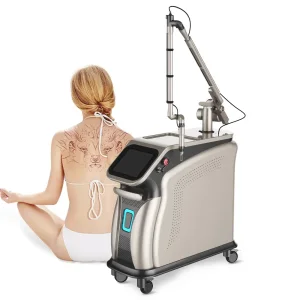
Treating recalcitrant black, dark blue, green, red, and yellow pigments. High peak power breaks down stubborn ink particles that have become immune to conventional nanosecond laser pulses.
Delivering low-fluence, ultra-short pulses ("Pico Toning") to disintegrate dermal melasma pigment without triggering melanocyte hyperactivity or rebound hyperpigmentation on darker skin phototypes.
Fractional Honeycomb Lens Array creates localized mechanical micro-cavitations within the papillary dermis. Stimulates neo-collagenesis and elastin remodeling with zero epidermal breakage and under 24h downtime.
Deep penetrating 1064nm wavelength selectively targets deeply situated dermal melanocytes in congenital lesions, providing clean pigment clearance with minimal risk of scarring.
Rapid photomechanical clearance of superficial epidermal melanin in 1 to 2 short sessions. Instant frosting response with swift micro-crust shedding over 3 to 5 days.
Applying topical nano-carbon paste followed by fast-scanning 1064nm laser energy to shrink enlarged pores, balance sebum production, and brighten overall skin tone.
How Beijing Sano Laser provides complete regulatory documentation, engineering backbones, and international customer protection frameworks for long-term equipment operation.
Purchasing aesthetic laser equipment directly from a factory requires absolute confidence in post-sale support, international regulatory alignment, and continuous technical assistance. SANO Laser has built a comprehensive Global Service Infrastructure engineered to remove operational friction for overseas buyers:
Platforms hold Medical CE (MDR/MDD compliance), ISO 13485 quality system accreditation, RoHS environmental compliance, and complete safety test reports under IEC 60601-1 and IEC 60601-2-22 laser safety standards.
Comprehensive warranty covering all core laser cavities, power modules, control boards, and cooling systems. Replacement parts are dispatched via express air courier free of charge during the warranty period.
Direct remote technical assistance provided by the software and optical engineers who designed the unit. Instant video diagnostic sessions resolve operational queries within hours.
We supply international distributors with full regulatory clearance dossiers, including electrical schematics, optical path diagrams, clinical study summaries, and localized user manuals for fast local registration.
Expert engineering answers to critical questions asked by medical equipment importers, clinic owners, and procurement directors before placing factory orders.
Verification requires reviewing oscilloscope high-speed photodiode measurements. A genuine picosecond laser machine exhibits a single pulse duration between 300ps and 600ps. Many low-cost manufacturers sell "pseudopicosecond" or "short-nanosecond" machines (3ns to 8ns) labeled as picosecond. True picosecond systems feature complex seed laser configurations, specialized pulse-compression cavities, high-voltage Pockels cell drivers, and expensive articulated light transmission arms rather than simple optical fiber cords. SANO Laser provides factory oscilloscope verification reports for every export unit.
For standard machine configurations with localized software language updates and custom UI logos, our MOQ is 1 unit, with production lead times of 5 to 7 working days. For complete OEM customization—including custom industrial shell molding, custom Pantone color execution, specialized handpiece branding, and custom packaging—our standard MOQ ranges from 5 to 10 units with lead times of 15 to 20 business days.
High-peak-power picosecond laser pulses (exceeding 1.5 Gigawatts) destroy traditional glass optical fibers instantly due to internal optical breakdown. A precision-engineered 7-joint articulated arm utilizes sealed internal metal elbows with specialized dielectric mirrors to bounce the high-energy beam through air. This maintains peak beam quality, prevents energy drop-off, allows 360-degree handpiece mobility, and ensures a long service life without optical degradation.
Because picosecond laser cavities generate substantial thermal energy at high repetition rates, high-purity distilled or deionized water (conductivity < 5 μS/cm) must be used in the internal closed-loop cooling system. Tap or mineral water causes mineral scaling inside the laser rod cooling jacket, leading to optical rod distortion and premature cavity failure. SANO machines feature integrated water purity sensors and flow alarms that alert operators if water replacement is required.
SANO platforms are designed with modular internal architectures featuring quick-connect harnesses and standardized power blocks. In the rare event of a hardware fault, our engineering team uses diagnostic error codes and video calls to isolate the issue. Replacement plug-and-play modules (such as simmer boards, touchscreens, or cooling pumps) are shipped via DHL/FedEx express within 24 hours, allowing local clinic technicians to complete swapping procedures in under 30 minutes.
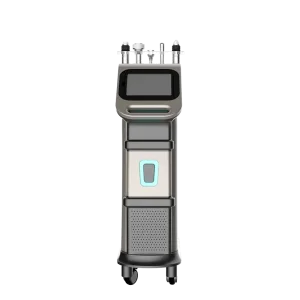
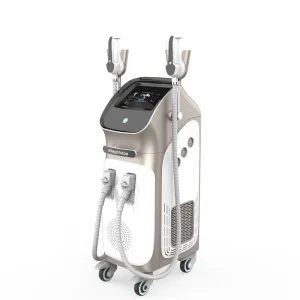
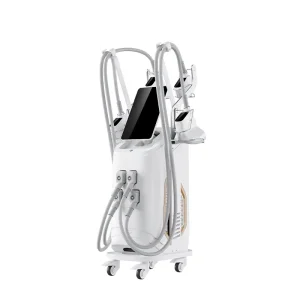
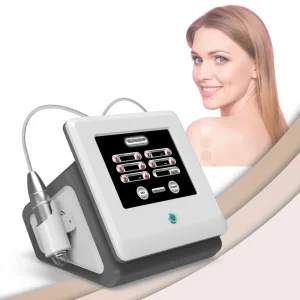
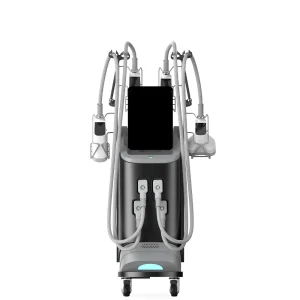
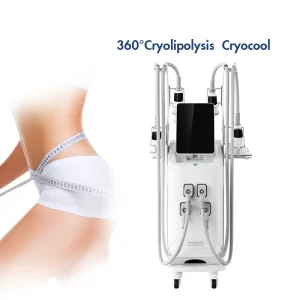
Explore our comprehensive product lines including Picosecond Lasers, Microneedle RF, Cryolipolysis, Diode Laser Hair Removal, and EMS Body Sculpting systems.