- +86 136 8127 5833
- [email protected]
- Shunyi, Beijing, China
Engineered for high ambient humidity, continuous clinical operation, and high ROI performance across Indonesian medical aesthetic centers.
An in-depth analysis of Southeast Asia’s largest body contouring market, detailing patient preferences, regional clinic expansion, and thermal adaptation engineering.
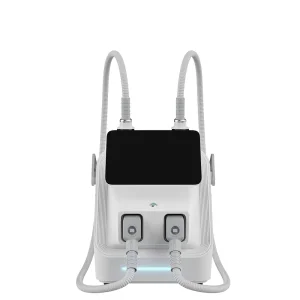
Indonesia is experiencing an unprecedented surge in demand for non-surgical cosmetic procedures. Driven by a rapidly growing urban middle class in tier-1 metro centers like Greater Jakarta (Jabodetabek), Surabaya, Bandung, and Medan, as well as the booming medical tourism sector in Bali, body shaping has evolved from a luxury luxury service to a mainstream wellness ritual. Portable cryolipolysis devices have gained massive traction due to their footprint efficiency, mobility between multi-branch clinics, and minimal capital expenditure requirement.
Deploying optical and thermal aesthetic hardware in Indonesia presents unique engineering challenges. Tropical ambient temperatures frequently exceeding 32°C combined with relative humidity over 85% create thermal stress on low-tier thermoelectric cooling (TEC) assemblies. Chinese tier-1 manufacturers have solved this by integrating dual-compressor auxiliary water chilling loops, high-pressure Japanese diaphragm pumps, and heat-exchanger radiators specifically rated for humid tropical climates, guaranteeing consistent -11°C targeted lipid freezing without system overheat triggers.
How advanced 360-degree contact cooling, precision vacuum dynamics, and semiconductor thermal control deliver localized fat crystallization while preserving surrounding tissue integrity.
Cryolipolysis operates on the fundamental physiological principle of selective cryo-necrosis (apoptosis) of subcutaneous adipocytes. Adipose tissue is significantly more susceptible to cold-induced injury than surrounding collagenous skin layer, vascular networks, or peripheral nerves. When held at controlled temperatures between -5°C and -11°C for 35 to 60 minutes, intracellular lipids undergo crystallization, initiating a cascade of cell death followed by natural macrophage clearance over 4 to 12 weeks.
| Performance Benchmark | Legacy Dual-Plate Applicators | SANO 360° All-Dimension Surround Cooling | Clinical Impact in Practice |
|---|---|---|---|
| Thermal Coverage Area | approx. 40% - 60% of cup area | 100% Full Contact Area | Eliminates untreated "cold gap" tissue zones |
| Cooling Temperature Uniformity | High thermal gradient fluctuation | ± 0.5°C Precision Control | Prevents localized epidermal frostbite risk |
| Average Fat Reduction per Session | 15% - 18% Layer Thickness | 24% - 30% Layer Reduction | Higher patient satisfaction and repeat bookings |
| Standard Treatment Duration | 60 Minutes per zone | 35 - 45 Minutes per zone | Increases clinic daily patient throughput by 40% |
Integrated proportional valves maintain continuous sub-atmospheric pressure (10 to 80 kPa), pulling targeted adipose tissue into the ergonomic silicon applicator cup while temporarily restricting localized dermal capillary blood flow to maximize thermal exchange efficiency.
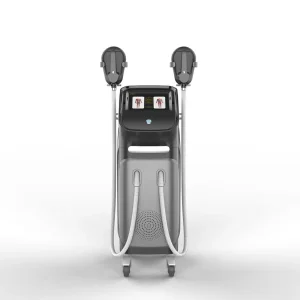
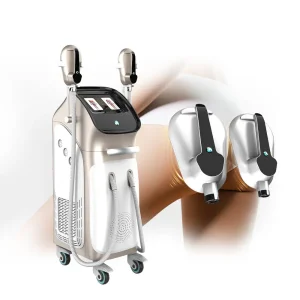
Equipped with independent power modules and dual vacuum pumps, high-end portable platforms allow two or four handles to operate simultaneously across different anatomical zones (e.g., abdomen and flanks), dramatically reducing session duration.
Real-time continuous temperature feedback sensors embedded within each applicator cup monitor skin contact thermal values 50 times per second, automatically adjusting semiconductor output or triggering safety cutoff if temperatures fall outside safe parameters.
Why Indonesian aesthetic chains, biomedical equipment importers, and distributors partner directly with leading Beijing and Guangdong production clusters.
Leading Chinese aesthetic equipment manufacturers like SANO Laser integrate world-class sub-components: Japanese-engineered quiet liquid-pumps, German semiconductor TEC refrigeration modules, medical-grade soft silicone cups from medical suppliers, and Taiwanese power supplies. By leveraging complete industrial ecosystems in Beijing and Guangdong, production efficiency is optimized without compromising component longevity or safety compliance.
For an Indonesian beauty clinic, acquisition cost directly dictates service pricing competitiveness. European or American desktop cryolipolysis platforms often exceed $40,000 to $70,000 USD, forcing session prices above IDR 5,000,000 ($320 USD). In contrast, direct sourcing of medical-grade Chinese OEM portable systems ($3,500 - $7,000 USD) enables clinics to price sessions at an accessible IDR 1,500,000 to IDR 2,500,000 ($100 - $160 USD), achieving full capital payback within 45 to 60 operating days.
Tailored deployment strategies for Indonesian aesthetic businesses and upcoming technological breakthroughs in non-invasive body sculpting.
Portable units feature heavy-duty medical casters and compact chassis, allowing seamless transfer between treatment rooms or satellite clinic locations in Jakarta, Tangerang, and Bekasi without requiring dedicated transport vans.
High-end wellness resorts integrate non-invasive fat reduction into holistic detox retreats. Low noise emission (<50 dB) and ultra-smooth vacuum suction provide a relaxed, spa-grade experience for international clients.
Specialized maternal care clinics across Indonesia utilize specialized mini-chin and abdominal applicators to treat postpartum localized adiposity safely, without surgical risks or downtime for nursing mothers.
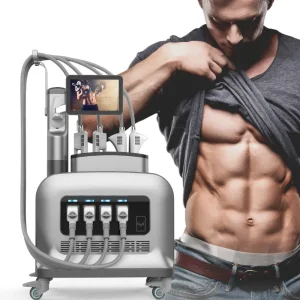
Future iterations merge Cryolipolysis freezing with concurrent Radiofrequency (RF) skin tightening and High-Intensity Electromagnetic Muscle Stimulation (HI-EMT). Simultaneous fat apoptosis and dermal collagen remodeling eliminate secondary skin laxity post-slimming.
Next-gen machines will incorporate bio-electrical impedance analysis (BIA) directly into applicator contact surfaces. The device dynamically adjusts target cooling profiles based on individual patient tissue hydration, dermal thickness, and visceral vs. subcutaneous fat ratios.
Ensuring legal import clearance, operational peace of mind, and continuous spare parts availability across all Indonesian provinces.
Medical aesthetic hardware imported into Indonesia requires distribution licensing (IPAK) and medical device marketing authorization (AKL/AKD) from the Ministry of Health (Kemenkes RI). Factory suppliers provide complete CE, ISO 13485 test dossiers, CB electrical safety certificates, and EMC test reports to streamline local distributor registration.
In accordance with Indonesia’s Halal Product Guarantee Law (UU BPJPH), non-invasive treatment consumables—specifically anti-freeze gel membranes required for epidermal protection—must adhere to strict non-porcine, Halal-certified ingredient sourcing. Factory options include certified gel pads optimized for thermal transfer.
Indonesian electrical grids operate on 220V / 50Hz, with potential voltage fluctuations in regional cities. Units are equipped with wide-input heavy-duty power transformers and surge isolation switches. Factory-trained engineers provide remote video diagnostic support and air-freight express spare parts dispatches.
Explore our complete medical aesthetic hardware portfolio, engineered with modular components, standardized interfaces, and direct OEM customization options.
Direct technical and operational answers compiled by our chief biomedical engineering and export compliance team.
Partner directly with a lead OEM/ODM manufacturer in China. Custom shell branding, software localization, and factory-direct wholesale pricing available for Indonesian aesthetic equipment distributors.
Send Inquiry Now - Get Direct Factory Quote