- +86 136 8127 5833
- [email protected]
- Shunyi, Beijing, China
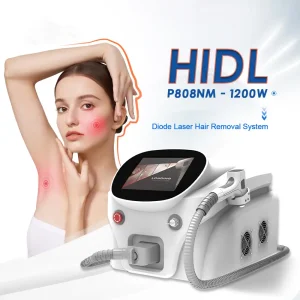
Featured primary multi-modality platforms engineered for high-patient-volume clinics and regional aesthetic distribution hubs throughout Brazil.
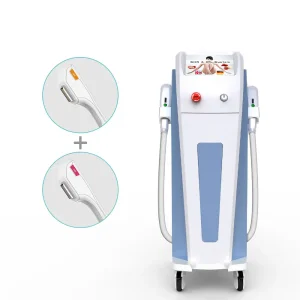
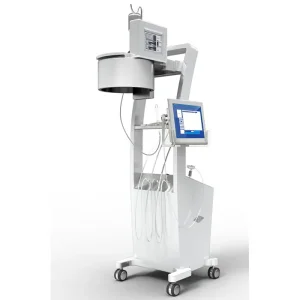
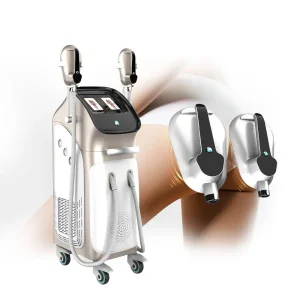
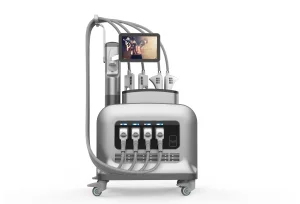
Analyzing the structural shifts, clinical requirements, and economic paradigms governing diode laser hair removal equipment across South America's largest aesthetic market.
Brazil represents one of the most ethnically diverse populations globally. The clinical reality across key metropolitan hubs—such as São Paulo, Rio de Janeiro, Belo Horizonte, and Salvador—spans the entire Fitzpatrick Scale (Types I through VI). Traditional single-wavelength 808nm diode lasers often encounter thermal limits when treating darker skin tones (Fitzpatrick IV-VI) due to competitive epidermal melanin absorption.
To achieve high epilation efficacy without inducing post-inflammatory hyperpigmentation (PIH) or epidermal burns, leading Brazilian clinics demand multi-wavelength laser technology integrating 755nm Alexandrite, 808nm Diode, and 1064nm Nd:YAG wavelengths into a single coherent delivery beam.
Operating medical aesthetic lasers in tropical and sub-tropical Brazilian climates presents severe thermal management challenges. Ambient room temperatures and high humidity place extreme stress on internal cooling loops. Standard air-cooled or passive water systems frequently trigger thermal safety cut-offs during back-to-back 12-hour clinic operational windows.
Industrial Solution: High-grade diode laser factories implement dual TEC (Thermoelectric Cooling) peltier modules combined with compressor-driven active refrigeration loops and Japanese-imported water pumps to maintain cooling fluid at a constant 20°C–24°C, preserving diode bar integrity regardless of ambient clinic conditions.
A rigorous evaluation model for Brazilian medical distributors, chain clinics, and international procurement managers seeking long-term optical equipment reliability.
The core cost driver of any diode laser hair removal system resides in the optical emitter array. Sub-standard macro-channel diode stacks suffer from non-uniform thermal dissipation, leading to localized hotspot burnout within 5–10 million shots.
Enterprise procurement requires gold-tin (AuSn) bonded micro-channel laser stacks sourced from premium semiconductor manufacturers (e.g., Coherent / Dilas), ensuring stable pulse width, zero power degradation, and a minimum lifetime of 50 to 100 million shots.
In the global OEM supplier ecosystem, marketing specifications often confuse total machine electrical consumption (e.g., 3000W peak electrical supply) with genuine optical laser power emitted at the handpiece spot (e.g., 1200W, 1600W, or 2000W optical power).
For Brazilian clinics performing rapid In-Motion body treatments, true optical power directly determines maximum energy fluence (J/cm²) achieved at ultra-short pulse durations (<30ms), which is critical for destroying deep-seated papilla hair stem cells without burning the surrounding dermis.
Importing capital equipment into Brazil involves complex logistics and customs clearance. Equipment downtime translates directly into clinic revenue loss.
Leading manufacturers design systems with quick-connect internal modularity: plug-and-play power supply units (PSU), medical-grade Mean Well switching supplies, standardized quick-connect water valves, and replaceable sapphire tip handpieces, enabling local technicians to perform maintenance within hours.
A side-by-side technical evaluation contrasting entry-level commercial grade systems with industrial medical-grade diode platforms.
| Engineering Benchmark | Standard Commercial Grade System | SANO Industrial Medical Grade Platform | Impact on Brazilian Clinic Operations |
|---|---|---|---|
| Emitter Stack Architecture | Macro-channel / Unsealed Copper Stack | Micro-channel / AuSn Hard-Soldered Coherent Stack | Extends handpiece lifetime from 10M to 50M+ shots without energy drop. |
| Wavelength Spectrum | Single 808nm Wavelength | Triple (755nm + 808nm + 1064nm) Co-axial Beam | Allows safe treatment of light fine hair and dark tanned skin (Fitzpatrick I-VI). |
| System Cooling Mechanism | Standard Radiator + Fan Air Cooling | Dual TEC Peltier + Active Refrigeration Water Chiller | Enables continuous 24-hour non-stop clinic operation in tropical Brazilian climates. |
| Pulse Width Range | 50ms – 400ms (Long pulse thermal risk) | 5ms – 200ms (Ultra-short pulse flexibility) | Destroys hair follicle papilla cleanly with minimal dermal heat accumulation. |
| Sapphire Tip Temperature | 0°C to -5°C (Inconsistent skin numbness) | -10°C to -16°C Continuous Contact Sapphire | Provides pain-free treatments, virtually eliminating burnt epidermis claims. |
| Software & Telemetry | Basic Manual Parameter Entry | Android Smart Operating System + IoT Telemetry | Supports localized Portuguese interface, clinical presets, & remote clinic fleet tracking. |
Next-generation technological developments shaping high-end medical aesthetic practices and manufacturing standards globally.
Traditional laser hair removal relies heavily on manual operator assessment of skin phototype, creating human error risk. Future-ready diode laser platforms incorporate optical melanin sensors integrated into the applicator head.
Before laser energy is fired, the sensor measures epidermal melanin concentration and skin reflectance in real-time, automatically calibrating the safest energy fluence (J/cm²) and optimal pulse duration (ms) for the patient's exact skin profile.
Clinic operational efficiency depends on treatment speed. Modern diode laser handpieces utilize magnetic quick-swap optical tips, allowing practitioners to transition from a small 9x9nm facial tip (for lip, ears, and eyebrows) to a massive 15x30mm or 15x40mm body spot within seconds.
Larger spot sizes provide deeper photon penetration depth due to reduced lateral light scattering, maximizing photon energy density at the sub-dermal follicle matrix level.
A dominant business model among Brazilian aesthetic device distributors involves equipment leasing and pay-per-shot renting to smaller MedSpas in regional cities. Advanced OEM manufacturers equip diode laser consoles with cloud IoT modules, Android-based touchscreens, and encrypted RFID card management. Distributors can remotely set shot limits, track operational hours, conduct remote diagnostic scans, and lock/unlock units over cellular network connections.
Ensuring seamless market entry through complete technical documentation, electrical safety certification, and tailor-made OEM/ODM adaptation.
To legally market medical lasers in Brazil, importers must obtain registration from ANVISA (Agência Nacional de Vigilância Sanitária) under RDC 185/2001 regulations. As a dedicated OEM/ODM manufacturer, we supply full technical dossiers, including IEC test reports, Risk Management Files (ISO 14971), Clinical Evaluation Reports, and factory BGMP (Boas Práticas de Fabricação) audit documentation to accelerate importer registration timelines.
Medical electrical devices entering the Brazilian market require mandatory INMETRO certification aligned with IEC 60601-1 (General Safety) and IEC 60601-2-22 (Particular Requirements for Laser Equipment). Our production lines adhere to ISO 13485 quality management systems, ensuring every machine shipped meets international electromagnetic compatibility (EMC) and optical safety thresholds.
Localization extends beyond compliance to user interface design. We customize software interfaces into natural Brazilian Portuguese, embedding intuitive skin-tone selection logic, body area treatment maps, and customized distributor branding on boot screens. Exterior casing finishes and custom voltage configurations (110V/220V 60Hz) are tailored for regional Brazilian electrical standards.
Looking to establish your custom brand or import certified medical aesthetic platforms into Brazil? Speak directly with our export engineering desk for OEM/ODM consultation and factory direct pricing.
Send Inquiry NowExplore our full lineup of laser, light-based, RF, and body contouring equipment manufactured for global clinics and medical equipment importers.
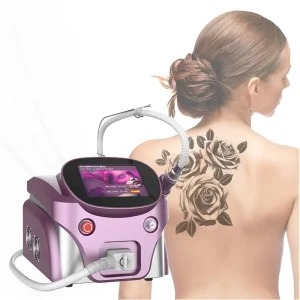

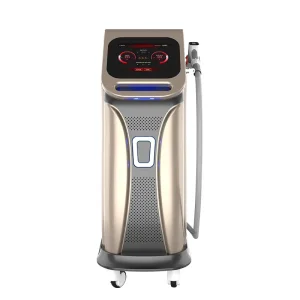
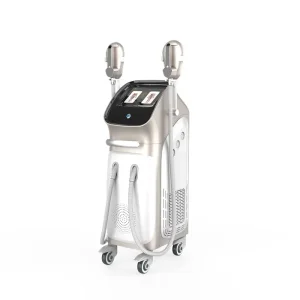
Expert insights regarding technical compliance, clinical efficacy, procurement logistics, and after-sales engineering support.
Brazil features high ethnic diversity, with patients ranging from Fitzpatrick I (fair skin) to Fitzpatrick VI (dark brown/black skin). Single 808nm lasers can cause excessive epidermal heating on Fitzpatrick V-VI or struggle with very fine light hair. A triple-wavelength system combines the 755nm Alexandrite wavelength (high melanin absorption for thin/fine hair), the 808nm Diode wavelength (classic rapid coverage), and the 1064nm Nd:YAG wavelength (deep dermal penetration with minimal epidermal melanin absorption) into one simultaneous pulse. This allows Brazilian clinics to treat all skin tones safely year-round without changing handpieces.
Registering medical equipment with ANVISA (Agência Nacional de Vigilância Sanitária) requires a comprehensive technical dossier. As an OEM manufacturer, SANO provides complete support including: ISO 13485 Quality Management certificates, IEC 60601-1 electrical safety and IEC 60601-2-22 laser safety test reports, CB scheme certificates, clinical evaluation data, factory BGMP (Boas Práticas de Fabricação) audit documents, user manuals in Portuguese, and risk assessment files compliant with ISO 14971.
In high-ambient-temperature regions like Northern and Northeastern Brazil, passive water-to-air heat exchangers fail to keep circulating water below 30°C. When circulating water exceeds 35°C, semiconductor diode bars experience thermal strain, power loss, and catastrophic degradation. Our industrial platforms incorporate TEC (Thermoelectric Cooling) peltier chillers and compressor refrigeration units that actively hold internal water temperature at a constant 20°C–24°C, allowing non-stop clinic operation even if the clinic room lacks central air conditioning.
Using authentic Coherent (USA) laser bars sealed with hard AuSn (gold-tin) solder in a micro-channel thermal configuration, our diode stacks are warrantied for 50 million shots, with an expected clinical lifespan exceeding 100 million shots when proper deionized water filtration maintenance protocols are observed. This delivers an exceptionally low operating cost per session for Brazilian clinic owners.
We provide comprehensive OEM/ODM solutions tailored for regional brands: custom injection-molded chassis design, private label branding, customized paint colors, custom boot screen animations, native Brazilian Portuguese touchscreen UI, integration of rental management systems (RFID card/IoT cloud control), and custom optical spot size handpiece configurations.
Every platform is built with modular plug-and-play architecture. In the event of a component issue, diagnostic error codes isolate the failure to a specific module (e.g., pump, power supply, or control board). Replacement modules are dispatched via express courier (DHL/FedEx) within 24–48 hours. We also offer distributor technical training programs in video and live engineer-to-engineer webinars to empower your local technician team in Brazil.