- +86 136 8127 5833
- [email protected]
- Shunyi, Beijing, China
Engineered for maximum patient comfort, zero skin thermal injury, and continuous duty-cycle operation under heavy clinic workloads.
Analyzing Southern California’s uniquely competitive medspa dynamics, stringent patient expectations, and climate-induced skin vulnerabilities.
The Greater Los Angeles metropolitan area—spanning Beverly Hills, West Hollywood, Santa Monica, Newport Beach, and Pasadena—represents the highest density of medical spas, dermatological clinics, and plastic surgery centers in North America. Operating within this ultra-competitive market requires healthcare providers and clinic owners to maintain the highest standard of procedural efficiency, patient safety, and comfort. As high-energy photothermal devices (such as high-fluence 808nm diode lasers, Q-switched picosecond lasers, fractional CO2 lasers, and radiofrequency microneedling arrays) become standard offerings, effective epidermal cooling has transitioned from a luxurious comfort option into a mandatory clinical safety standard.
Los Angeles patients present a distinct demographic challenge: high average annual UV exposure leads to elevated basal melanin levels across Fitzpatrick Skin Types II through V. When performing aggressive photo-rejuvenation or high-speed laser hair reduction on sun-exposed California skin, the risk of epidermal thermal injury, post-inflammatory hyperpigmentation (PIH), and blistering increases exponentially. Standard contact cooling (such as chilled sapphire tips) often proves insufficient during continuous multi-pass treatments, as heat accumulates rapidly in the upper skin layers.
Unlike sapphire contact plates that require direct mechanical contact—potentially dragging topical numbing gels, compromising treatment visibility, or risking cross-contamination—forced-air cryo machines deliver continuous, controlled cold air (-30°C to -35°C) directly to the target zone before, during, and immediately after energy delivery. This non-contact approach maintains clear optical visibility for the practitioner while preserving epidermal integrity.
Furthermore, California State Medical Board regulations and OSHA compliance protocols prioritize non-invasive risk mitigation. By deploying industrial-grade Air Cryo machines sourced directly from verified OEM manufacturers, Los Angeles clinic directors reduce liability, lower reliance on topical anesthetic creams (which carry risks of systemic toxicity and delay room turnover), and dramatically shorten patient recovery times.
Mitigates photothermal damage on Fitzpatrick IV-VI skin types common in Southern California, eliminating burn risks during high-fluence treatments.
Eliminates 30-45 minute waiting periods for topical numbing gels to take effect. Continuous air cryo provides instant analgesia on demand.
Operates using ambient atmospheric air, eliminating the recurring costs, storage space, and hazardous handling associated with cryogenic gas canisters.
How next-generation sub-zero pneumatic systems are redefining non-invasive pain management and clinical throughput globally.
The global aesthetic hardware market has shifted away from liquid nitrogen (LN2) and carbon dioxide (CO2) aerosol spray canisters toward closed-loop mechanical refrigeration compressors. Industrial liquid-based cryo solutions present severe logistical friction for urban clinics, including hazardous delivery contracts, evaporation loss, and ventilation hazards. Modern factory-manufactured Air Cryo platforms utilize high-efficiency rotary compressors paired with dual-stage heat exchangers, converting standard ambient air into a controlled stream of sub-zero cold air ranging from -20°C to -35°C.
Leading global OEM/ODM manufacturers, such as Beijing Sano Laser, are incorporating micro-processor controlled variable frequency fans and smart temperature feedback loops. By adjusting pneumatic pressure across 10 discrete airflow velocity levels, clinicians can tailor the cooling intensity precisely to the thermal relaxation time (TRT) of target tissues. Whether soothing delicate periorbital skin post-fractional resurfacing or numbing dense follicular fields prior to high-speed body laser hair removal, dynamic airflow control ensures consistent target temperature without causing local frostbite.
Inside the engineering framework of tier-1 medical cooling machines manufactured for international market export.
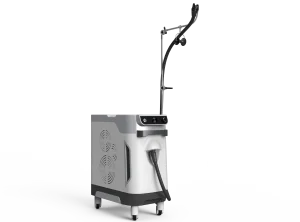
Utilizes ultra-quiet, industrial-duty compressors filled with environmentally safe R404a or R290 refrigerant. Designed to reach target temperatures (-30°C) within 4 minutes of cold start, sustaining rapid heat extraction even in un-airconditioned treatment bays.
Equipped with a counter-balanced, 360-degree flexible mechanical arm and custom laser adapter clips. Allows solo operators to lock the cold air nozzle directly onto laser handpiece barrels for effortless single-practitioner operation.
Integrated self-defrosting heating elements prevent ice blockage inside the cooling air ducting during long treatment sessions, guaranteeing constant airflow velocity and uniform temperature distribution across 8+ hour operational shifts.
Featuring a 10.4-inch color LCD touch interface supporting multi-language menu navigation, customized clinic branding presets, automated filter maintenance alerts, and modular fan-speed memory protocols.
Optimizing treatment outcomes and patient satisfaction scores by pairing Air Cryo platforms with primary aesthetic modalities.
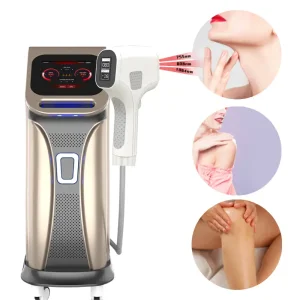
In high-volume clinics across West Hollywood and Irvine, operators pair 2000W diode hair removal systems with continuous forced air cryo. Pre-cooling the epidermis lowers nerve sensitivity, allowing clinicians to safely increase laser fluence by up to 20% for superior follicular destruction on dark, stubborn hair.
Fractional CO2 laser resurfacing produces substantial post-procedure heat sensation and erythema. Directing -30°C cold air onto treated tissue during and post-procedure dissipates lingering dermal heat, reduces downtime from days to hours, and delivers immediate thermal pain relief for patients in Beverly Hills practices.
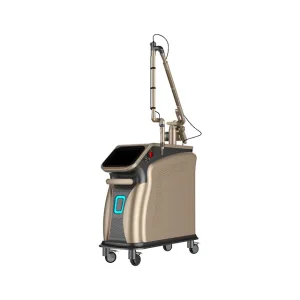
Picosecond acoustic shockwaves create rapid micro-cavitation in dermal ink particles, accompanied by localized thermal spikes. Pre- and post-cooling with Air Cryo equipment reduces the incidence of epidermal frosting blisters, hypopigmentation, and scar formation in high-density tattoo removal centers in Venice Beach.
Eliminating middleman markups, securing fully compliant CE/FDA manufacturing standards, and customized hardware configurations.
Navigating the supply chain for aesthetic equipment in North America requires balancing competitive capital expenditure with uncompromising hardware reliability. Importing direct from premier Beijing engineering facilities allows Los Angeles medical equipment distributors, medspa franchise networks, and private label brands to achieve superior profit margins while maintaining direct control over technical specifications.
In-depth technical answers curated for clinical directors, biomedical engineers, and equipment buyers in California.
Explore our complete line of CE-compliant laser, RF, body slimming, and skin rejuvenation systems manufactured for high-volume practice integration.
Get factory-direct pricing, custom OEM shell designs, complete FDA/CE regulatory support, and 2-year warranty coverage.