- +86 136 8127 5833
- [email protected]
- Shunyi, Beijing, China
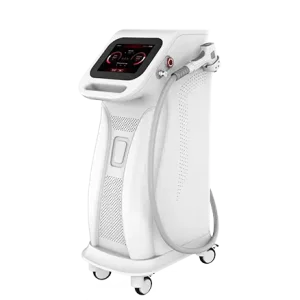
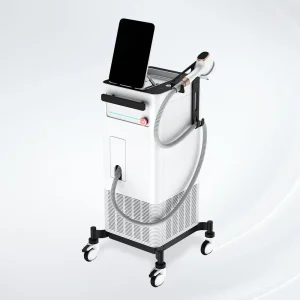
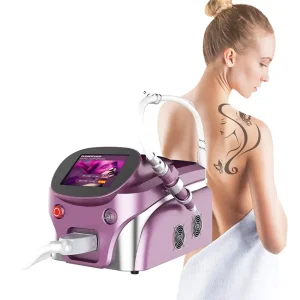
Engineered for high-volume clinical deployments, featuring multi-wavelength diode stacks, ultra-short picosecond pulses, and active cryogenic cooling systems.

Analyzing the paradigm shift in non-invasive medical aesthetics, energy-based devices (EBDs), and high-yield OEM supply chain dynamics.
The global medical aesthetics market is undergoing a structural transition driven by technological convergence, demographic expansion, and shifting consumer preferences toward zero-downtime non-invasive treatments. Valued at over USD 15.4 billion in 2023, the market for Energy-Based Devices (EBDs)—encompassing diode lasers, picosecond optical resonators, fractional radiofrequency (RF) matrices, high-intensity focused ultrasound (HIFU), and electromagnetic muscle stimulators—is projected to grow at a compound annual growth rate (CAGR) exceeding 9.8% through 2030. Within this expanding ecosystem, the demand for high-reliability, medical-grade manufacturing partners under the umbrella of Category Call 01 Manufacturer & Suppliers has become a pivotal strategic bottleneck for global distributors, multi-chain dermatological MedSpas, and medical device brands.
Historically, the professional aesthetic laser supply chain was segregated between ultra-high-cost Western original equipment manufacturers (OEMs) and low-tier regional assembly houses. Today, modern industrial clusters centered around high-precision optical assembly, advanced TEC semiconductor cooling, and automated SMT electronics fabrication have redefined the cost-to-performance curve. Original Equipment Manufacturers (OEM) and Original Design Manufacturers (ODM) based in certified medical-industrial parks are delivering capital equipment that rivals or surpasses legacy European and American platforms in optical peak power, pulse duration control, and operational uptime, while offering unprecedented capital efficiency.
Information Gain Insight: Modern clinical success relies not merely on peak output wattage, but on the precise synergy between thermal relaxation time (TRT), spot area energy homogenization, and microchannel cooling efficiency. Category Call 01 suppliers integrate vertical cavity surface-emitting lasers (VCSEL) and macro-channel gold-tin solder diode stacks to minimize optical thermal degradation across extended clinical operating hours.
This industry whitepaper serves as an authoritative guide for medical directors, equipment distributors, purchasing agents, and clinical practice managers seeking to navigate the procurement, technical validation, and operational deployment of professional aesthetic systems. By systematically deconstructing optical biophysics, regulatory engineering standards, localized ROI models, and future technology roadmaps, this document provides the analytical foundation necessary for making high-capital equipment acquisition decisions under rigorous E-E-A-T (Experience, Expertise, Authoritativeness, and Trustworthiness) criteria.
Comprehensive breakdown of optical tissue interaction, wavelength selective photothermolysis, and electro-thermal system mechanics.
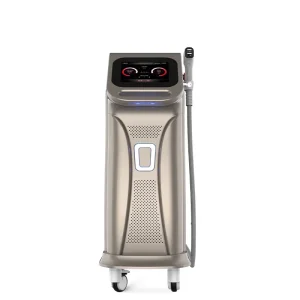
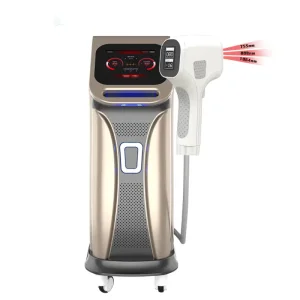
Combining 755nm (Alexandrite), 808nm (Gold Standard Diode), 940nm (Coagulative), and 1064nm (Nd:YAG) in a single optical array allows simultaneous targeting of superficial bulge, follicular bulb, and deep vascular papilla across Fitzpatrick skin types I through VI.
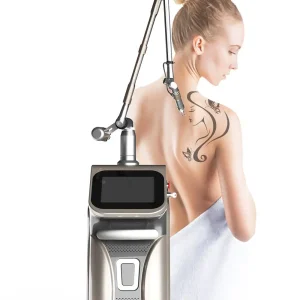
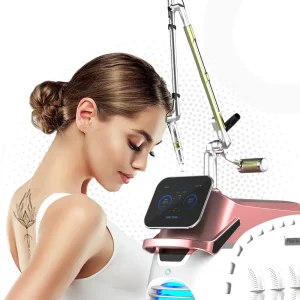
Delivering sub-nanosecond pulse widths (typically 350ps to 600ps) converts light energy into mechanical shockwaves. This shatters exogenous tattoo pigment particles and endogenous melanosomes without triggering thermal necrosis in surrounding epidermal tissue.
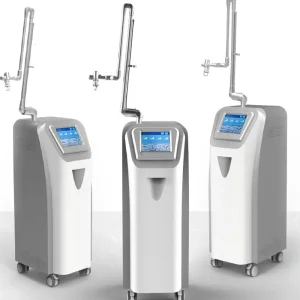
All-metal RF-excited sealed CO2 laser tubes provide superior beam quality (TEM00 mode, M² < 1.2) compared to legacy glass DC tubes. Operating at 10,600nm, they deliver ablative micro-beams that stimulate instant collagen contraction and neocollagenesis.
The core governing principle of photo-aesthetic equipment manufactured by premier Category Call 01 suppliers is Selective Photothermolysis, pioneered by Anderson and Parrish. Achieving optimal clinical outcomes requires precise control over three inter-dependent variables: wavelength ($\lambda$), fluence ($J/cm^2$), and pulse duration ($\tau$).
To safely destroy a hair follicle, pigmented lesion, or vascular capillary without inducing epidermal damage, the pulse duration must be equal to or shorter than the Thermal Relaxation Time (TRT) of the target chromophore (melanin, hemoglobin, or water), expressed mathematically as:
TRT Formula: $TRT = \frac{d^2}{8\kappa}$
Where d represents the characteristic dimension (diameter) of the target structure, and $\kappa$ represents the thermal diffusivity of tissue ($\approx 1.4 \times 10^{-7} m^2/s$). For a 100-micrometer hair follicle, TRT is approximately 10 to 100 milliseconds, whereas for a micro-melanosome, TRT drops to sub-microsecond levels.
Below is a comparative breakdown of key engineering parameters across primary equipment classes produced by industrial manufacturers:
| Technology Modality | Target Chromophore | Operational Wavelength | Energy/Pulse Width Range | Primary Clinical Indication |
|---|---|---|---|---|
| Quad-Wavelength Diode | Melanin (Follicular) | 755 / 808 / 940 / 1064 nm | 10–120 J/cm² | 5–400 ms | Permanent Hair Reduction (Fitzpatrick I–VI) |
| Picosecond Nd:YAG | Exogenous Ink / Melanin | 1064 nm / 532 nm (755nm optional) | 0.1–2.5 J/cm² | 350–600 ps | Tattoo Removal & Epidermal Pigmentation |
| Fractional CO2 (RF Metal) | Water (Tissue Hydration) | 10,600 nm | 1–200 mJ/dot | 0.1–10 ms | Ablative Resurfacing & Deep Acne Scars |
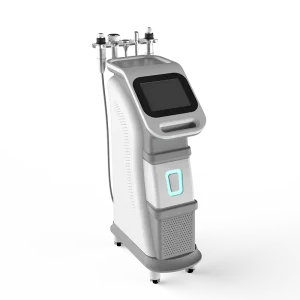
| Vacuum RF Microneedling | Dermal Structural Collagen | 1 MHz – 5 MHz Bi-polar RF | 10–200 W | Depth: 0.5–4.5 mm | Subdermal Remodeling & Elastosis |
| 360° Cryolipolysis | Adipose Triglycerides | Thermal Extraction (Cold) | Temperature: +5°C to -12°C | Non-Invasive Subcutaneous Fat Apoptosis |
Verifying medical device safety, electromagnetic compatibility (EMC), and optical radiation safety for international distribution.
Commercializing medical aesthetic hardware in regulated jurisdictions requires strict adherence to internationally recognized quality management systems and product safety directives. Leading Category Call 01 manufacturers operate facilities certified under ISO 13485:2016 (Medical Devices — Quality Management Systems), ensuring that every stage of design, component sourcing, assembly, and testing is fully traceable.
When sourcing medical-grade aesthetic equipment, importers and brand owners must audit suppliers against the following core technical requirements:
Compliance with Regulation (EU) 2017/745 (MDR) for Class IIa and Class IIb active surgical/aesthetic devices. Includes IEC 60601-1 electrical safety and IEC 60601-2-22 laser safety testing.
Substantial equivalence demonstration under section 510(k) of the Food, Drug, and Cosmetic Act. Requires rigorous optical energy output verification and clinical performance data.
Global CB scheme certification confirming laser classification (Class 4 for high-power EBDs) with fail-safe interlocks, key switches, beam shutters, and emergency stop circuits.
Quality control within top-tier manufacturing plants involves multi-stage burn-in stress testing. Laser power output is calibrated using thermal disk energy meters (such as Ophir or Coherent sensors) across 10,000 continuous pulses to ensure power stability within a narrow $\pm 2\%$ variance tolerance. Cooling loops undergo 5-bar hydrostatic pressure testing to eliminate the risk of coolant leakage around sensitive high-voltage power supplies.
Tailoring equipment choices to clinical demographics, regional treatment pricing, and return-on-investment timelines.
Clinical efficacy and commercial viability vary significantly depending on geographic patient demographics and local regulatory environments. Equipment procurement strategies must align with regional patient skin phototypes and prevalent aesthetic concerns.
Primary Demand: Multi-wavelength diode hair removal (high speed, large spot sizes), fractional CO2 skin resurfacing, and vacuum-assisted RF microneedling.
Commercial Focus: Practice profitability hinges on high patient turnover per hour. High-wattage diode systems (1800W–3000W) with 15x30mm² spot sizes enable full-body treatments in under 30 minutes, driving high hourly revenue for MedSpas.
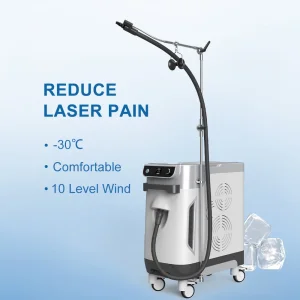
Primary Demand: Long-pulse 1064nm diode/Nd:YAG lasers for hair removal on Fitzpatrick IV–VI skin, advanced cooling systems (Zimmer air chillers), and deep pigment clearance.
Commercial Focus: Epidermal protection is paramount due to high ambient temperatures and elevated skin melanin levels. Equipment featuring active sapphire cooling down to -16°C prevents post-inflammatory hyperpigmentation (PIH).
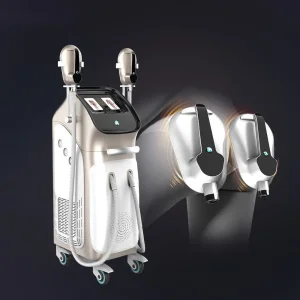
Primary Demand: Picosecond pigment removal, non-ablative skin whitening, DPL vascular therapy, and EMS electromagnetic body sculpting.
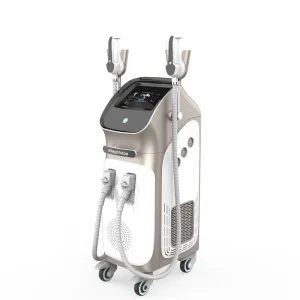
Commercial Focus: High demand for low-downtime brightening and body contouring treatments. Multi-functional platforms (e.g., combination EMS + Cryolipolysis or Diode + IPL combo) maximize space efficiency and lower capital entry costs.
To illustrate financial feasibility, the following model calculates the typical payback period for a multi-specialty MedSpa acquiring a high-capacity 2000W 808nm/Multi-wavelength Diode Laser platform:
| Financial Metric | Conservative Estimate | Moderate / Urban MedSpa | High-Volume Clinic Chain |
|---|---|---|---|
| Initial Capital Outlay (Device + Logistics) | $12,000 USD | $15,000 USD | $18,000 USD (Dual Handpiece) |
| Average Treatment Fee per Session | $150 USD | $250 USD | $350 USD |
| Daily Patient Volume (Sessions) | 4 patients/day | 8 patients/day | 15 patients/day |
| Monthly Gross Revenue (22 Days) | $13,200 USD | $44,000 USD | $115,500 USD |
| Operating Expense (Consumables, Staff, Overhead) | $3,500 USD | $9,000 USD | $22,000 USD |
| Estimated Payback Period (Net Profit) | ~ 1.25 Months | < 1 Month (2-3 Weeks) | < 10 Operating Days |
Next-generation innovations shaping smart photonics, AI parameter optimization, and energy recycling architectures.
The next decade of medical aesthetic engineering will be defined by intelligent real-time diagnostics, advanced optical beam shaping, and automated energy delivery. Category Call 01 manufacturing pioneers are currently investing R&D capital into four core technological vectors:
Integrating multi-spectral optical coherence tomography (OCT) into applicator tips to scan epidermal melanin concentration and dermal skin thickness in real time. Algorithms automatically adjust pulse fluences and cooling cycles millisecond by millisecond, virtually eliminating accidental thermal burns.
Transitioning from traditional Gaussian beam profiles to diffractive optical element (DOE) flat-top beam shaping. Flat-top optical profiles distribute energy uniformly across the entire spot size, avoiding central hot spots and ensuring uniform follicle destruction.
Cloud-connected power supplies constantly monitor diode stack voltage, water flow rate, temperature sensor logs, and shot counts. Predictive maintenance alerts notify distributors before a component failure occurs, guaranteeing 99.8% clinic operational uptime.
Addressing core queries from medical directors, biomedical engineers, and international equipment buyers.
Explore specialized platforms for fractional CO2 resurfacing, electromagnetic body shaping, picosecond tattoo removal, and micro-needling RF systems.