- +86 136 8127 5833
- [email protected]
- Shunyi, Beijing, China
Direct manufacturer supply of CE-certified aesthetic systems engineered for clinical efficacy, maximum patient safety, and optimal operational ROI.
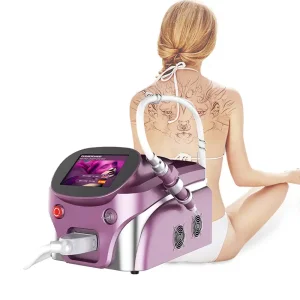
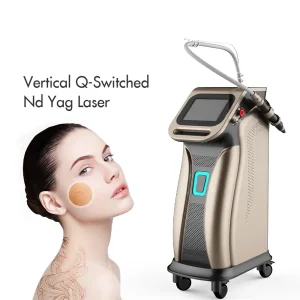
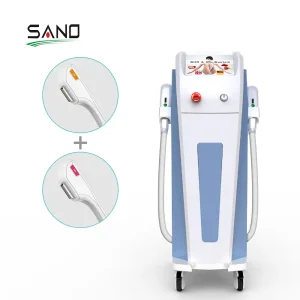
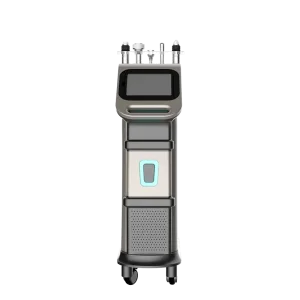
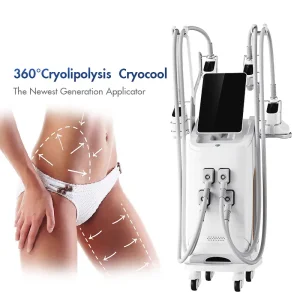
Understanding price variables across direct Chinese manufacturers, OEM suppliers, and Tier-1 brand distributors.
The global medical aesthetic laser market is experiencing an unprecedented surge in demand for non-invasive pigment clearance technologies. Driven by changing demographic trends, tattoo regret, and the expanding clinical utility of Q-switched and picosecond platforms for dermal rejuvenation, dermatological practices and medical spas are aggressively upgrading their equipment portfolios. However, navigating the procurement landscape for wholesale tattoo removal equipment prices requires a rigorous analysis of optoelectronic architecture, component sourcing, supply chain mechanics, and long-term total cost of ownership (TCO).
Historically, the capital equipment expenditure (CAPEX) for a medical-grade Q-switched Nd:YAG or true ultra-short pulse picosecond laser ranged from $80,000 to over $250,000 when purchased through traditional Western legacy brands. Today, advanced precision manufacturing hubs in China—specifically integrated optoelectronic industrial parks in Beijing and Guangdong—have fundamentally disrupted this cost model. By leveraging localized supply chains, automated SMT board assembly, and vertical integration of optical rod growing, Chinese manufacturers deliver fully certified platforms at $3,500 to $28,000 FOB, offering equivalent or superior peak power, pulse stability, and clinical efficacy.
| Equipment Category | Technical Specifications | Wholesale Factory Price Range (USD) | Typical Retail / Distributor MSRP | Primary Clinical Applications |
|---|---|---|---|---|
| Entry-Level Desktop Q-Switched Nd:YAG | 1064nm/532nm, Passive Q-Switch, Pulse Width 6-10ns, Energy Max 800mJ, Single Flashlamp. | $1,800 – $3,500 | $6,000 – $12,000 | Monochrome black/blue ink, superficial epidermal freckles, carbon doll peels. |
| Professional Vertical Active Q-Switched Laser | Active Electro-Optic Modulator (EO-Q), 1064/532/755nm, Pulse Width 3-5ns, Energy 1500mJ, Dual Rods. | $4,500 – $8,500 | $15,000 – $28,000 | Multicolor ink removal, stubborn dermal melasma, Nevus of Ota, skin toning. |
| Medical-Grade Picosecond Platform (Internal Optics) | Pseudo-Pico / High Peak Power Electro-Optic System, Pulse Width 600-800ps, 2000W Power Supply. | $7,500 – $14,000 | $25,000 – $45,000 | Refractory tattoos, post-inflammatory hyperpigmentation (PIH) correction, collagen stimulation. |
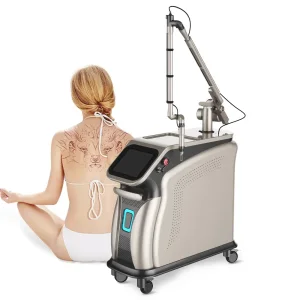
| Flagship True Picosecond System (7-Joint Arm) | Korean 7-Joint Articulated Arm, True Picosecond (<375ps), Peak Power 2.0GW, Flat-Top Beam, Honeycomb Focus Lens. | $15,000 – $28,000 | $55,000 – $110,000 | Complete multi-color tattoo eradication (red, green, blue, yellow), deep acne scarring, skin resurfacing. |
Evaluating photomechanical vs. photothermal physics, pulse width duration, and optical delivery components.
Traditional Q-switched lasers operate in the nanosecond range ($10^{-9}$ seconds), creating a predominantly photothermal effect that boils ink particles but risks thermal diffusion into adjacent tissue. Modern Picosecond lasers ($10^{-12}$ seconds) drop the pulse width below the Thermal Relaxation Time (TRT) of target melanosomes, generating high-intensity photoacoustic shockwaves. This shatters ink into micro-fine dust-like particles for rapid macrophage clearance with zero epidermal scarring.
The optical path delivery system is a critical cost driver. Budget platforms utilize handpiece-contained crystals with Gaussian beam profiles, leading to central hot spots and peripheral under-treatment. Enterprise-grade systems incorporate imported Korean 7-joint counter-balanced articulated arms equipped with auto-detecting spot size handpieces. This delivers a uniform "Top-Hat" energy profile across spot sizes from 2mm to 10mm without energy leakage.
Laser tattoo removal equipment prices scale with wavelength versatility. Standard models feature 1064nm (black/blue ink) and 532nm (red/orange ink). Premium manufacturing configurations integrate solid-state dye handpieces or titanium-doped sapphire modules to output 585nm (sky blue) and 650nm (green ink), as well as a 755nm Alexandrite wavelength for stubborn residual pigment on light skin tones.
The future technology roadmap for industrial aesthetic lasers involves real-time skin reaction feedback and automated fluence tuning. Premium Chinese manufacturers are embedding closed-loop optical sensors within handpieces that read skin impedance and real-time erythema response. Paired with AI parameter presets, the software automatically modifies peak power density and repetition rate (Hz) mid-treatment, maximizing chromophore disruption while preventing epidermal blistering or post-inflammatory hypopigmentation.
How modern clinics combine laser tattoo removal hardware with secondary modalities to maximize patient throughput and practice profitability.
Leading dermatology chains no longer rely on single-function devices. Advanced clinical workflows pair Picosecond laser tattoo removal with Vacuum RF Microneedling or Fractional CO2 Lasers. Applying fractional radiofrequency 15 minutes prior to laser exposure softens dermal fibrotic scar tissue surrounding embedded ink, allowing deeper photon penetration and accelerating lymphatic flushing of shattered pigment granules. This reduces total required sessions from 10-12 down to 4-6 sessions.
A major challenge in tattoo removal is preventing thermal damage in darker skin types where epidermal melanin competes for laser photon absorption. By utilizing 1064nm dominant output, sub-nanosecond pulse durations, and integrated contact sapphire cooling (or synchronized -35°C cold air chillers), modern manufacturers provide clinics with broad-spectrum safe treatment protocols that virtually eliminate the risk of scarring and dyschromia.
Deconstructing the manufacturing matrix that allows Chinese OEM factories to deliver high-precision medical lasers at unbeatable wholesale prices.
The aggressive pricing advantage achieved by Chinese aesthetic laser manufacturers is not a result of compromised quality, but rather the output of localized Industry 4.0 smart manufacturing ecosystems. Centered around industrial high-tech corridors such as Shunyi District in Beijing and Shenzhen in Guangdong, direct OEM factories benefit from complete vertical supply chain integration.
From synthetic Nd:YAG crystal rod synthesis and Xenon flashlamp blowing to high-voltage capacitor manufacturing, 90% of raw optical sub-assemblies are produced within a 50-kilometer industrial radius. Premium models selectively integrate world-class imported components—such as German Heraeus lamps, US Coherent laser bars, and UK Morgan cavities—ensuring top-tier output stability at direct-factory cost structures.
Industrial chassis, internal aluminum frames, and motherboard power supplies are fabricated using automated fiber-laser cutters, CNC multi-axis milling, and robotic surface-mount technology (SMT). Human assembly error is systematically minimized, yielding exceptional mechanical tolerance, vibration resistance during transit, and lower warranty claim rates.
Before any laser leaves the facility, it undergoes a strict 72-hour continuous thermal burn-in test, power meter calibration using Israeli Ophir energy probes, and high-voltage electrical safety testing. Energy drift spectra are recorded and archived for every serial number, guaranteeing that equipment delivered overseas operates within strict ±3% clinical energy tolerances.
A comprehensive financial guide for equipment distributors, chain medspas, and procurement officers evaluating equipment purchases.
When analyzing tattoo removal equipment prices, sophisticated procurement teams look beyond the initial purchase order price. Total Cost of Ownership (TCO) encompasses initial capital outlay (CAPEX), shipping/customs duties, operational maintenance (OPEX), consumable shot degradation, and technical support longevity. Partnering directly with established OEM/ODM manufacturers yields substantial financial advantages across all metrics.
Consider a multi-room medical spa purchasing a high-end Articulated Arm Picosecond Laser System at a wholesale OEM price of $18,000 (compared to $120,000 for a Western brand equivalent):
Legacy Western laser platforms frequently lock buyers into expensive proprietary shot cartridges, per-use RFID cards, or compulsory $15,000/year service contracts. Direct factory supply models dismantle these artificial operational barriers:
Navigating international medical device regulations, safety certifications, and technical warranty networks.
Importing medical aesthetic platforms requires strict adherence to regional safety standards. Established manufacturers supply complete technical documentation dossiers including ISO 13485:2016 Medical Quality Management System certification, Medical CE (EU MDR 2017/745 compliance), FDA 510(k) clearances, and RoHS electrical safety testing report (IEC 60601-1 / IEC 60601-2-22 laser safety).
For large-scale distributors and franchise chains, manufacturers offer complete White-Label and OEM/ODM engineering services. This includes customized exterior industrial design, injection-molded shell colors, localized UI software interface languages, custom parameter presets, and branded packaging to build local market equity.
Reliable suppliers back their products with comprehensive 2-year factory warranties, guaranteed spare parts inventory for 7+ years, video technician troubleshooting, and remote engineering diagnostic firmware. Spare parts (such as replacement lamps, water filters, or optics) are dispatched via express courier within 24-48 hours to minimize clinic downtime.
Direct technical answers from senior optoelectronic engineers and international trade specialists.
The fundamental distinction lies in pulse duration and photomechanical stress generation. Q-switched lasers fire in the nanosecond pulse width (3 to 10 nanoseconds), relying primarily on photothermal heat to shatter tattoo ink particles. Picosecond lasers fire in the ultra-short picosecond range (375 to 800 picoseconds), creating an almost purely photoacoustic effect. This breaks ink into significantly smaller, dust-like particles, requiring fewer total clinical treatments, clearing stubborn residual ink more effectively, and drastically reducing risk of thermal injury or hyperpigmentation.
Prices reflect internal engineering components and build quality. Low-cost desktop units ($1,500-$3,000) use passive Q-switched modules inside the handpiece, plastic casings, low-power single-capacitor supplies, and basic cooling. High-end medical platforms ($12,000-$28,000) feature imported active Electro-Optic (EO) Q-switches, Korean 7-joint articulated optical delivery arms, dual laser rod cavities, high-frequency 2000W-3000W power supplies, and industrial compressor refrigeration systems designed for continuous 12-hour clinic operation without energy degradation.
No single laser wavelength can absorb all pigment colors efficiently. A complete system relies on multi-wavelength delivery. The 1064nm wavelength is ideal for dark pigments (black, dark blue, brown). The 532nm wavelength targets warm pigments (red, orange, purple). For difficult pigments like green and light blue, specialized 650nm, 585nm, or 755nm Alexandrite handpiece attachments or dye-impregnated filters are required. Leading OEM manufacturers offer multi-wavelength handpiece modules to ensure full-spectrum tattoo removal capabilities.
Component lifespan depends on engineering configuration and optical quality. Standard Chinese Xenon lamps typically deliver 1,000,000 to 2,000,000 shots. Premium UK-imported Firstreams or German Heraeus Xenon lamps integrated into high-tier platforms last between 5,000,000 and 10,000,000 shots. Water filters and deionized resin cartridges should be replaced every 3-6 months depending on usage, while optical mirrors and YAG rods require minimal maintenance if distilled water and proper ambient cooling are maintained.
Direct factory manufacturers export via air freight (DHL, FedEx, UPS) or sea freight container depending on chassis weight. Machines are encased in heavy-duty flight cases or reinforced wooden crates. Suppliers provide complete customs clearance documentation (HS Code 90189090, Commercial Invoice, Packing List, CE Certificates). Upon arrival, installation is plug-and-play, supported by detailed engineering manuals, video walkthroughs, and live online video training sessions conducted by factory-certified application engineers.
Explore our complete range of certified aesthetic platforms engineered for global distributors and medical centers.