- +86 136 8127 5833
- [email protected]
- Shunyi, Beijing, China
Factory-direct aesthetic hardware engineered for medical spas, clinical chains, and global equipment distributors.
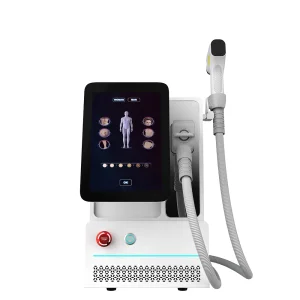
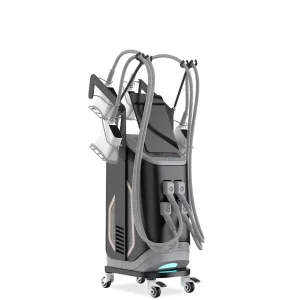
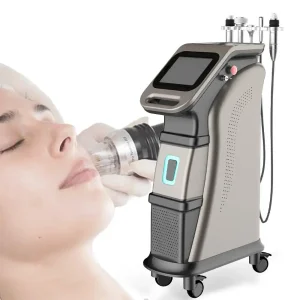
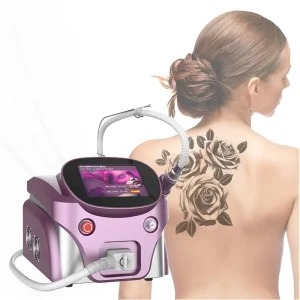
Understanding macro demand, capital expenditure (CapEx), and return on investment (ROI) variables for commercial laser procurement.
The global demand for commercial laser tattoo removal equipment has undergone a structural shift over the last five years. Historically viewed as a niche dermatological service, tattoo laser clearance is now a core profit driver for medical aesthetics clinics, dermatology practices, and specialized laser centers worldwide. Driven by rising rates of tattoo regret—statistically affecting over 28% of tattooed adults globally—and the evolution of multi-color ink formulas, practice owners require clinical-grade machinery capable of broad pigment ablation with zero permanent epidermal scarring.
For B2B procurement officers, equipment distributors, and clinic directors, analyzing wholesale tattoo removal equipment costs requires evaluating both the initial machine purchase price and long-term operating expenses (OpEx). Sourcing directly from an established OEM/ODM factory in China bridges the gap between ultra-high European capital requirements ($80,000 – $160,000 per platform) and accessible, high-performance manufacturing ($3,500 – $25,000 per unit) without compromising technical precision or clinical safety standards.
A granular look into factory-gate pricing tiers, engineering differences, and targeted clinical scenarios.
| Equipment Category | Wholesale Cost Range (USD) | Technology Platform | Target Clinical Application | Expected Lifespan / Shots |
|---|---|---|---|---|
| Tier 1: Portable Passive Q-Switched | $2,500 – $5,500 | Passive Q-Switched Nd:YAG (1064/532nm) | Small medspas, eyebrow/permanent makeup removal | 500,000 – 1,000,000 shots |
| Tier 2: Vertical Active Q-Switched | $6,000 – $12,000 | Electro-Optic Active Q-Switch (High Energy) | Established clinics, high-volume dark ink removal | 2,000,000 – 5,000,000 shots |
| Tier 3: Clinical Picosecond Platform | $12,500 – $24,500 | True Sub-Nanosecond Picosecond (755/1064/532nm) | Refractory tattoos, recalcitrant green/blue inks, melasma | 10,000,000+ shots (Articulated Arm) |
| Tier 4: Enterprise Multi-Wavelength Workstation | $25,000 – $45,000+ | Dual-Beam Pico + Integrated Epidermal Chiller | Full-spectrum clinical research & high-end laser centers | Continuous Duty Heavy Industrial |
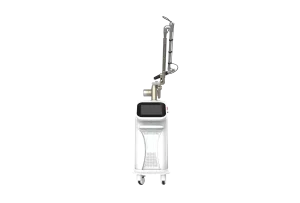
The core factory cost of a laser system is governed by optical crystal quality (Nd:YAG rod dimensions), laser chamber cavity design, power supply capacity (from 800W up to 3000W), and the origin of the optical delivery arm. Systems featuring imported South Korean 7-joint articulated optical arms and German-built Xenon lamps command higher initial prices but deliver uniform energy distribution (top-hat beam profile) with zero hot spots.
Beyond the initial wholesale equipment price, practice owners must calculate flashlamp replacement frequency, water filtration cartridge maintenance, and cooling system efficiency. Industrial-grade cooling units capable of maintaining internal water temperatures below 38°C prevent optical laser bar burnout, safeguarding your capital investment over millions of treatment pulses.
Why pulse duration determines clinical efficacy, thermal damage thresholds, and clearance speed.
Traditional Q-switched lasers operate in the nanosecond pulse width range (5ns – 10ns). Energy delivery relies primarily on photothermal action, heating ink particles until thermal expansion causes structural shattering. Because the pulse width exceeds the thermal relaxation time of ultra-fine ink granules, heat radiates into surrounding dermal tissue, increasing the risk of blistering, hypopigmentation, and extended recovery periods.
Advanced Picosecond lasers reduce pulse duration to ultra-short windows (350ps – 600ps). By delivering peak power in trillionths of a second, the laser creates a intense photoacoustic shockwave. Rather than burning the ink, it shatters pigment particles into microscopic dust-like fragments, allowing the body's lymphatic macrophage system to flush ink away up to 50% faster.
Tattoo inks are engineered with diverse chemical compounds. A single wavelength cannot resolve all pigment colors. Direct factory platforms provide interchangeable wavelength modules for targeted chromophore absorption:
Maximizing patient comfort, clinical outcomes, and clinic workflow speed through combined hardware technology.
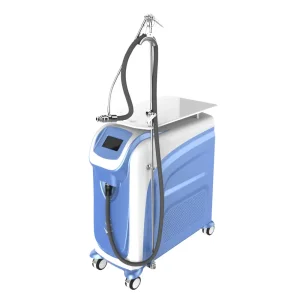
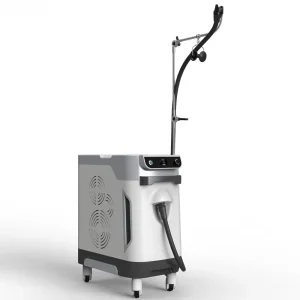
Combining high-fluence laser delivery with dedicated -30°C cold air epidermal chillers (such as Zimmer-style cooling units) protects the stratum corneum, reduces procedural pain by up to 70%, and permits higher safe energy fluences without causing thermal blistering.
Treating darker skin tones requires precision spot size expansion (up to 10mm) and lengthened pulse widths. Intelligent factory GUIs come pre-loaded with clinical protocols that automatically cap energy density, mitigating post-inflammatory hyperpigmentation (PIH).
Modern articulated arms incorporate optical encoders that communicate directly with the main CPU. As the operator zooms the handpiece from 2mm to 10mm, the machine auto-adjusts fluence (J/cm²) instantly, eliminating manual calculation errors.
Navigating international certifications, quality control protocols, and custom manufacturing solutions.
Importing commercial medical aesthetic equipment requires strict adherence to regional medical device regulations. Professional OEM factories maintain comprehensive technical dossiers to ensure smooth customs clearance and local registration:
For aesthetic brand owners, regional distributors, and large medspa franchises, working with an experienced manufacturer unlocks fully tailored equipment designs:
Forecasting technological shifts in solid-state cavities, AI-assisted pigment analysis, and energy delivery systems.
Next-generation picosecond platforms are incorporating real-time spectrophotometry sensors in the optical handpiece. The system analyzes skin melanin index and ink depth prior to firing, dynamically modulating energy output to prevent accidental epidermal burns.
Transitions from traditional rod-based Nd:YAG crystals to seed-injected fiber laser cavity architectures are enabling pulse durations shorter than 100 picoseconds. This shift elevates photoacoustic disruption while eliminating lamp replacement cycles.
Integrating diffractive optical elements (DOE) allows picosecond lasers to split single beams into arrays of micro-spots. This creates Localized Optical Breakdown (LOB) in the dermis, enabling combined tattoo removal and skin rejuvenation within a single session.
Expert technical responses to common purchasing, maintenance, and clinical inquiries.
Complete your clinical setup with our medical laser, body sculpting, and skin rejuvenation systems.