- +86 136 8127 5833
- [email protected]
- Shunyi, Beijing, China
Direct manufacturer supply featuring high-peak power outputs, multi-wavelength capabilities, and medical-grade certifications.
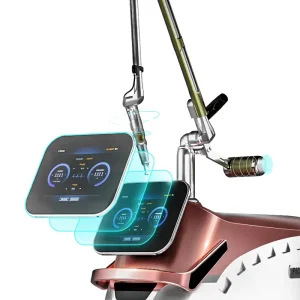
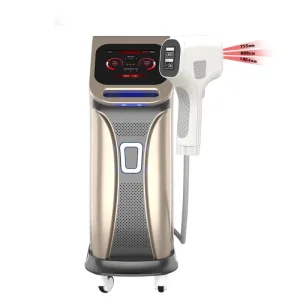
Navigating procurement costs, capital equipment depreciation, and technological ROI across international medical aesthetic sectors.
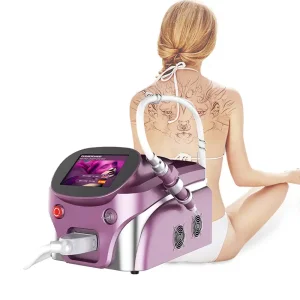
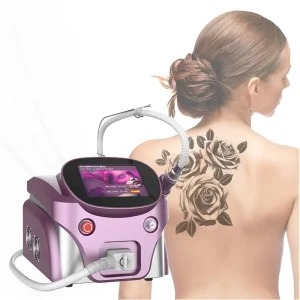
The global demand for non-invasive tattoo removal and pigment clearings has expanded rapidly over the last decade. According to clinical industry studies, over 30% of individuals with tattoos report some degree of tattoo regret, driving a compound annual growth rate (CAGR) of over 9.8% in the laser removal device sector. However, for clinical directors, medspa owners, and regional equipment distributors, evaluating the wholesale laser tattoo removal machine price requires a deep understanding of core hardware engineering, beam dynamics, and supply chain logistics.
When sourcing medical-grade lasers, wholesale pricing generally falls into three distinct commercial tiers based on internal optical architecture, power supply capacity, and beam delivery mechanics:
Wholesale Price: $2,500 – $5,500
Tech Spec: Passive Q-Switched Nd:YAG, handpiece-mounted crystals, pulse duration 6-10ns, single lamp. Best for small salons or low-volume pigment removal.
Wholesale Price: $6,000 – $14,000
Tech Spec: Electro-Optic Active Q-Switched or standard Picosecond laser modules, dual lamp/dual rod optical cavity, articulated arm option, pulse width 2000ps to 6ns.
Wholesale Price: $15,000 – $35,000+
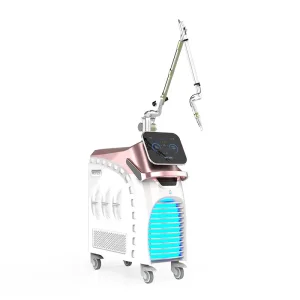
Tech Spec: True Pico-domain (300-600ps), 7-joint Korean articulated arm, flat-top beam profile, multi-wavelength (1064nm, 532nm, 755nm, 585/650nm dye conversion).
Understanding how pulse width reduction converts photothermal stress into photomechanical shockwaves to shatter ink particles safely.
The primary vector driving pricing variance between laser suppliers is the optical delivery engine. Historically, standard Q-Switched Nd:YAG lasers relied on a photothermal mechanism, heating target ink particles until thermal expansion caused structural fracturing. However, this required pulse widths of 5 to 10 nanoseconds, transferring substantial heat to surrounding dermal tissue and increasing the risk of post-inflammatory hyperpigmentation (PIH) and thermal scarring—especially in darker Fitzpatrick skin types.
Modern medical-grade picosecond lasers operate at pulse durations measured in trillionths of a second (300 to 600 picoseconds). At this ultra-short time domain, energy is delivered faster than the thermal relaxation time of tattoo pigment. Instead of heating the ink, the laser creates a intense photomechanical pressure wave (photo-acoustic effect) that shatters ink particles into microscopic dust-like fragments. These minute particles are subsequently phagocytosed by macrophages and cleared through the lymphatic system much more rapidly, cutting the required clinical treatment sessions from 10–12 down to 4–6.
| Technical Parameter | Standard Q-Switched Nd:YAG | Professional Active Q-Switch | Medical Picosecond Platform |
|---|---|---|---|
| Pulse Duration | 6 ns – 10 ns (Nanoseconds) | 3 ns – 5 ns (Nanoseconds) | 350 ps – 600 ps (Picoseconds) |
| Primary Mechanism | Photothermal (Heat-dominant) | Mixed Photo-Thermal / Acoustic | Pure Photomechanical (Stress Wave) |
| Ink Particle Fragmentation | Pebble-sized fragments | Granular fragments | Microscopic Dust particles |
| Risk of Thermal Damage / PIH | Moderate to High | Low to Moderate | Extremely Low |
| Average Clearing Sessions | 8 – 14 Sessions | 6 – 10 Sessions | 3 – 6 Sessions |
| Typical Wholesale Price Range | $2,800 – $6,500 | $7,000 – $13,500 | $15,000 – $38,000 |
A major consideration for wholesale buyers is the wavelength spectrum supported by the laser generator cavity. Light absorption varies dramatically depending on tattoo ink pigmentation:
How Beijing industrial clusters deliver premium medical laser components at optimized wholesale pricing.
When international distributors analyze the competitive price-to-performance ratio of Chinese aesthetic laser manufacturers, the advantages stem from complete industrial ecosystem integration. China's medical device manufacturing centers—particularly in Beijing and Guangdong—have established robust component supply chains that dramatically lower production overhead without compromising optical precision or structural durability.
Integrated supply chains allow direct sourcing of high-purity YAG crystals, xenon flash lamps, and military-grade high-voltage capacitors, reducing procurement bill-of-materials by up to 45%.
In-house CNC machining of laser optical cavities ensures sub-micron alignment tolerances, eliminating energy dispersion and ensuring stable flat-top beam output profiles.
Automated 168-hour continuous burn-in testing, energy meter calibration, and high-pressure water cooling circuit leak inspections guarantee clinical reliability prior to packaging.
By leveraging OEM and ODM partnerships with established Chinese manufacturers, global aesthetic brands can configure custom housing designs, tailor GUI touchscreen software across multiple languages, and implement proprietary pulse parameters—all while securing a wholesale unit price that leaves margin for regional distribution and dealer markup.
Tailoring laser parameters to regional patient demographics, skin phototypes, and aesthetic indications.
Succeeding in the medical aesthetic business requires aligning hardware capabilities with localized regional patient profiles. Laser tattoo removal machines are versatile platforms capable of treating numerous dermatological conditions beyond standard body art removal.
Primary Focus: Multi-colored tattoo clearance, tattoo fading for cover-ups, and PMU (permanent makeup) eyebrow ink removal.
Key Requirements: Picosecond platforms equipped with 755nm Alexandrite or 532nm conversion handpieces to treat stubborn green, bright red, and turquoise inks on Fitzpatrick I-III skin types.
Primary Focus: Epidermal and dermal pigment disorders (Melasma, Freckles, Nevus of Ota, Age Spots) and Non-ablative Skin Toning.
Key Requirements: Low-fluence 1064nm Picosecond laser toning modes using flat-top spot profiles. Minimizes melanocyte stimulation and prevents rebound hyperpigmentation on Fitzpatrick skin phototypes III-V.
Primary Focus: Deep dark tattoo removal, post-acne hyperpigmentation, and Carbon Peel facial rejuvenation (Hollywood Peel).
Key Requirements: High peak-power 1064nm Q-switched or Picosecond systems with active liquid-to-air cooling systems capable of continuous operation in hot ambient climates.
Ensuring international quality standards, certification readiness, and seamless warranty infrastructure.
Purchasing capital equipment at wholesale prices requires confidence in regulatory compliance and post-sale technical continuity. A reliable equipment manufacturer must support global partners with robust technical documentation, modular component designs, and direct engineer-led troubleshooting.
To ensure smooth customs clearance and legal operation within aesthetic clinics worldwide, manufactured platforms adhere to strict international regulatory frameworks:
Distributors and clinics cannot afford equipment downtime. Leading manufacturers implement a modular internal design architecture where power supplies, water pumps, control boards, and optical modules are housed in plug-and-play sub-assemblies. In the event of a component issue, technical teams provide remote diagnostic video support, delivering plug-in replacement modules within 3 to 5 business days via express air freight.
Technical, commercial, and operational insights for aesthetic equipment buyers.
Comprehensive manufacturing lines for skin rejuvenation, body shaping, vascular therapy, and scar resurfacing.