- +86 136 8127 5833
- [email protected]
- Shunyi, Beijing, China
Direct factory supply of certified medical laser, cryolipolysis body contouring, and advanced cooling technologies.
A comprehensive analysis of sub-zero therapeutic thermal contrast, cellular response mechanisms, and market dynamics shaping commercial aesthetic manufacturing.
In the rapidly evolving landscape of non-invasive body contouring, Cryoslimming (Cryolipolysis) stands out as the clinical gold standard for targeted subcutaneous adipose tissue reduction. Unlike thermal ablation therapies—such as High-Intensity Focused Ultrasound (HIFU) or Radiofrequency (RF) which rely on hyperthermic tissue destruction—Cryolipolysis leverages the distinct thermal susceptibility of lipids compared to surrounding water-rich cells.
Subcutaneous adipocytes (fat cells) are exceptionally rich in saturated fatty acids, primarily triglycerides. When exposed to controlled cooling within a precise thermal window (typically between -4°C and -11°C), these lipids undergo a phase transition from liquid to solid crystallization. This intracellular lipid crystallization triggers a stress response in the adipocyte membrane, initiating a natural, programmed cell death pathway known as apoptosis.
Following cryo-induced apoptosis, an inflammatory cascade ensues over 14 to 90 days. Macrophages gradually phagocytize and digest the damaged adipocytes, transporting the residual lipids through the lymphatic system to the liver for normal metabolic processing. Crucially, neighboring vascular networks, peripheral nerves, dermal fibroblasts, and muscular structures remain entirely undamaged, as their high water content protects them from crystallization at these specific therapeutic thresholds.
According to recent macroeconomic aesthetic market surveys, the global body contouring market is projected to expand at a Compound Annual Growth Rate (CAGR) of 14.2% through 2032, reaching an estimated global market valuation exceeding $11.8 Billion USD.
Dissecting the hardware architecture: Thermoelectric Peltier arrays, 360° surround cooling vs. dual-plate legacy systems, and industrial vacuum dynamics.
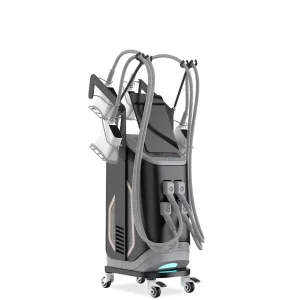
Legacy cryolipolysis equipment relied on two flat metallic cooling plates positioned inside a rigid vacuum cup, leaving up to 60% of the targeted tissue uncooled or subjected to uneven thermal gradients. Next-generation factory manufacturing utilizes all-dimension 360° conductive aluminum alloy applicators, achieving 100% thermal coverage across the treatment area for a 30% increase in fat cell destruction per session.
The core engine of cryo thermal pump stability relies on internal Peltier thermoelectric coolers. Wholesale industrial manufacturing integrates high-density Japanese semiconductor modules engineered for over 10,000 continuous operating hours. This guarantees rapid initial chilldown (reaching sub-zero target in under 120 seconds) with zero voltage drift under heavy back-to-back clinical workloads.
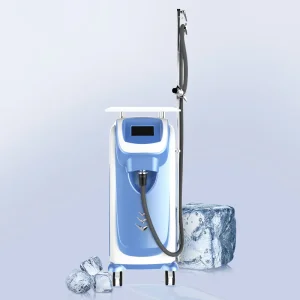
To prevent system overheating during continuous 12-hour clinic operational cycles, our OEM factory chassis embeds dual-stage refrigeration compressors paired with 10L medical-grade stainless steel water reservoirs, high-pressure German water pumps, and heavy-duty radiator fans. This prevents thermal throttle lockouts common in low-tier wholesale units.
Improper vacuum suction leads to bruising, skin tearing, or inadequate micro-vascular occlusion. Our machines employ digital proportional solenoid valves with custom step-up suction modes (up to 100 kPa), ensuring soft tissue tension without localized vascular trauma or patient discomfort.
Biocompatibility is non-negotiable. All handpiece contours are molded from non-porous, medical-grade soft silicone that conforms ergonomically to diverse body shapes (abdomen, flanks, inner thighs, chin) while maintaining vacuum seals without causing contact dermatitis.
Independent dual-board power architectures allow up to 4 applicators to operate simultaneously with completely distinct temperature, vacuum, and timing parameters—quadrupling patient throughput and maximizing revenue per square foot for commercial operators.
How leading global aesthetic practices structure targeted cryolipolysis protocols for optimal clinical efficacy and rapid business ROI.
Wholesale cryoslimming machines are designed to fulfill specific clinical needs depending on the healthcare or aesthetic facility's positioning:
Investing in factory-direct wholesale equipment significantly compresses the capital payback period compared to purchasing brand-name Western distributor platforms with expensive per-treatment card-latch fees.
Ensuring absolute patient safety through rigorous factory quality management systems and anti-frost protection engineering.
Exporting medical aesthetic equipment globally requires strict adherence to regional regulatory frameworks. As a professional OEM/ODM manufacturer, our production lines operate under ISO 13485:2016 quality management standards for medical devices.
The most critical safety hazard in sub-zero cryolipolysis is ice crystal formation on the epidermis, which can lead to localized frostbite (cryo-burns) or permanent hyperpigmentation. Factory safety mitigation involves a three-tier hardware-software redundant protection loop:
A forward-looking perspective on AI-driven thermal mapping, thermal shock contrasts, and cloud telemetry in B2B manufacturing.
Emerging platforms incorporate rapid thermal alternation cycles: heating targeted fat to +42°C for 5 minutes (inducing local hyperemia and metabolic activation) immediately followed by sub-zero freezing at -10°C. Clinical trials show this rapid contrast shock increases adipocyte apoptosis rates by an additional 15-20% while shortening total cycle times to 35 minutes.
Next-gen factory prototypes feature bio-electrical impedance sensors built into the applicator silicone. By measuring local tissue impedance, the software automatically calculates fat layer density versus fibrous connective tissue, auto-adjusting cooling duration, freeze temperature, and vacuum pull for individualized patient protocols.
For global distributors and chain clinics, smart factory integration provides encrypted Wi-Fi cloud connectivity. Manufacturers can remotely diagnose Peltier performance, perform OTA software updates, monitor shot counts, and deliver predictive maintenance alerts prior to component failure.
Direct technical guidance for aesthetic equipment importers, distributors, and clinic owners.
Expand your clinic portfolio with high-demand aesthetic laser, skin cooling, and body contouring devices.