- +86 136 8127 5833
- [email protected]
- Shunyi, Beijing, China
Explore our engineering-validated skin chillers, tattoo removal laser systems, and body sculpting platforms built to medical-grade specs.
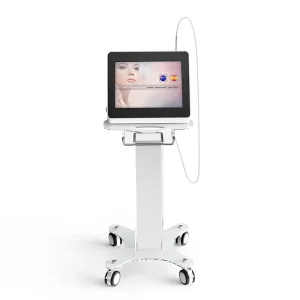
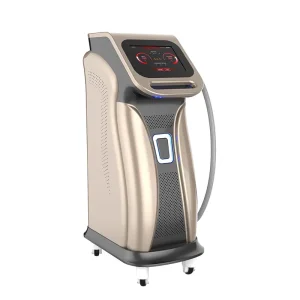
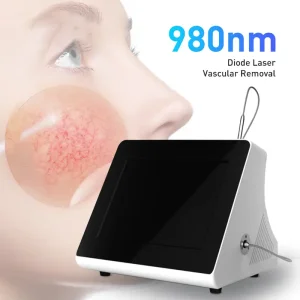
The global market for medical aesthetic laser procedures—specifically high-energy Picosecond (1064nm, 532nm, 755nm) and Q-Switched Nd:YAG tattoo removal—has experienced exponential growth over the last decade. As clinical protocols advance toward higher fluences and shorter pulse durations to achieve rapid pigment clearance, the thermal load placed on the patient's epidermis has increased proportionally. This clinical reality has driven worldwide procurement demand for OEM non-contact skin chillers engineered to match or exceed the performance parameters of industry benchmarks such as the Zimmer Cryo 6 Skin Cooling Machine.
Historically, cosmetic clinics relied on contact cooling plates, icy compresses, or chemical cryogen sprays (e.g., tetrafluoroethane). However, these legacy methods exhibit severe operational bottlenecks during intense laser tattoo removal sessions:
Consequently, hospital dermatology departments, multi-chain medspas, and aesthetic device distributors are standardizing on continuous cold air skin cooling systems. By providing a continuous stream of chilled air (-30°C to -35°C) before, during, and immediately after the laser impulse without touching the skin, forced-air chillers dramatically enhance patient comfort, reduce epidermal thermal injury, prevent post-inflammatory hyperpigmentation (PIH), and eliminate consumable expenses.
Information Gain Insight: According to clinical dermatological evaluations, maintaining an epidermal skin surface temperature below 15°C via continuous forced-air cooling during 1064nm Q-switched laser irradiation reduces patient pain scores by up to 68% while allowing clinicians to safely increase energy fluences by 20–30% for faster tattoo ink clearance.
To understand why the OEM Zimmer Cryo 6 Skin Cooling Machine architecture is indispensable for laser tattoo removal, one must analyze the selective photothermolysis and photo-acoustic shockwaves generated during ink shattering.
When a high-power Q-switched or Picosecond laser pulse strikes tattoo pigment deposited in the dermis, the ink particles absorb laser energy within nanoseconds or picoseconds. This rapid energy deposition creates extreme localized temperatures exceeding several hundred degrees Celsius, breaking the pigment into microscopic fragments. However, a significant portion of this thermal energy conducts outward into the surrounding dermal and epidermal structures.
Lowers baseline skin temperature from ~33°C to 10°C–12°C prior to laser discharge, creating a wide thermal buffer that absorbs lateral heat diffusion.
Counteracts peak thermal accumulation at the epidermal-dermal junction precisely while the laser beam is shattering dermal ink particles.
Rapidly extracts residual metabolic heat post-treatment, diminishing acute erythema, edema, and immediate blister formation risks.
Epidermal tissue has a thermal relaxation time of approximately 3 to 10 milliseconds. When performing high-frequency laser passes (e.g., 5Hz to 10Hz repetition rates), heat accumulation in basal layer melanocytes rapidly exceeds the threshold for thermal necrosis (43°C+). Forced air cooling at -30°C creates a high convective heat transfer coefficient ($h_c$), dynamically stripping thermal energy from the skin surface at a rate exceeding the conduction rate from the deep dermis:
Convective Heat Flux Formula: $q = h_c \cdot (T_{skin} - T_{air})$
Where $T_{air}$ is maintained at -30°C to -35°C and airflow velocity is optimized between 800 and 1500 L/min, maximizing $q$ to ensure the epidermis stays undamaged even during aggressive treatment protocols.
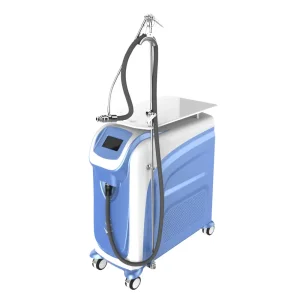
Beijing Sano Laser Development S&T Co., Ltd. builds medical aesthetic systems with engineer-led precision. Our OEM Zimmer Cryo 6 compatible systems integrate premium industrial refrigeration components to guarantee continuous 24/7 clinical operation without compressor frosting or airflow degradation.
| Hardware Subsystem | Engineering Specification | Clinical & Operational Advantage |
|---|---|---|
| Refrigeration Compressor | High-Efficiency Closed Compressor (Hermetic Heavy-Duty) | Rapid cooldown to -30°C within 5 minutes; supports back-to-back clinic appointments without downtime. |
| Eco-Refrigerant Gas | R404A / R410A (Zero Ozone Depletion) | Complies with European CE, EU F-Gas regulations, and US EPA SNAP standards. |
| Air Flow Turbine | 9-Level Variable Speed Centrifugal Blower (Up to 1500L/min) | Allows precise adjustments from delicate facial vascular treatments to high-power body tattoo removal. |
| Dehumidification System | Auto-Defrost & Internal Moisture Separator | Prevents ice blockages within the 2-meter flexible delivery hose; maintains constant laminar airflow. |
| Treatment Arm Assembly | Articulated Support Arm & Hands-Free Laser Adapter | Enables single-operator usage; laser handpiece and cryo nozzle focus on the exact treatment spot simultaneously. |
| Noise Mitigation | Acoustic Dampening & Silencer Chambers (< 58 dB) | Maintains a quiet, relaxed environment for patients and practitioners during long sessions. |
As an established OEM factory based in Shunyi District, Beijing, SANO Laser provides end-to-end customization services for equipment brands, distributors, and large medspa franchises:
Skin cooling technology in energy-based device (EBD) therapies has evolved across four distinct technological generations. Understanding this trajectory highlights why advanced air-chilling platforms represent the current pinnacle of clinical safety and ROI.
Manual application. High labor, messy, unreliable temperature control, risk of laser energy reflection and refraction.
Integrated into handpiece. Limited thermal capacity; susceptible to thermal saturation during fast repetition rates; unable to cool non-contact laser therapies.
Continuous non-contact cooling (Zimmer Cryo 6 benchmark). Zero consumables, constant sub-zero air delivery, compatible with all aesthetic lasers.
Integrated infrared thermal sensors that auto-adjust air velocity based on real-time skin temperature feedback, ensuring optimal thermal protection.
Future Outlook: SANO Laser’s R&D team is actively engineering 4th-Generation smart skin chillers featuring closed-loop optical feedback systems. By continuously reading skin surface temperature via integrated IR sensors, next-gen OEM chillers will automatically modulate fan speed to keep epidermal temperature within a tight target window (4°C to 10°C), eliminating operator error and maximizing clinical safety.
Investing in an OEM Zimmer Cryo 6 skin cooling system offers compelling financial returns for aesthetic business models ranging from single-location clinics to global equipment brands.
In a high-volume laser tattoo removal center performing 15 to 30 sessions daily, patient comfort directly impacts appointment duration and referral rates. Using cold air cooling yields measurable economic benefits:
Financial Model Case Study: A dermatology clinic replacing topical numbing cream ($8 per session) and consumable cryogen sprays ($12 per session) with a SANO OEM Air Cooling System saves approximately $20 per patient. Over 1,000 sessions per year, the system yields $20,000 in direct cost savings—fully recovering equipment acquisition costs within 3 to 5 months.
Beijing Sano Laser Development S&T Co., Ltd. operates under strict ISO13485 quality management standards. Every cold air skin cooling machine undergoes a rigorous 72-hour continuous burn-in test and pressure calibration before leaving our Shunyi facility.
Systems comply with Medical CE, EU Low Voltage Directive (LVD), and Electromagnetic Compatibility (EMC) standards. Complete technical files supplied for local country registrations.
Shipped in heavy-duty aluminum flight cases with shock-absorbing foam padding, certified for air cargo, sea freight, and express door-to-door delivery.
Comprehensive 2-year warranty with free spare parts delivery, engineer-led video support, and lifetime technical assistance directly from our assembly desk.
Direct technical answers from SANO Laser’s engineering team regarding skin cooling machines and laser compatibility.
Pair your skin chiller with our industry-leading laser, body contouring, and vascular removal machinery.