- +86 136 8127 5833
- [email protected]
- Shunyi, Beijing, China
Direct factory supply platforms engineered for precision, high throughput, and maximum return on investment.
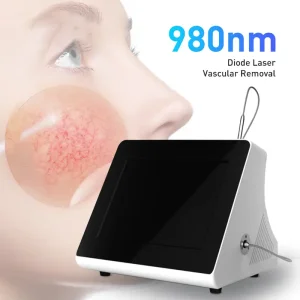
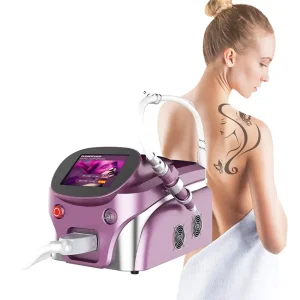
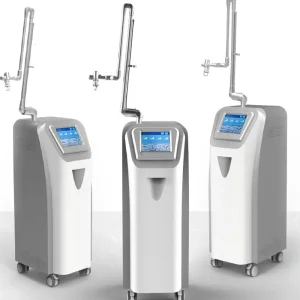
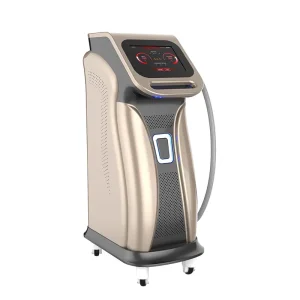
Understanding the multi-variable cost drivers behind solid-state Neodymium-doped Yttrium Aluminum Garnet (Nd:YAG) systems in 2026.
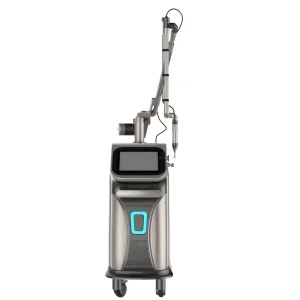
The global demand for Nd:YAG (Neodymium-doped Yttrium Aluminum Garnet) laser systems continues to scale rapidly across two major enterprise verticals: high-precision medical aesthetics (dermatology, tattoo removal, vascular lesion ablation) and heavy-duty industrial processing (laser micro-machining, seam welding, surface rust removal, and ceramic scribing). Procurement professionals searching for optimal OEM Yag Laser Machine Cost Manufacturers & Suppliers face a complex landscape where prices range from $2,500 for entry-level portable Q-switched units to over $85,000 for medical-grade, multi-pulse picosecond workstations with articulated light-guide arms.
The primary cost variable in a YAG laser platform is not merely the chassis or touchscreen user interface; it resides in the electro-optical resonator core, crystal quality, pumping medium (Diode vs. Flashlamp), and pulse Q-switching mechanism. As global enterprises look to optimize capital expenditures (CapEx) while maintaining medical compliance (FDA 510k, CE MDR, ISO 13485), understanding direct-factory pricing structures becomes a strategic imperative.
| Laser Category & Architecture | Typical FOB Price Range (USD) | Pumping Core & Optics Type | Key Industrial / Clinical Applications | Primary Cost Components |
|---|---|---|---|---|
| Portable Active Q-Switched Nd:YAG | $2,200 – $4,800 | Flashlamp-Pumped / Single Cavity / Electro-Optic KD*P | Tattoo Removal, Carbon Peeling, Epidermal Pigment | Compact power module, handheld internal resonator, simple water cooling. |
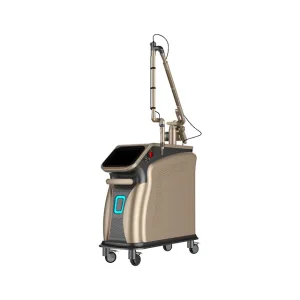
| Vertical Dual-Rod Medical Q-Switched YAG | $6,500 – $14,000 | Flashlamp or Hybrid Diode / Dual-Rod Energy Accumulation | Deep Dermal Pigment, Onychomycosis, Melasma, Vascular | Korean 7-joint articulated arm, dual Nd:YAG crystals, high-joule capacitor bank. |
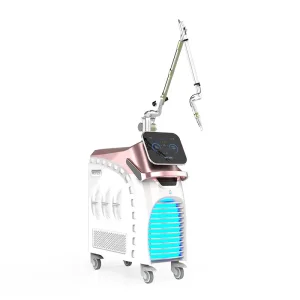
| Premium Sub-Nanosecond Picosecond YAG | $12,500 – $32,000 | DPSS (Diode-Pumped) / Semiconductor Seed + Amplifier | Refractory Tattoo Clearance, Skin Resurfacing, Acne Scarring | Custom seed diode, optical isolator, real-time energy feedback sensor, TEC chiller. |
| Industrial High-Power Fiber-Coupled YAG | $8,000 – $45,000+ | Fiber-Coupled Diode Module / Continuous Wave (CW) or Pulsed | Precision Metal Welding, Mold Repair, Electronics Scribing | Fiber delivery optics, high-power cooling manifold, CNC industrial controller interface. |
An engineering evaluation of the sub-assemblies inside industrial and aesthetic Nd:YAG laser systems.
The single crystal of Yttrium Aluminum Garnet doped with Neodymium ions ($Nd^{3+}:Y_3Al_5O_{12}$) serves as the gain medium. High-cost machines utilize optical-grade rods grown via the Czochralski process with zero wave-front distortion, uniform doping (typically 0.6 to 1.1 at%), and precision AR-coating. Cheaper supplier alternatives use budget crystal rods prone to thermal lensing, lower damage thresholds, and rapid power degradation under continuous firing.
Traditional xenon flashlamps are low-cost ($150 – $400 replacement cost) but have a finite lifespan of 1 to 3 million shots, high heat generation, and fluctuating beam profiles. Modern Diode-Pumped Solid-State (DPSS) systems incorporate semiconductor laser diode bars operating at 808nm. DPSS systems cost 30-50% more upfront but offer 20,000+ operational hours, exceptional beam homogeneity, and near-zero ongoing consumable expense.
Achieving gigawatt peak powers requires robust Q-switching. Passive Q-switching (Cr4+:YAG crystals) is lightweight and affordable but lacks precise timing control. Active Electro-Optic Q-switching (KD*P or BBO cells coupled with a high-voltage driver) enables synchronized pulse delays down to nanosecond (5-8ns) or picosecond (<450ps) domains, generating high photo-acoustic effect with minimal thermal damage to surrounding tissue.
When comparing factory quotes, always request the laser spatial beam profile test report. Premium OEM manufacturers guarantee a beam propagation factor ($M^2 < 1.3$), producing a flat-top (top-hat) energy distribution. Budget suppliers often output a Gaussian beam with localized hotspots ($M^2 > 2.0$), causing pinpoint tissue burning or uneven industrial weld penetration, drastically reducing patient safety and clinical yield.
How concentrated industrial clusters in Beijing, Wuhan, and Guangdong enable 40%–65% cost advantages without sacrificing quality.
Leading Chinese manufacturing hubs possess vertically integrated supply chains within a 50km radius. From synthetic crystal growth foundries (Nd:YAG, KTP, BBO) to optical lens coating laboratories and specialized power supply assembly lines, component procurement lead times drop from weeks to hours, drastically lowering inventory holding costs.
Tier-1 Chinese factories utilize automated 72-hour thermal stress chambers and high-repetition energy pulse testing. Every cavity undergoes power stability mapping across temperature ranges ($15^\circ C$ to $35^\circ C$) before outer shell assembly, ensuring field stability and reducing global after-sales warranty claim costs for OEM distributors.
Modular chassis manufacturing allows Chinese suppliers to support low Minimum Order Quantities (MOQs) for brand customisation. Global buyers can specify custom housing colors, software UI localization in 15+ languages, handpiece spot-size options, and logo integration at zero to minimal setup expense compared to European or US OEMs.
How enterprise buyers select wavelength extensions (1064nm, 532nm, 1320nm) based on end-user operational requirements.
Primary Wavelengths: 1064nm & 532nm Q-Switched / Picosecond
Operational Intent: High-speed removal of multi-color tattoos, nevus of Ota, melasma treatment, and non-ablative carbon peeling ("Hollywood Peel").
Key Spec Requirement: Flat-top energy profile, pulse duration under 10ns, multiple spot size handpieces (2mm to 10mm) with automatic fluence compensation.
Primary Wavelengths: 1064nm Long-Pulsed (10ms - 40ms)
Operational Intent: Transdermal coagulation of telangiectasia (spider veins), leg veins, deep nail fungus (onychomycosis) thermal eradication.
Key Spec Requirement: High continuous pulse energy (up to 120 J/cm²), integrated contact sapphire cooling tip ($0^\circ C$ to $-5^\circ C$), foot-pedal activation.
Primary Wavelengths: 1064nm Fiber-Coupled / High-Repetition Pulsed YAG
Operational Intent: Non-destructive surface rust stripping, aerospace component micro-welding, semiconductor mold cleaning.
Key Spec Requirement: Industrial galvanometric scan heads, air-cooled or heavy-duty water chiller, IP54 industrial dust enclosure, automation PLC interface.
Strategic guidance for global importers, distributors, and clinic group owners.
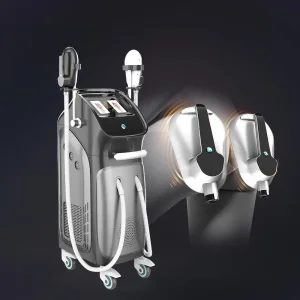
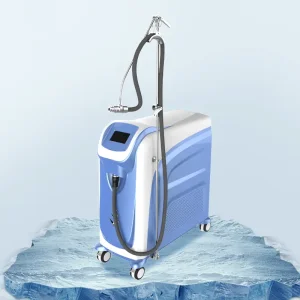
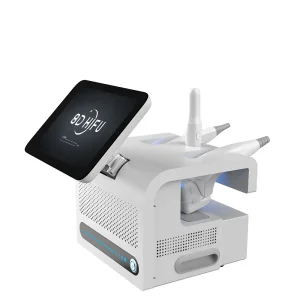
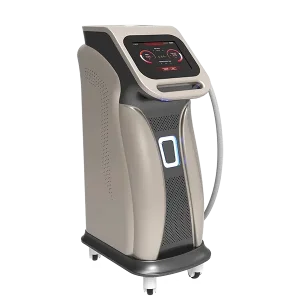
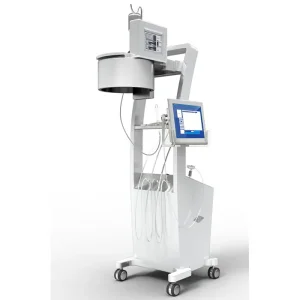
Direct manufacturer solutions for body sculpting, hair removal, vascular therapy, and cooling.
In-depth responses covering cost factors, operational maintenance, and technical compliance.