- +86 136 8127 5833
- [email protected]
- Shunyi, Beijing, China
Engineered to clinical precision standards by verified OEM/ODM manufacturing facilities worldwide.
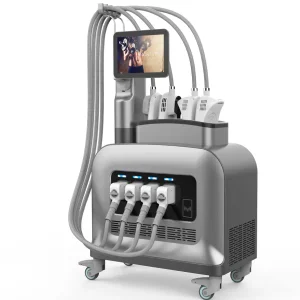
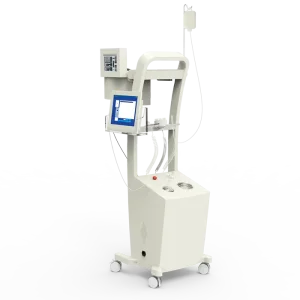
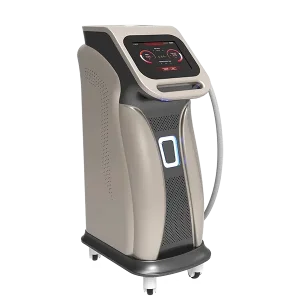
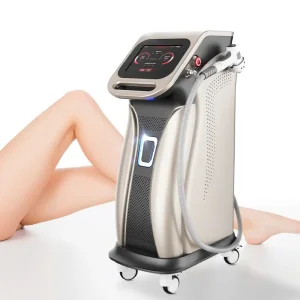
How modern dermatological testing devices transitioned from visual inspection tools into high-throughput AI multi-spectral quantification engines.
In the contemporary global medical aesthetics and clinical dermatology landscape, the role of OEM Skin Test Machine Manufacturers & Factories has undergone a fundamental paradigm shift. Historically, skin analysis relied heavily on subjective visual observation, Wood's lamps, and manual tactile assessments. However, with the rapid acceleration of high-resolution digital optical sensors, multi-spectral LED arrays, and deep neural network algorithms, skin diagnostics have evolved into the definitive foundational layer for all non-invasive and minimally invasive clinical interventions.
Today’s advanced OEM skin analysis systems serve as the critical bridge between initial patient intake and targeted therapeutic execution. Modern clinics, medical spas, cosmetic R&D laboratories, and global skincare brand counters no longer view skin test devices merely as sales tools; they treat them as essential quantitative diagnostic instruments. By leveraging exact optical measurements—spanning RGB white light, Cross-Polarized (PL) light, Parallel-Polarized light, and 365nm Near-Ultraviolet (UV) spectra—these platforms quantify epidermal and dermal pathologies with sub-millimeter precision.
Understanding how engineering choices in optics, polarization filters, and sensor physics directly impact diagnostic accuracy and clinical efficacy.
By eliminating specular reflections from the stratum corneum surface using precisely aligned linear cross-polarizers, OEM skin testing machines reveal vascular structures, erythema, hemoglobin concentration, and deep dermal hyperpigmentation that remain invisible to the naked eye.
Selective 365nm UV excitation triggers auto-fluorescence in Propionibacterium acnes porphyrins (emitting distinct red-orange spectral signals), while mapping sub-clinical sun damage, UV spots, and dyschromia buried beneath the upper epidermal layers.
Utilizing structured optical projection or stereoscopic shading analysis, the system constructs a micrometric 3D topographic mesh of skin surface texture. This enables objective calculation of wrinkle volume, pore depth, skin roughness (Ra, Rz values), and scar tissue dimensions.
When evaluated by senior dermatologists and aesthetic engineers, an industrial-grade OEM skin analyzer processes multiple physical skin metrics through AI image segmentation:
How leading Chinese and international manufacturing facilities manage hardware assembly, sensor calibration, software SDK delivery, and global supply chains.
Selecting an experienced OEM skin test machine manufacturer is a vital strategic decision for aesthetic brand owners, medical device distributors, and pharmaceutical conglomerates. A professional manufacturing facility operates specialized dust-free optical assembly lines, precise light chamber calibration tunnels, and automated burn-in testing rigs to guarantee unit-to-unit color temperature uniformity and optical clarity.
Top-tier factories provide extensive customization across both physical hardware and embedded software architectures:
Custom injection molding, sheet metal chassis design, custom hood geometries, integrated touch display sizes (10.1-inch to 21.5-inch), custom LED ring lighting configurations, and branded chassis colors.
Fully customized graphical user interfaces (GUI), branded PDF clinical report generation, custom recommendation logic for proprietary cosmetic products, and RESTful APIs connecting to clinic Electronic Medical Records (EMR).
Deployment of localized database nodes (AWS, Azure, or local servers) guaranteeing compliance with regional data privacy laws such as HIPAA in North America and GDPR in the European Union.
A detailed breakdown of key hardware configurations supplied by OEM factories for commercial, clinical, and laboratory applications.
| Specification Parameter | Commercial Grade (Retail / Spa) | Clinical Grade (MedSpa / Clinic) | Medical Research Grade (Lab / Hospital) |
|---|---|---|---|
| Optical Sensor Resolution | 12.0 Megapixels HD CMOS | 20.0 - 28.0 Megapixels Industrial Ultra-HD | 35.0+ Megapixels Full-Frame Sensor Array |
| Illumination Spectrum Modes | 3 Spectra (RGB White, PL, UV 365nm) | 6-8 Spectra (RGB, PL, UV, Wood's, Parallel, Red/Brown) | 10+ Custom Hyperspectral Narrowband Channels |
| Camera Lens Hardware | Standard Fixed Focal Optical Lens | Distortion-Free Macro Coated Lens Assembly | Scientific-Grade Telecentric Magnification Optics |
| AI Algorithm Engine | Basic Pattern Matching Engine | Deep Convolutional Neural Network (CNN) | Proprietary Sub-Dermal Layer Segmentation Model |
| Analysis Metrics Measured | Pores, Wrinkles, Spots, Moisture | Pores, UV Spots, Porphyrins, Redness, Texture, Skin Age | TEWL, Elastometry, Melanin Index, Deep Micro-Vessels |
| System Deployment & SDK | Standalone App (iOS / Android) | Windows / Cloud Portal + EMR Integration SDK | Raw Image Data Export (DICOM compatible) + C++ SDK |
How distinct clinical environments maximize return on investment and treatment safety by implementing OEM skin testing machinery.
Dermatologists utilize high-precision skin testing units prior to initiating aggressive energy-based treatments (such as 808nm diode lasers, fractional CO2 lasers, picosecond laser pigment clearance, or microneedling RF). Establishing a quantitative baseline prevents hyperpigmentation claims, tracks healing progression, and verifies treatment safety.
In commercial MedSpa settings, visual diagnostic reports build instant trust between practitioners and clients. By comparing before-and-after multi-spectral images side-by-side, practitioners clearly demonstrate improvements in skin texture, pore size reduction, and vascular clearance—driving higher client retention and cross-selling treatment packages.
Global cosmetic brands integrate customized OEM skin analyzers at retail counters and within clinical trial facilities. The specialized software automatically correlates identified skin deficiencies with specific formulation lines, recommending tailored serums, moisturizers, or anti-aging protocols backed by objective optical data.
Navigating global certification requirements to guarantee hardware reliability, electrical safety, and patient data privacy.
When sourcing hardware directly from OEM Skin Test Machine Manufacturers & Factories, international distributors must rigorously evaluate factory compliance credentials. Operating a certified manufacturing environment ensures that diagnostic equipment complies with international medical standards and electrical safety protocols.
Anticipating technological shifts in optical hardware, real-time sub-dermal imaging, and predictive AI modeling.
The skin analysis hardware market is advancing rapidly toward deeper optical penetration and higher predictive intelligence. Leading R&D departments within OEM manufacturing factories are currently developing advanced diagnostic capabilities that will define the next decade of aesthetic science:
Integrating miniature OCT optical probes directly into skin testing handheld units, allowing clinicians to view real-time cross-sectional epidermal thickness, basement membrane integrity, and dermal collagen density non-invasively.
Transitioning from basic 3-spectrum illumination to custom multi-channel LED arrays capable of isolating specific light wavelengths (e.g., 540nm for superficial micro-vessels, 630nm for deep collagen synthesis assessment).
Utilizing generative AI algorithms trained on hundreds of thousands of longitudinal dermatological datasets to accurately simulate a patient's skin aging trajectory over 5 to 15 years—and visually demonstrate the preventive impact of recommended aesthetic therapies.
Addressing technical, operational, and procurement queries regarding OEM skin diagnostic machinery.
Explore our complete range of CE and FDA compliant medical laser, radiofrequency, and body contouring systems.