- +86 136 8127 5833
- [email protected]
- Shunyi, Beijing, China
Explore our engineering portfolio of compact Q-switched Nd:YAG lasers, picosecond systems, and clinical auxiliary technologies built for international aesthetic equipment distributors.
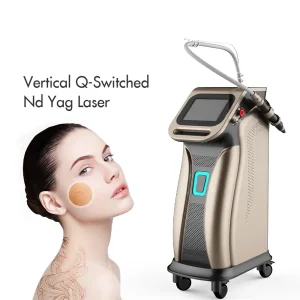
Analyzing global market shifts, clinic capital expenditure optimizations, and the surging demand for OEM portable Nd:YAG laser systems in aesthetic medicine.
The global market for aesthetic lasers has undergone a structural transformation over the past decade. Traditional, heavy floor-standing Nd:YAG laser platforms, while optically robust, present substantial logistics, space utilization, and mobility challenges for modern multi-room clinics, medical spas, and chain aesthetic practices. Procurement data indicates a 34% year-over-year increase in demand for portable Q-switched Nd:YAG laser machines that deliver medical-grade pulse energies without compromising thermal management or beam stability.
As an OEM/ODM manufacturer specializing in solid-state laser technology, our R&D desk bridges the gap between mechanical miniaturization and high optical power output. B2B importers, regional brand distributors, and clinical chain operators seek modular platforms that meet stringent international regulatory standards (CE MDR, US FDA 510k compliance frameworks) while offering competitive unit economics and low total cost of ownership (TCO).
OEM Industry Benchmark: Modern portable Nd:YAG platforms must deliver peak power densities exceeding 15 MW/cm² within nanosecond and sub-nanosecond pulse regimes to trigger photo-acoustic target fragmentation while maintaining handpiece skin contact temperature below 25°C via active semiconductor cooling.
Deep-dive into the optical cavity dynamics, crystal doping, chromatic frequency doubling, and thermal management mechanisms engineered into our portable laser chassis.
Synthesized Neodymium-doped Yttrium Aluminum Garnet (Nd:Y3Al5O12) crystal rods are pumped via high-efficiency Simmer-current flashlamps. Provides exceptional mechanical hardness, thermal conductivity, and steady optical output at 1064nm fundamental wavelength.
Non-linear Potassium Titanyl Phosphate (KTP) crystal optics double the frequency of the 1064nm beam, generating a precise 532nm green wavelength specifically targeted at epidermal melanin, superficial lesions, and red/orange ink pigments.
Electro-optic Pockels cells compress optical energy into giant giant-pulses (pulse width 3-8 nanoseconds). This hyper-short pulse width enforces selective photothermolysis, fragmenting pigment via acoustic shockwaves rather than thermal diffusion.
Below are standard engineering specs available for custom white-label and distributor OEM manufacturing orders:
| Parameter Metric | Standard OEM Specification | High-Output Clinical Configuration |
|---|---|---|
| Laser Medium | Nd:YAG Solid-State Crystal (Ø 6mm x 85mm) | Dual-Rod Nd:YAG Optical Cavity |
| Operating Wavelengths | 1064nm, 532nm, 1320nm (Carbon Peel) | 1064nm, 532nm, 585nm, 650nm (Dye Handpiece) |
| Single Pulse Energy | Up to 800 mJ @ 1064nm | Up to 1200 mJ @ 1064nm |
| Pulse Duration (FWHM) | 6 ns – 10 ns | 3 ns – 6 ns (Sub-nanosecond range) |
| Repetition Frequency | 1 Hz – 10 Hz adjustable | 1 Hz – 12 Hz smooth sliding mode |
| Spot Size Diameter | 1 mm – 6 mm continuously adjustable | 2 mm – 10 mm zoom handpiece with red pilot beam |
| Thermal Dissipation System | Closed-loop Water + Air Heat Exchanger | Active TEC Semiconductor Liquid Cooling Array |
| Chassis Footprint & Net Weight | 480mm x 360mm x 320mm | 22 kg | 520mm x 390mm x 360mm | 26 kg |
End-to-end industrial customization engineered to elevate private labels, regional aesthetic distributors, and medical equipment brands worldwide.
We deliver tailored software graphical interfaces (GUI) on capacitive HD touchscreens. Customization includes localized multi-language UI, brand logo integration, clinical preset parameters, and encrypted lock-out system logic for lease/rental business models.
From heavy-duty injection-molded ABS housing to military-grade aluminum internal framework, our industrial design team creates bespoke chassis aesthetics, color palettes, and ergonomic handpiece cradles aligned with your brand identity.
Every portable Nd:YAG unit undergoes a rigorous 72-hour continuous thermal stress test, energy calibration via high-precision power meters, and 100,000-shot lamp verification before entering sterile dust-free packaging.
We provide complete engineering documentation, including EMC electric safety test reports, IEC 60825-1 laser safety compliance, ISO 13485 manufacturing certificates, and clinical protocols for local market registration.
Comprehensive indication matrix detailing chromatic light absorption across exogenous ink particles and endogenous cutaneous melanin.
The primary clinical indication for Q-switched Nd:YAG lasers is tattoo breakdown via selective photothermolysis. The 1064nm wavelength penetrates deeply into the dermis with minimal absorption by epidermal melanin, making it the safest standard for black, dark blue, and dark green tattoo inks across all Fitzpatrick skin types (I–VI). The frequency-doubled 532nm wavelength exhibits extremely high absorption in red, orange, and purple pigments, situated higher in the papillary dermis.
Epidermal pigmented lesions such as freckles, solar lentigines, and seborrheic keratoses respond rapidly to 532nm low-fluence irradiation. Dermal pigmentation—including Nevus of Ota, Hori's nevus, and recalcitrant melasma—is treated via 1064nm Sub-Cellular Selective Photothermolysis (Laser Toning mode), which shatters melanosomes without destroying surrounding keratinocytes or disrupting the basement membrane.
By applying a clinical-grade carbon nanoparticle lotion to the stratum corneum, the 1320nm or 1064nm short-pulsed laser beam targets the carbon particles within enlarged pores. The resulting micro-explosions vaporize dead epidermal cells, stimulate dermal collagen contraction, purge excess sebum, and yield immediate pore-tightening effects with zero downtime.
Where solid-state aesthetic laser engineering is headed: smart telemetry, picosecond pulse compression, and diode-pumped solid-state (DPSS) efficiency.
Future portable laser chassis are transitioning toward pulse widths under 800 picoseconds. Reducing pulse duration enhances photo-acoustic stress waves over thermal relaxation, boosting clearance speeds for resistant ink and stubborn melasma.
Replacing conventional xenon flashlamps with high-power laser diode arrays eliminates thermal load, reduces power consumption by 60%, extends generator service life beyond 5,000,000 pulses, and shrinks overall chassis dimensions.
Next-gen systems incorporate embedded Wi-Fi module telemetry, allowing distributors to perform remote diagnosis, track lamp pulse consumption, update treatment protocols over-the-air (OTA), and manage regional equipment leasing.
Ensuring frictionless international procurement, custom customs support, and local after-sales infrastructure for global buyers.
Navigating cross-border medical aesthetic equipment trade requires absolute regulatory precision and robust logistics support. As an established OEM manufacturer exporting to over 90 countries across North America, Europe, the Middle East, and Asia-Pacific, our technical export team ensures that every machine leaving our facility complies with local electrical, optical, and safety frameworks.
Units are configured with universal switching power supplies (110V/220V, 50/60Hz) and localized power standard connectors (US, EU, UK, AU, Swiss) to ensure immediate plug-and-play operation upon delivery.
We maintain an inventory of key optical components—including pre-aligned handpiece assemblies, xenon lamps, Nd:YAG rods, and power boards—guaranteeing dispatch within 24 hours for maintenance requests.
Expert engineering answers to common questions raised by medical laser importers, clinical directors, and B2B buyers.
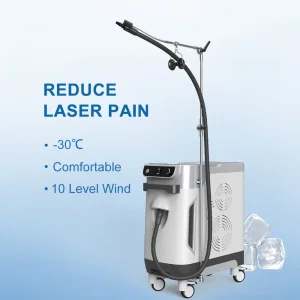
Explore our comprehensive lineup of clinical cooling units, diode hair removal platforms, DPL systems, and body sculpting equipment manufactured for international distributors.